When purchasing a cake cooler, how should the configuration be verified and delivery completed?
The delivery of a cake cooler should begin during the order confirmation stage, rather than waiting for the transport vehicle to arrive at the store before final inspection. A dessert shop wants to balance the display of whole cakes with the sales of cut desserts. This needs to be clearly outlined together with the equipment usage, configuration, and installation arrangements. Agreement between both parties on the same list helps to verify the appearance, accessories, installation, and usage training separately.
Check the shelf, lighting, rear operation, and base support compatibility, and then confirm the usage conditions of the actual model. For both curved and flat appearances, compare and observe the differences in handling using the same display containers. It is recommended to distinguish in the list between the cabinet or main unit itself, accompanying accessories, items that require on-site preparation, and additional services agreed upon separately. For items not specified, raise questions first and obtain confirmation; do not assume based on items shown in photos that they must be included in the supply scope.
Check the access route, door openings and corners, handling arrangements, and proposed installation locations before delivery. Connect the sequence of customers viewing, employees retrieving cakes, packing boxes, and checkout, and observe whether lighting and background affect product identification. Store decorations should not cover key display shelves, and the cake removal process should not require customers to bypass them. If the on-site condition differs from the initially provided drawings, communicate the handling method before installation to avoid discovering that moving parts are unusable or supporting conditions are not completed after the equipment is placed.
Suppose the height of a whole cake is appropriate, but it needs to be tilted when removed after adding decorations and a base. The relationship between the shelf and the door should be tested with complete products. Do not determine the display quantity based solely on the size of the cake batter. Therefore, inspection is not only about checking if the surface is intact, but also about verifying key components and operating conditions in relation to the agreed purpose. Prepare representative containers or packaging for whole cakes, cut desserts, bases, boxes, and price labels, and check the placement and removal relationships within the allowed demonstration range; Sections requiring professional debugging should follow the supplier's procedures and not be performed independently.
At the end of the handover, all instructions, configuration lists, and agreed service contact details matching the model must be collected, along with the responsible person and subsequent arrangements for unresolved issues. A visually larger freezer may not mean better usability for each layer. Testing whether a complete cake can fit more effectively is more valuable than simply testing static placement. Keep copies of delivery photos and documents for future reference during maintenance. If discrepancies are found in quantity, appearance, or configuration, record the specific location and communicate promptly; oral descriptions cannot replace written confirmation.
Related products
 Bakery refrigeration
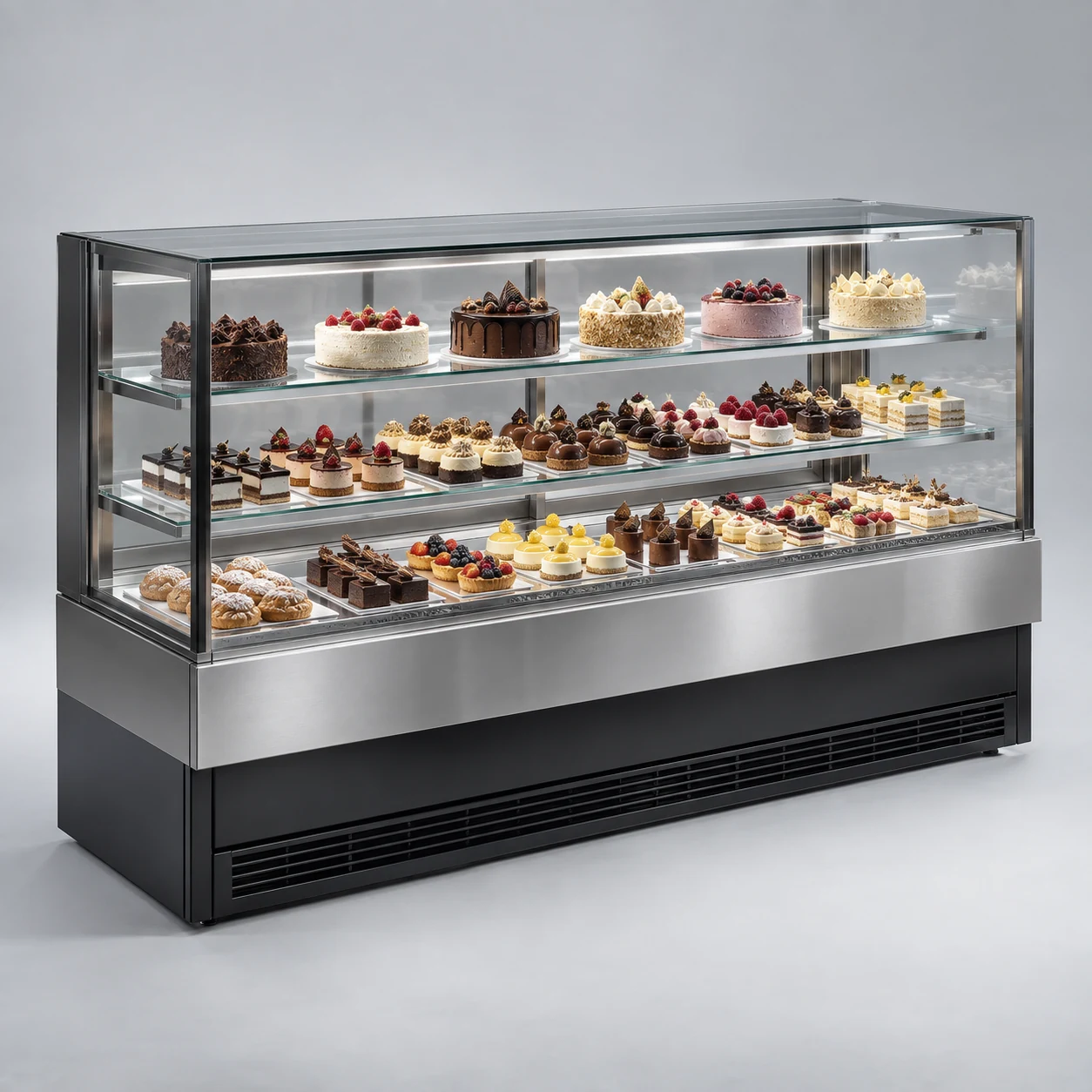
Cake displays
Clear tiered displays and soft lighting showcase cakes and pastries.