How should a freezer be selected to match the actual business needs of the store?
When choosing a freezer, it is essential to first clarify the business objectives, and then compare the appearance and configuration of the equipment. Taking a restaurant store that wants to optimize its freezer-focused display area as an example, the first thing to organize is not how many units to purchase, but how the display containers, ice materials, zone labels, and food items that require independent management should be stored, displayed, and managed. The form of goods, personnel actions, and equipment functions are interconnected; only by clarifying these conditions clearly can there be a basis for comparison in subsequent plans.
Prepare a representative product list, and list the most common items, the largest sizes, and those with the most inconvenient handling. First, confirm the display items and actual operation methods, then let equipment staff verify the ice table structure and supporting requirements. The depth of the countertop, the edge design, and container stability should be discussed in conjunction with daily organization practices. If only giving the supplier a general product name, it is easy to overlook the details that truly affect usage; Bring packaging photos, container dimensions, and the quantity to be displayed, which is more helpful than simply asking ‘which one is the best’.
If the display containers for the ice platform have different depths, the visual height after laying may be similar, but the actual placement stability varies. The contact methods between the container and the countertop, the organizing actions, and the edge relationships should be recorded separately, and then confirmed with the equipment personnel regarding the compatibility conditions. Such inspections can be completed before confirming the plan, or can be included in the communication with the prototype. When comparing, use the same items and the same operating sequence, and record the differences between each plan. Do not judge suitability for long-term operation based on a single display or a design drawing.
The visual sense of abundance needs to be combined with convenience in removal and organization; If a large amount of decoration needs to be removed daily to manage the countertop, the layout must be re-evaluated. You can separate the conditions that must be met, the conditions desired, and the issues still to be confirmed. For example, what must be met are the purpose and on-site installation conditions, what is desired may be a more convenient display method, and the parameters that have not been confirmed should be provided by the supplier with technical details for the corresponding model.
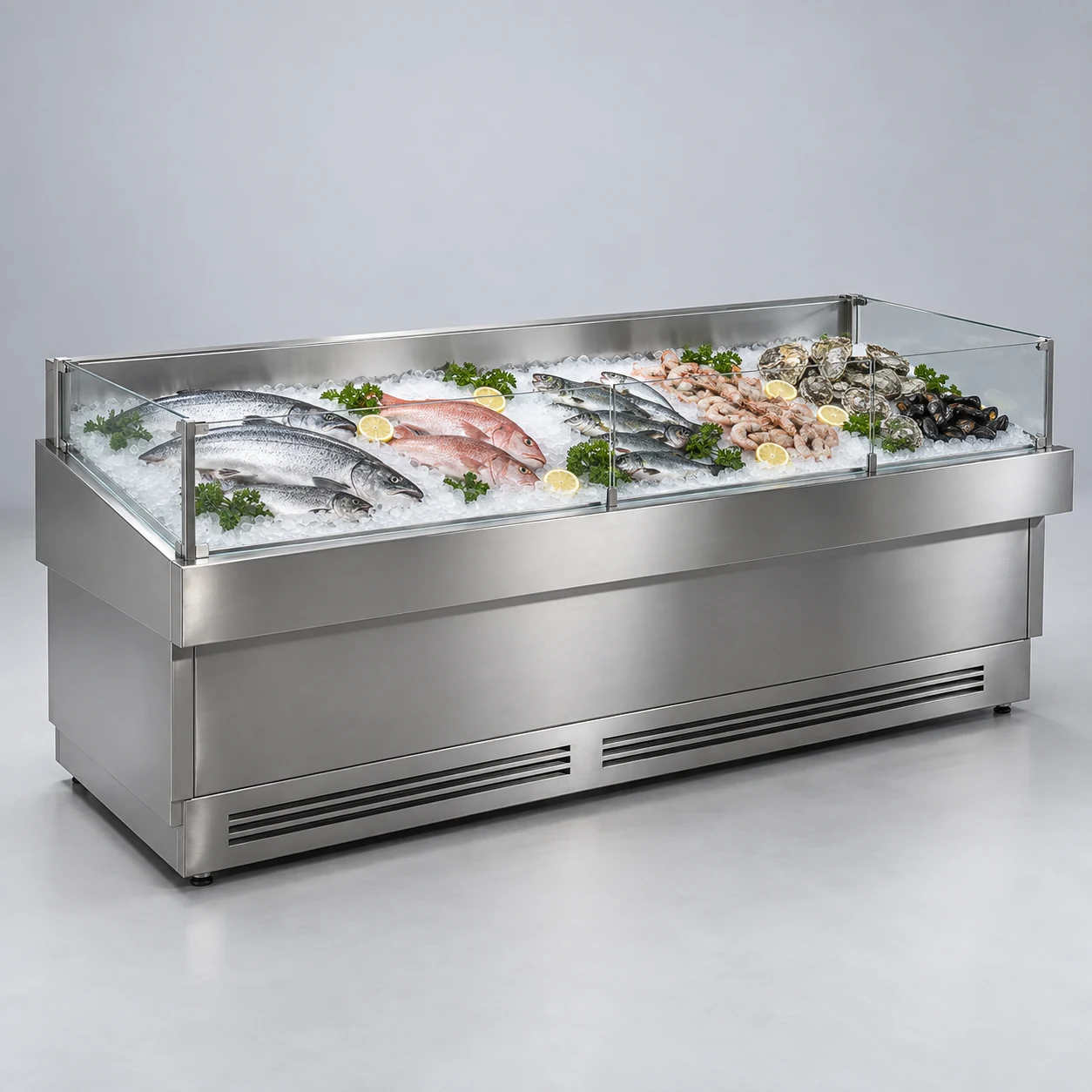
Finally, convert the selection conclusions into a verifiable list: equipment purpose, physical dimensions, main configurations, applicable products, on-site conditions, and subsequent communication matters. Verify the supply boundaries for the table surface, base, containers, and supporting components. The ice spreading effect in the sample diagram is different from the real business process. It should be confirmed through on-site demonstrations to see how employees carry out replenishment and organization. Price and appearance can only be part of the comparison. Warranty boundaries, maintenance arrangements, and accessory availability should also be discussed before order confirmation. When specific temperature, load, and energy conditions are involved, refer to official model specifications and professional confirmation results.
Related products
 Catering equipment
Ice display tables
An open ice bed highlights the colour and texture of fresh seafood.