When a milk cooler is delivered to the store, how should the configuration be verified and delivery completed?
Restocking of milk coolers should begin during the order confirmation stage, rather than waiting for the delivery vehicle to arrive at the store for temporary inspection. The actual conditions involved in making the dairy area in convenience stores a clearly identifiable area for regular purchases need to be clearly specified together with the equipment usage, configuration, and installation arrangements. Agreement between both parties on the same list helps to verify the appearance, accessories, installation, and usage training separately.
Check the shelves, barriers, price tags, and door configuration to confirm which accessories are compatible with existing dairy packaging. The dimensions of seasonal combinations are also included in the list before procurement to reduce subsequent temporary adjustments. It is recommended to distinguish in the list between the cabinet or main unit itself, accompanying accessories, items that require on-site preparation, and additional services agreed upon separately. For items not specified, raise questions first and obtain confirmation; do not assume based on items shown in photos that they must be included in the supply scope.
Check the access route, door openings and corners, handling arrangements, and proposed installation locations before delivery. Place frequently purchased items in positions that customers can easily identify, and clearly define the boundaries between combined packages and individual items. Test the height of the shelf and the position of the label together to avoid flipping adjacent rows of products when customers pick up items. If the on-site condition differs from the initially provided drawings, communicate the handling method before installation to avoid discovering that moving parts are unusable or supporting conditions are not completed after the equipment is placed.
Assuming dairy products now include large bottles and combined packs, the original shelf arrangement may not be suitable for all cases. It is necessary to distinguish the actual space used by single-piece packs, grouped packaging, and display labels, so that the arrangement inside the cabinet matches the restocking order. Therefore, inspection is not only about checking if the surface is intact, but also about verifying key components and operating conditions in relation to the agreed purpose. For bottled and boxed dairy products, combined packs, and price signs of different capacities, representative containers or packaging should be prepared, and the placement and retrieval relationships should be checked within the allowed demonstration range; Sections requiring professional debugging should follow the supplier's procedures and not be performed independently.
At the end of the handover, all instructions, configuration lists, and agreed service contact details matching the model must be collected, along with the responsible person and subsequent arrangements for unresolved issues. The dairy area needs to be easy for daily repeated purchases; Too many promotional signs may make it difficult for those familiar with the products to find them; the focus of display should be on stable identification and convenient replenishment. Keep copies of delivery photos and documents for future reference during maintenance. If discrepancies are found in quantity, appearance, or configuration, record the specific location and communicate promptly; oral descriptions cannot replace written confirmation.
Related products
 Convenience store refrigeration
Milk display cabinets
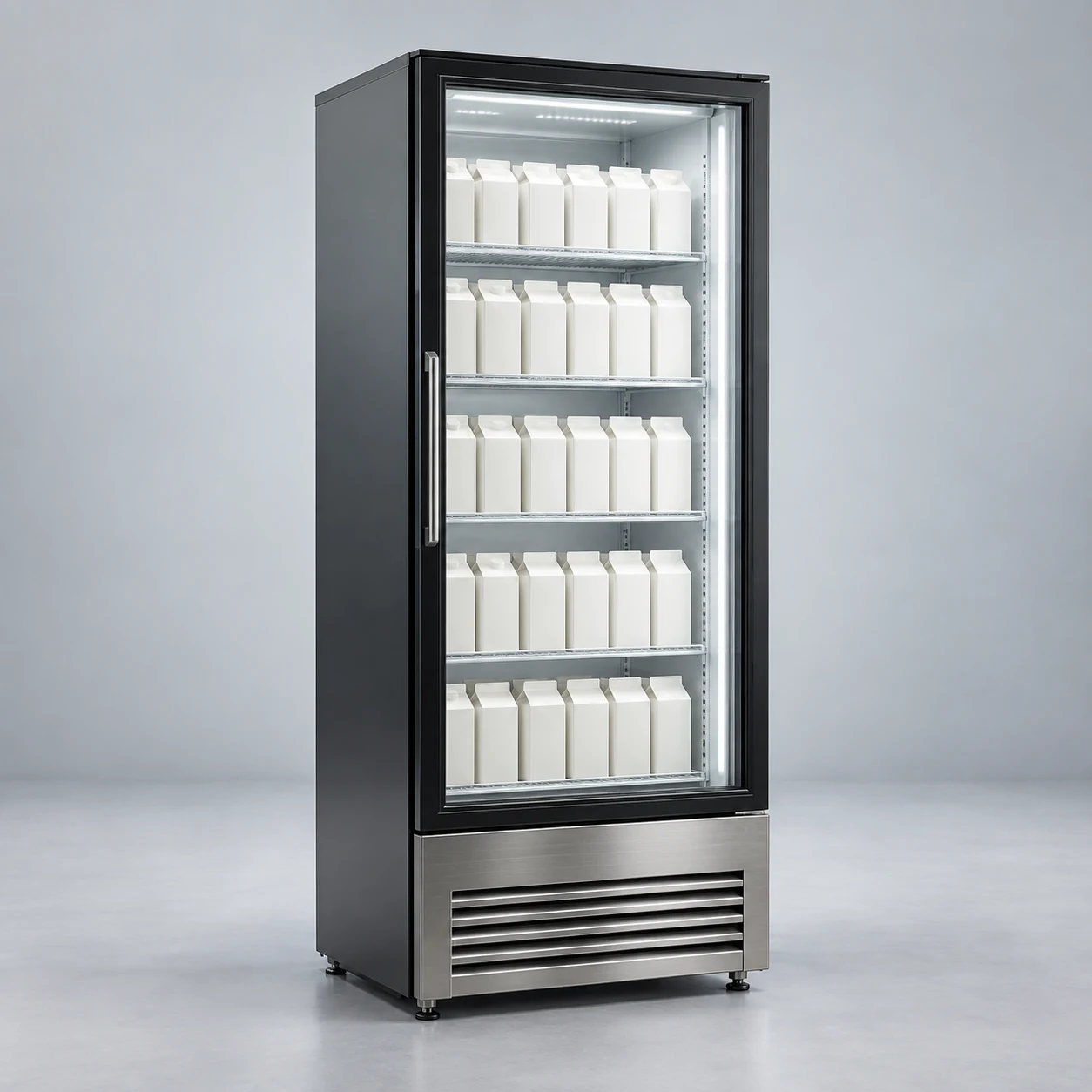
Clear shelving and soft lighting create an orderly dairy display.