Confirming a Customer’s Selection at a Meat Display: Names, Positions and Repeating the Choice
Match the customer’s intended item to the staff understanding using confirmed names, tray locations and a repeat-back before the next service step. Direction or visual similarity alone does not establish the choice.
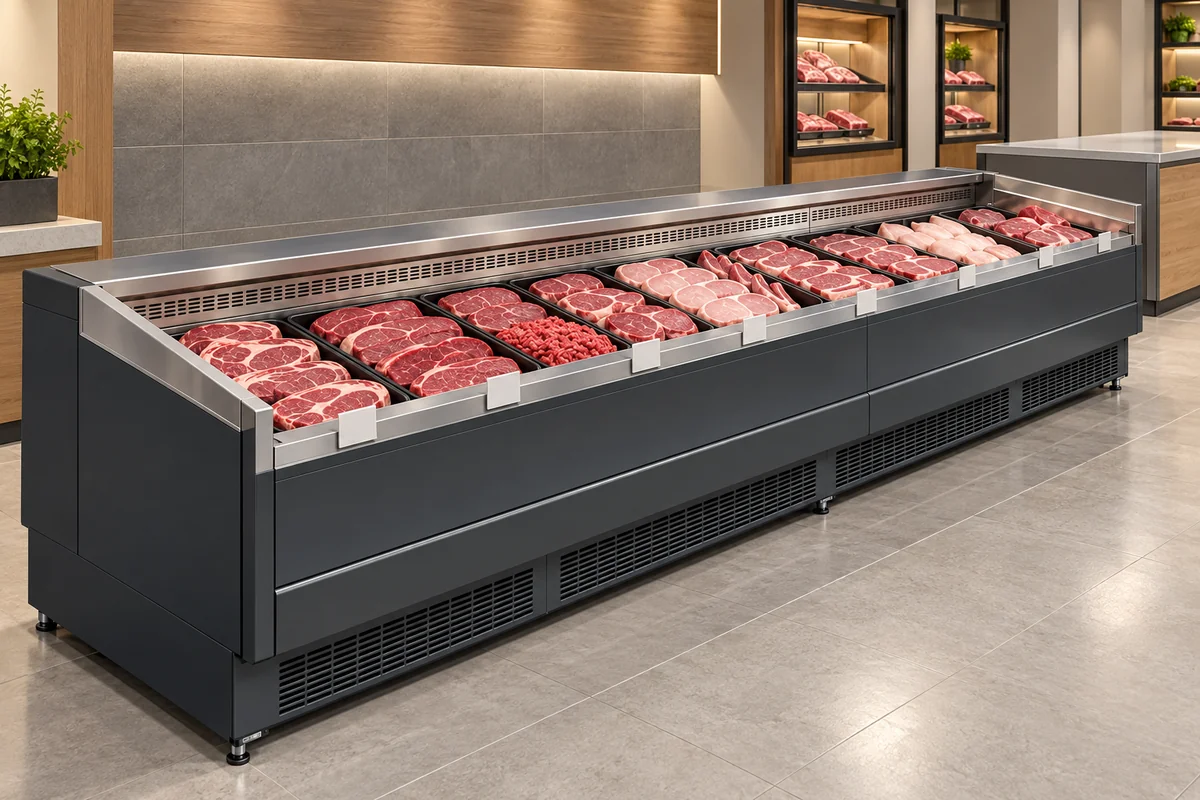
A pointing gesture may be understood differently
Customers and staff see a display from different sides, with different left-right and obstruction relationships. Clarify the intended item before the next step rather than relying on a gesture toward something nearby.
This concerns communication, not cut identification, quality or food use. Names should come from confirmed store information, not colour or photographs. Relevant staff should verify label correspondence; the illustration does not identify real sale items.
Combine a confirmed name with a clear location
Repeat the confirmed name with a tray or verified sign reference. Position helps align the view but does not replace item identity. Recheck location references after replenishment or moves.
Distinct position markers can assist similar-looking trays if appropriate for the site and equipment. Do not occupy functional areas or touch goods with improvised signs. Customers need not reach into the display to prove their choice, and staff should avoid unnecessary risky demonstrations.
Repeat the item separately from other requests
Confirm the item first and other requests separately, so names and intended quantities are not merged in a noisy exchange. Ask again when unclear rather than treating a companion’s response or staff guess as customer confirmation.
Follow applicable store processes for weighing, pricing and packaging. This guide defines neither measurement rules nor meat-handling steps. Distinguish intent from a completed transaction; removal from a display does not establish agreement to every later arrangement.
Preserve confirmed and unresolved information at handoff
When another employee takes over, communicate the confirmed item and outstanding questions. A vague reference to that tray loses context. Use only necessary work references without collecting contact details or displaying private data.
If understandings differ, return to the item and original intent rather than assigning blame. Distinguish moved locations, mismatched signs and unclear speech. Rewording uncertainty does not resolve it, and similar appearance is not permission to substitute goods.
Review recurring sources of clarification
Repeated clarification at one location may concern readable names, inconsistent position terms or different viewing angles. Record time and place without generalizing a few questions to every customer or inventing complaint rates.
For configuration discussions, prepare actual trays, display forms and viewing positions. The cover is generated from the official appearance, with blank cards rather than real item information. Clearer communication is a management aim, not proof of higher sales or equipment performance.
Common item-identification questions
Practical questions
Does a clear gesture remove the need to repeat the choice? Different viewpoints and adjacent similar items may still warrant confirmation. Can staff simply read a label? First confirm it remains linked to the goods after any moves.
For equipment enquiries, describe tray forms, customer and staff positions and recurring communication issues, using BAONIER product pages for context. Confirm equipment and accessories separately; selection discussions do not replace item verification or store service procedures.
Related products and enquiries
Linear fresh meat display · Meat display category · Discuss display containers and service needs