Choosing a glass door freezer: beyond clear visibility, it must also be easy to handle
With the highest and widest standard packaging, compare the effective dimensions and adjustable features of the inner shelf. Choosing a wider door doesn’t necessarily make picking easier; It is necessary to consider the single-pick range, front movement space, and different employees’ operating habits simultaneously.
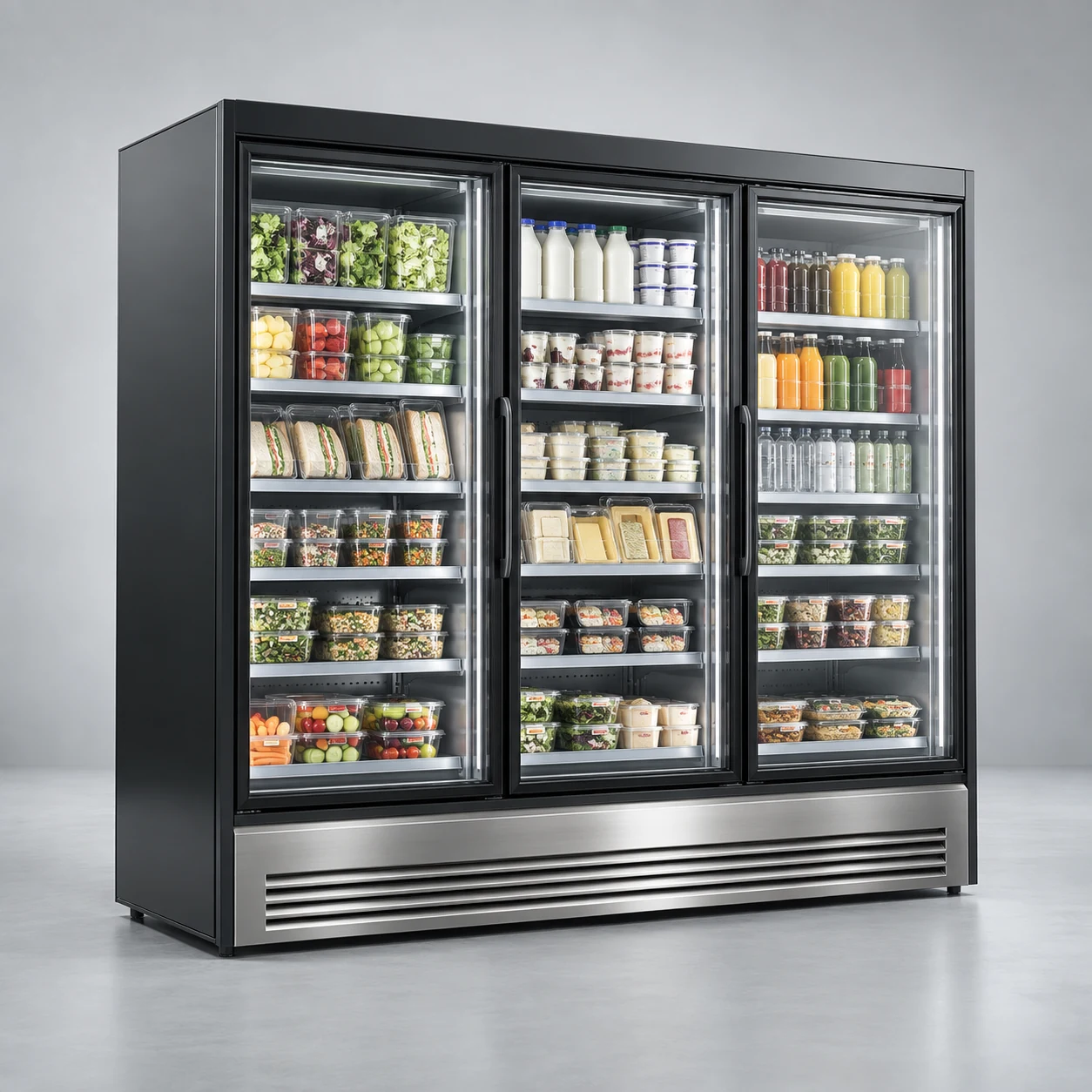
Define the issues to be solved during this purchase
Boutique food stores plan to use glass door cabinets to display packaged cold goods. When discussing glass door refrigerators, the first issues often arise regarding size selection, shape choice, and budget allocation. However, the answers to these questions depend on a common premise: what task the store wants the equipment to perform. Choosing a wider door doesn’t necessarily make picking easier; It is necessary to consider the single-pick range, front movement space, and different employees’ operating habits simultaneously. If this trade-off is not clearly stated, it is easy for discussions to focus on photos and total price, seemingly comparing multiple options, but no judgment criteria are actually established.
It is recommended to first write down the requirements in a complete description, including who uses, what is processed or displayed, where the task is completed, and the most inconvenient aspect currently. Focus should be placed on high-bottle beverages, carton dairy products, cup-sized desserts, and pre-packaged ingredients. Each item should correspond to an actual packaging or container to avoid different participants having different understandings of the ‘standard specifications’. The requirements table need not be complex, but it should be understood by procurement, store managers, and actual operators.
Actual compatibility conditions that need verification for glass door refrigerators
With the highest and widest standard packaging, compare the effective dimensions and adjustable features of the inner shelf. The transparency of the glass is just one aspect of the appearance; the handle position, picking action, and restocking accessibility also affect daily use. When preparing materials, representative items used daily can be photographed and numbered, with their external dimensions, usage location, and required operating space recorded separately. For special packaging, containers with handles, or temporary combinations, separate explanations are needed; only an average size cannot be provided.
Implementing size specifications for representative items makes it easier to determine compatibility differences. Taking glass door refrigerators as an example, assuming the glass door cabinet is used to display high-bottle beverages, there is ample static display space, but the bottle mouth requires significant inclination to be removed. Verification should be separated between 'fitability' and 'smooth removal', and labels and adjacent packaging should be checked to ensure they do not interfere with hand movements. In the comparison table, a separate row should be provided for this difference, listing the current plan, adjustable sections, and information yet to be confirmed separately. If the two candidate configurations provide different responses for this item, retain each of their applicable conditions, allowing the selection to be based on consistent requirements. Continue to inquire about unclear items; no conclusions should be added independently to complete the quotation comparison.
Verify configuration using a complete workflow process
Mark the occupied area after the cabinet doors open on the ground, and involve trolleys, baskets, and waiting customers in the simulation; The relationship between adjacent cabinet doors, wall pillars, and shopping aisles should be confirmed before determining the door opening direction. During the product selection phase, these steps should not be discussed until the renovation is completed. Use ground markers or cardboard to simulate the equipment boundaries, allowing actual users to demonstrate in their usual order, which helps identify subtle disturbances not visible on the drawings in advance.
The comparison of solutions should also include disturbances encountered during real use, not just the equipment itself. Take a glass door refrigerator as an example. Suppose two groups of doors are adjacent. When a customer opens one door, it accidentally blocks the picking position of the other group. Two personnel can demonstrate according to the common purchasing order, record the points of mutual waiting, and then discuss adjustments to the door orientation, adjacent placement, or passage arrangement. In the comparison table, a separate row should be provided for this difference, listing the current plan, adjustable sections, and information yet to be confirmed separately. If the two candidate configurations provide different responses for this item, retain each of their applicable conditions, allowing the selection to be based on consistent requirements. Continue to inquire about unclear items; no conclusions should be added independently to complete the quotation comparison.
Include daily management costs in the comparison table.
Include the closed state of the door body, the position of the price tag, and the neatness of the shelf in the inspection items. When issues such as door gaps, condensation, or improper closing are detected, record the specific door position and time period, and after-sales service will determine the cause based on the model. These daily tasks are not only encountered after procurement is completed; they affect the amount of effort required by the store for organization, training, and communication. When comparing solutions, you can ask how common components are identified, where the usage instructions can be found, which tasks should be handled by the store, and which require professional assistance.
Understanding the management approach before procurement can reduce omissions during configuration confirmation. Take a glass door refrigerator as an example. Suppose only one door repeatedly has improper closing issues. When recording, clearly write down the door position number, time period, and visible condition, instead of just stating ‘the glass door has problems’. After the service staff obtains the accurate position, it is easier to continue addressing the same issue. In the comparison table, a separate row should be provided for this difference, listing the current plan, adjustable sections, and information yet to be confirmed separately. If the two candidate configurations provide different responses for this item, retain each of their applicable conditions, allowing the selection to be based on consistent requirements. Continue to inquire about unclear items; no conclusions should be added independently to complete the quotation comparison.
How is the quotation confirmation and selection conclusion implemented?
Use numbers to distinguish each door and shelf, and confirm whether components such as handles, seals, and lights are complete. Keep the shipping packaging photos and delivery list to separate shipping issues from subsequent usage issues. If two solutions meet basic requirements, they can be mapped to the store’s workflow respectively, indicating which benefits are retained and any adjustments required. The reasons for selection should be specific to the usage process, so that when making subsequent adjustments to decoration or product structure, it is possible to determine whether the original decisions remain applicable.
When forming the final record, it is recommended to retain the product model, confirmation images, attachment list, and results of unresolved issues. Oral commitments should be translated into accessible confirmation details. For inquiries about BAONIER products, start with this requirement document: first describe the actual scenario, then verify the equipment configuration. For glass door refrigerators, the appropriate solution comes from the alignment between tasks, space, and management methods. The appearance and budget are further coordinated after these conditions are defined.