When purchasing a cold storage unit, how should we verify its configuration and complete delivery?
The delivery of cold storage facilities should begin preparation from the order confirmation stage, rather than waiting for the transport vehicle to arrive at the store before temporary inspection. The actual conditions required for stores to set up separate refrigerated or frozen storage spaces for daily turnover need to be clearly specified together with the equipment usage, configuration, and installation arrangements. Agreement between both parties on the same list helps to verify the appearance, accessories, installation, and usage training separately.
Distinguish between warehouse structure, refrigeration system, installation work, on-site support, and commissioning training in contracts. The more specific the project conditions, responsibility boundaries, and acceptance documents are, the easier it is to avoid the integration issues where 'the equipment arrives, but the site is not ready yet.' It is recommended to distinguish in the list between the cabinet or main unit itself, accompanying accessories, items that require on-site preparation, and additional services agreed upon separately. For items not specified, raise questions first and obtain confirmation; do not assume based on items shown in photos that they must be included in the supply scope.
Check the access route, door openings and corners, handling arrangements, and proposed installation locations before delivery. Draw a diagram showing the relationship between unloading points, warehouse doors, temporary storage areas, and store delivery points, and verify door movement and handling tool turning conditions. Storage locations should allow staff to see labels and locate items, without aiming to fill every corner. If the on-site condition differs from the initially provided drawings, communicate the handling method before installation to avoid discovering that moving parts are unusable or supporting conditions are not completed after the equipment is placed.
The quantity of goods stored in the fake design area is the same. One solution involves transporting them in full boxes, while the other requires frequent unpacking and picking. The two operating methods have different requirements for space availability and temporary turnover space. It’s not appropriate to compare the storage capacity solely based on the total number of boxes. Therefore, inspection is not only about checking if the surface is intact, but also about verifying key components and operating conditions in relation to the agreed purpose. Representative containers or packaging should be prepared for full-box products, turnover baskets, shelves, and batch labels, and the picking and placing relationships should be checked within the permitted demonstration range; Sections requiring professional debugging should follow the supplier's procedures and not be performed independently.
At the end of the handover, all instructions, configuration lists, and agreed service contact details matching the model must be collected, along with the responsible person and subsequent arrangements for unresolved issues. For the same storage quantity, different space requirements may be needed under full pallet and manual box handling methods; Before procurement, the actual handling methods must be clearly explained. Keep copies of delivery photos and documents for future reference during maintenance. If discrepancies are found in quantity, appearance, or configuration, record the specific location and communicate promptly; oral descriptions cannot replace written confirmation.
Related products
 Supermarket refrigeration
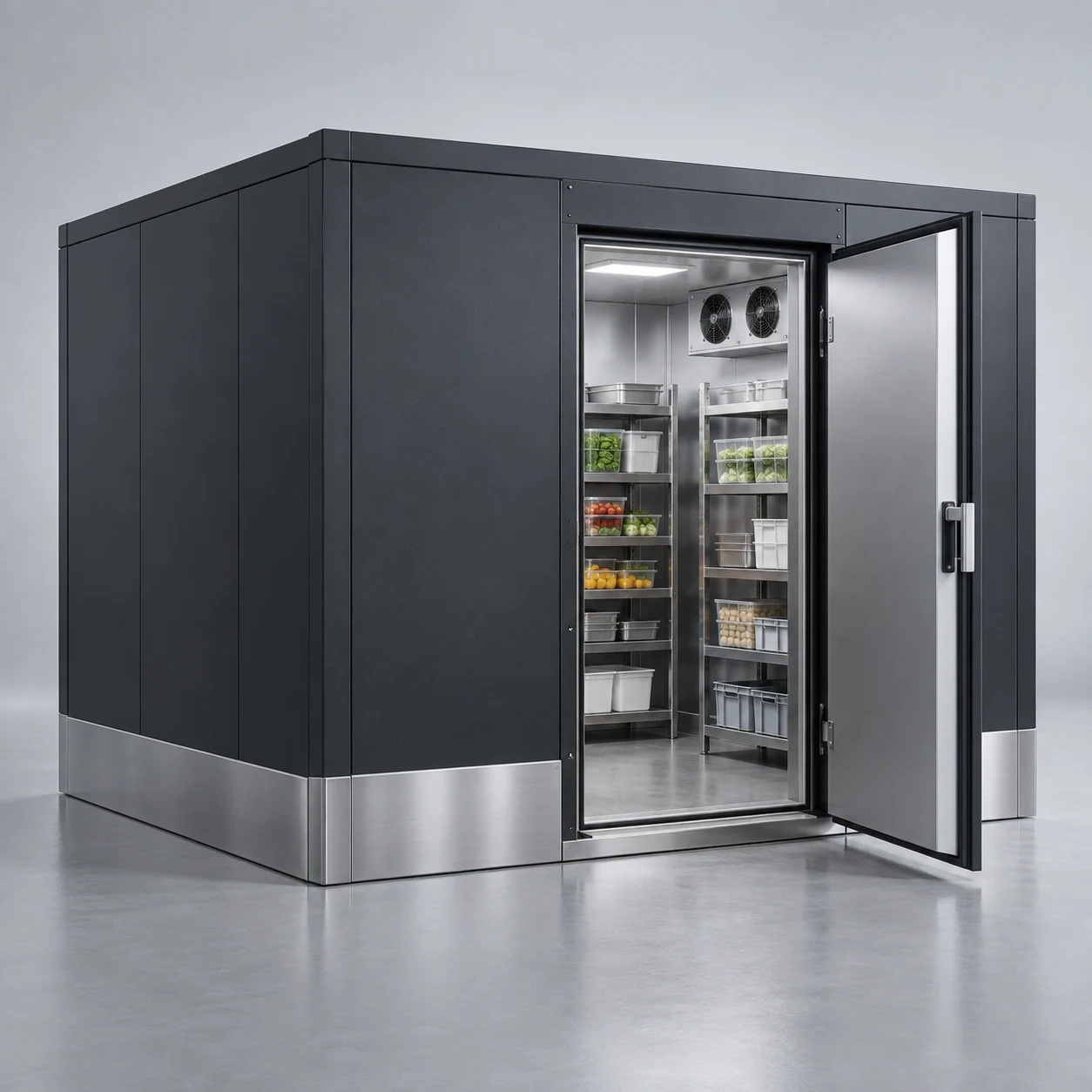
Cold rooms
A modular storage concept planned around goods, movement and site conditions.