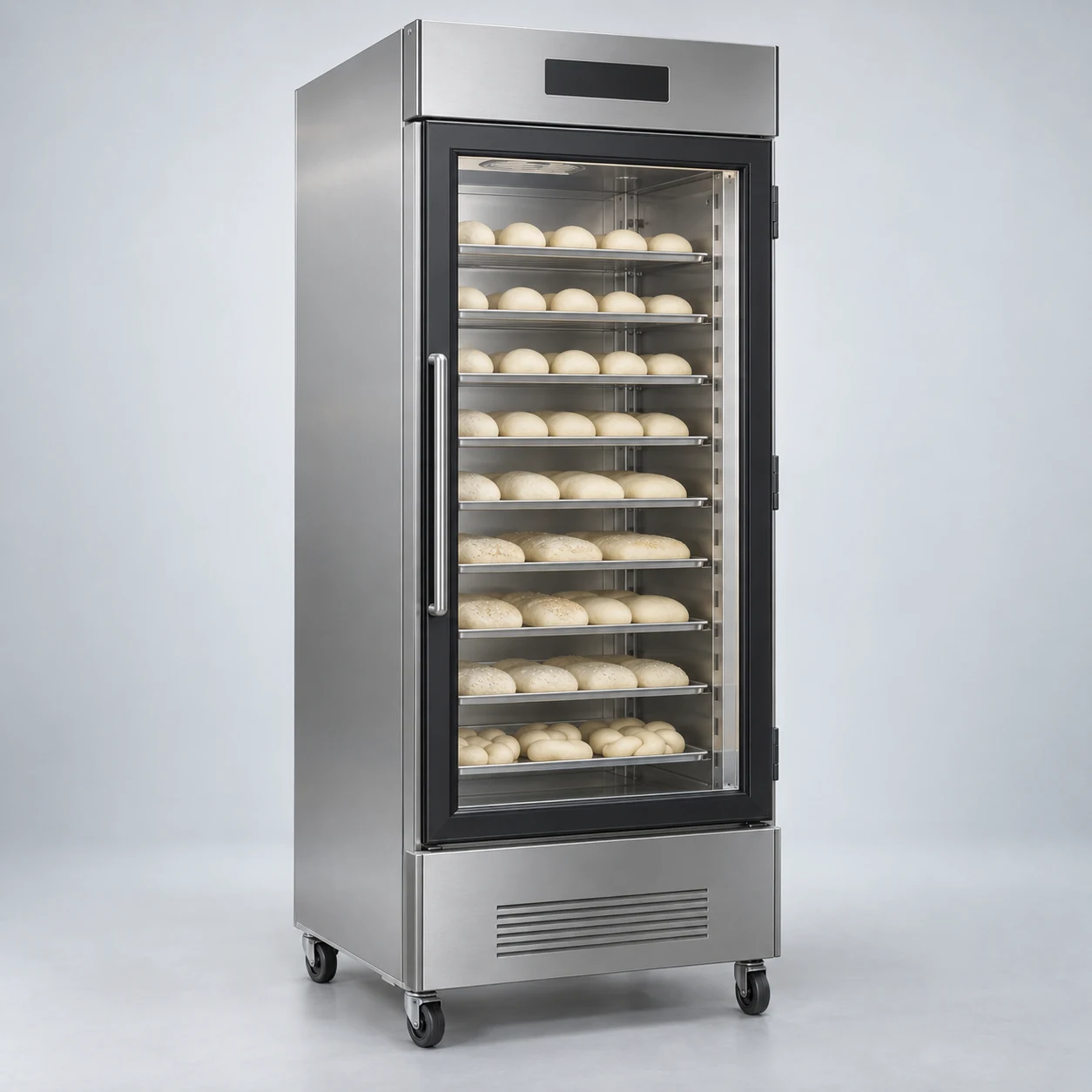
When the proofing box is delivered to the store, how should the configuration be verified and delivery completed?
The delivery of the proofing box should start preparation from the order confirmation stage, rather than waiting for the transport vehicle to arrive at the store before temporary inspection. The baking studio wants to clearly define the actual conditions involved in dough turnover and equipment scheduling. This needs to be written clearly along with the equipment purpose, configuration, and installation arrangements. Agreement between both parties on the same list helps to verify the appearance, accessories, installation, and usage training separately.
Use the store's actual baking trays to check rack placement, doors, and handling actions, ensuring control functions match the instructions If a cart needs to enter, the shape and trajectory of the cart should be included in the confirmation scope. It is recommended to distinguish in the list between the cabinet or main unit itself, accompanying accessories, items that require on-site preparation, and additional services agreed upon separately. For items not specified, raise questions first and obtain confirmation; do not assume based on items shown in photos that they must be included in the supply scope.
Check the access route, door openings and corners, handling arrangements, and proposed installation locations before delivery. Draw out the transfer paths for mixing dough, cutting, shaping, proofing, and subsequent baking, and check if cart docking and door opening interfere with other operations The equipment should be integrated into the scheduling system, rather than becoming a temporary storage location for items. If the on-site condition differs from the initially provided drawings, communicate the handling method before installation to avoid discovering that moving parts are unusable or supporting conditions are not completed after the equipment is placed.
Assuming two types of baking trays are used simultaneously in the bakery store, equipment with the same nominal tray count may have different compatibility requirements. It is necessary to confirm each item based on the actual tray type and planned process, rather than directly equating the number of layers with the ability to handle batches. Therefore, inspection is not only about checking if the surface is intact, but also about verifying key components and operating conditions in relation to the agreed purpose. Prepare representative containers or packaging around the baking tray, dough turnover batches, trolleys, and batch labels for inspection of the placement relationship within the permitted demonstration range; Sections requiring professional debugging should follow the supplier's procedures and not be performed independently.
At the end of the handover, all instructions, configuration lists, and agreed service contact details matching the model must be collected, along with the responsible person and subsequent arrangements for unresolved issues. A large number of slots doesn’t automatically mean reasonable scheduling; Handling small batches multiple times and larger batches in a concentrated manner require different requirements for on-site organization. Keep copies of delivery photos and documents for future reference during maintenance. If discrepancies are found in quantity, appearance, or configuration, record the specific location and communicate promptly; oral descriptions cannot replace written confirmation.