When purchasing a soup-making stove, how is the configuration verified and delivery completed?
The delivery of the soup-making stove should begin from the order confirmation stage, rather than waiting for the transport vehicle to arrive at the store before final inspection. For restaurants preparing independent soup supply stations, the actual conditions involved need to be clearly specified together with the equipment purpose, configuration, and installation arrangements. Agreement between both parties on the same list helps to verify the appearance, accessories, installation, and usage training separately.
Check the energy form, installation compatibility, container matching, and training content to determine which accessories fall within the supply scope. The delivery demonstration should cover both normal operations and scenarios requiring contact with service personnel. It is recommended to distinguish in the list between the cabinet or main unit itself, accompanying accessories, items that require on-site preparation, and additional services agreed upon separately. For items not specified, raise questions first and obtain confirmation; do not assume based on items shown in photos that they must be included in the supply scope.
Check the access route, door openings and corners, handling arrangements, and proposed installation locations before delivery. Draw up an action sequence from ingredient preparation, container placement to service handover, and separate the positions where service staff stay from the equipment operation positions. The surrounding environment and safety distances are determined by professionals based on equipment documentation. If the on-site condition differs from the initially provided drawings, communicate the handling method before installation to avoid discovering that moving parts are unusable or supporting conditions are not completed after the equipment is placed.
If the restaurant uses two different-shaped soup bowls for soup service, even if the quantities are the same, it does not mean the usage method of the equipment is the same. The actual containers should be checked during placement, removal, and delivery processes to ensure the suitability of the equipment for the containers is clearly stated. Therefore, inspection is not only about checking if the surface is intact, but also about verifying key components and operating conditions in relation to the agreed purpose. Prepare representative containers or packaging for soup bowls, pots, ingredient containers, and service utensils within the allowed demonstration range, and check the placement and removal relationships; Sections requiring professional debugging should follow the supplier's procedures and not be performed independently.
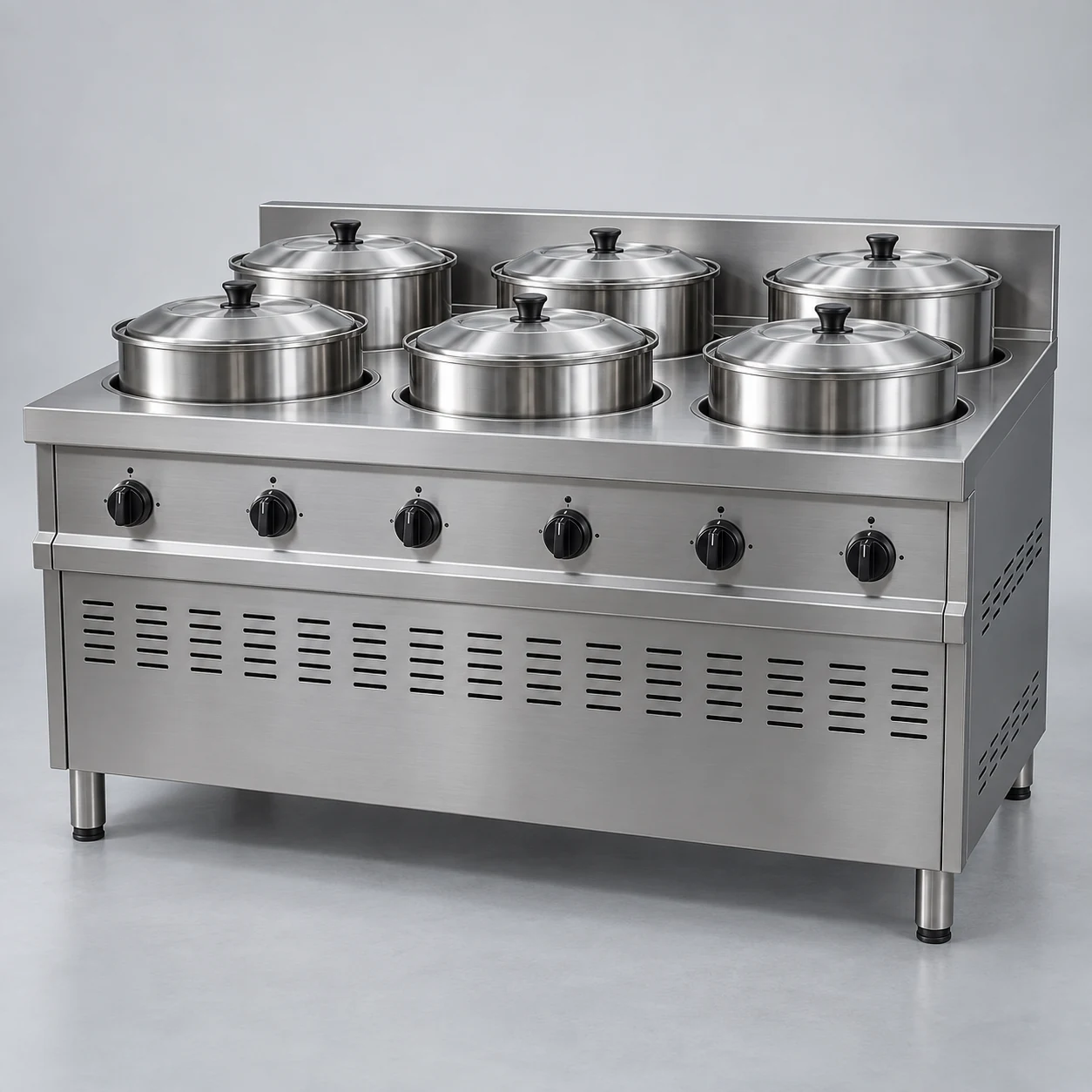
At the end of the handover, all instructions, configuration lists, and agreed service contact details matching the model must be collected, along with the responsible person and subsequent arrangements for unresolved issues. A large number of holes does not mean a smoother process; If the production window and container turnover are not properly arranged, waiting will still occur between the equipment and service. Keep copies of delivery photos and documents for future reference during maintenance. If discrepancies are found in quantity, appearance, or configuration, record the specific location and communicate promptly; oral descriptions cannot replace written confirmation.
Related products
 Catering equipment
Soup simmering stoves
A soup preparation concept with heat source and stations configured to requirements.