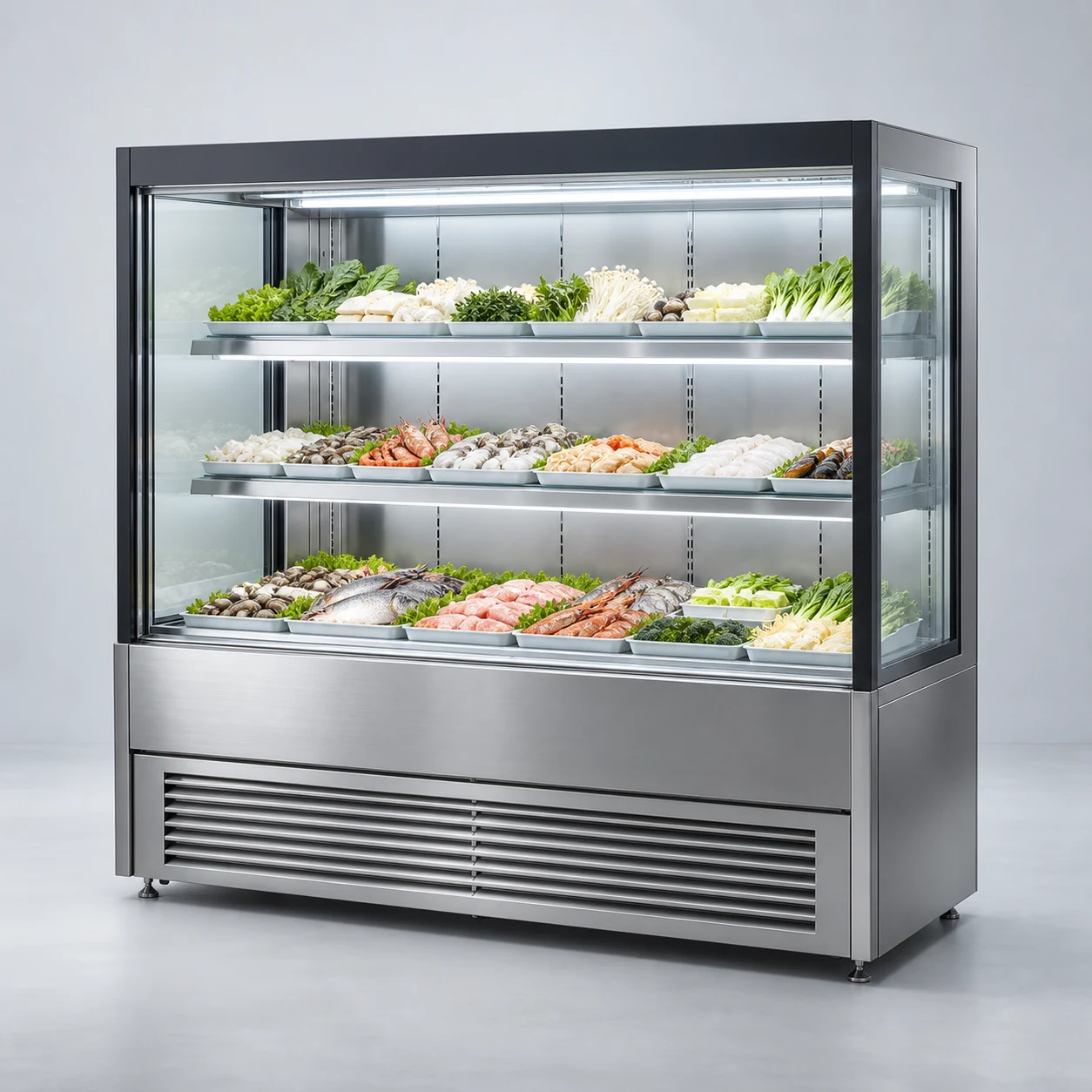
Catering equipment
Menu display cabinets
Display ingredients clearly to support menu selection and restaurant service.
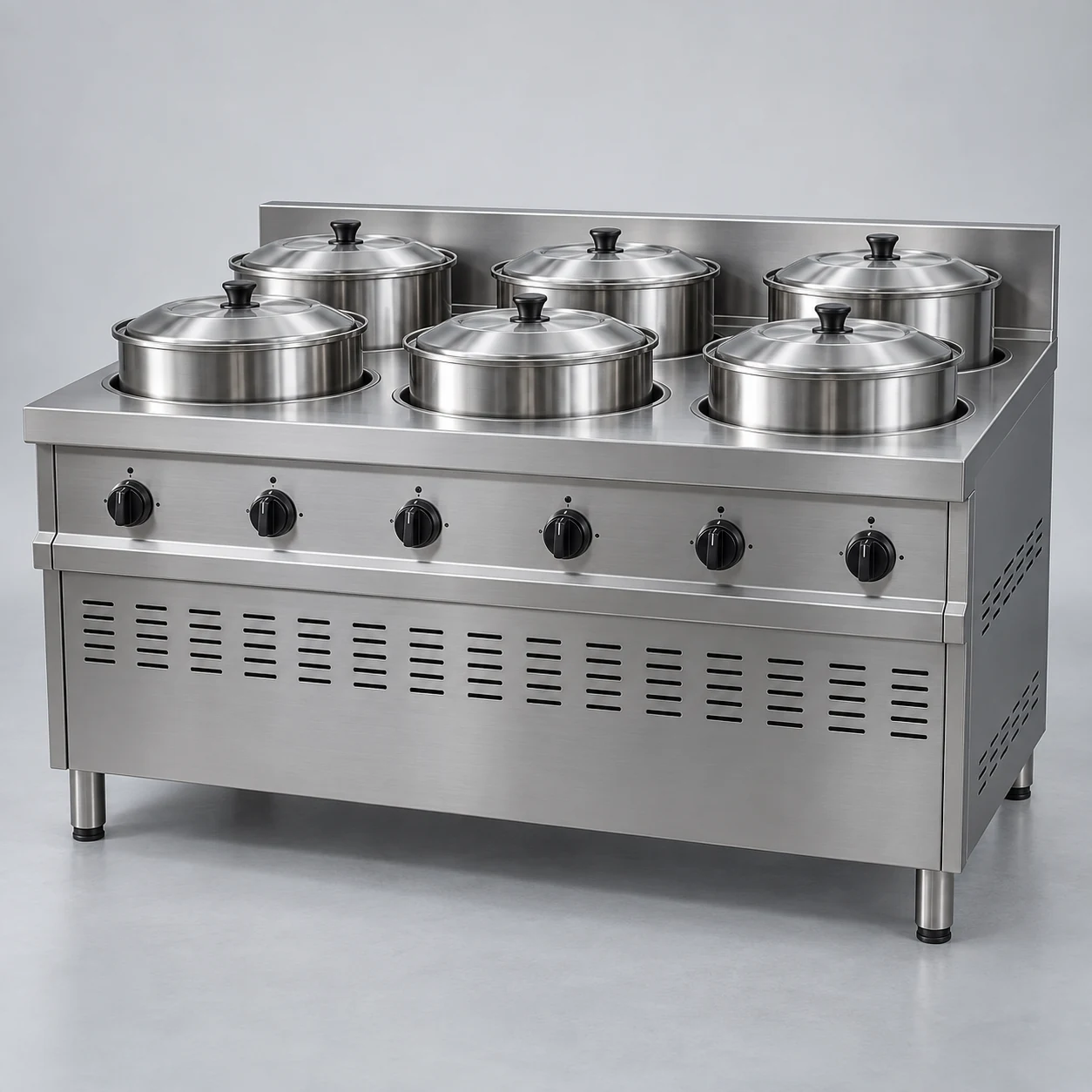
A soup preparation concept with heat source and stations configured to requirements.
Choose equipment around the goods you store, the way you display them and the space available.
A soup preparation concept with heat source and stations configured to requirements.
Catering equipment environments
Display ingredients clearly to support menu selection and restaurant service.
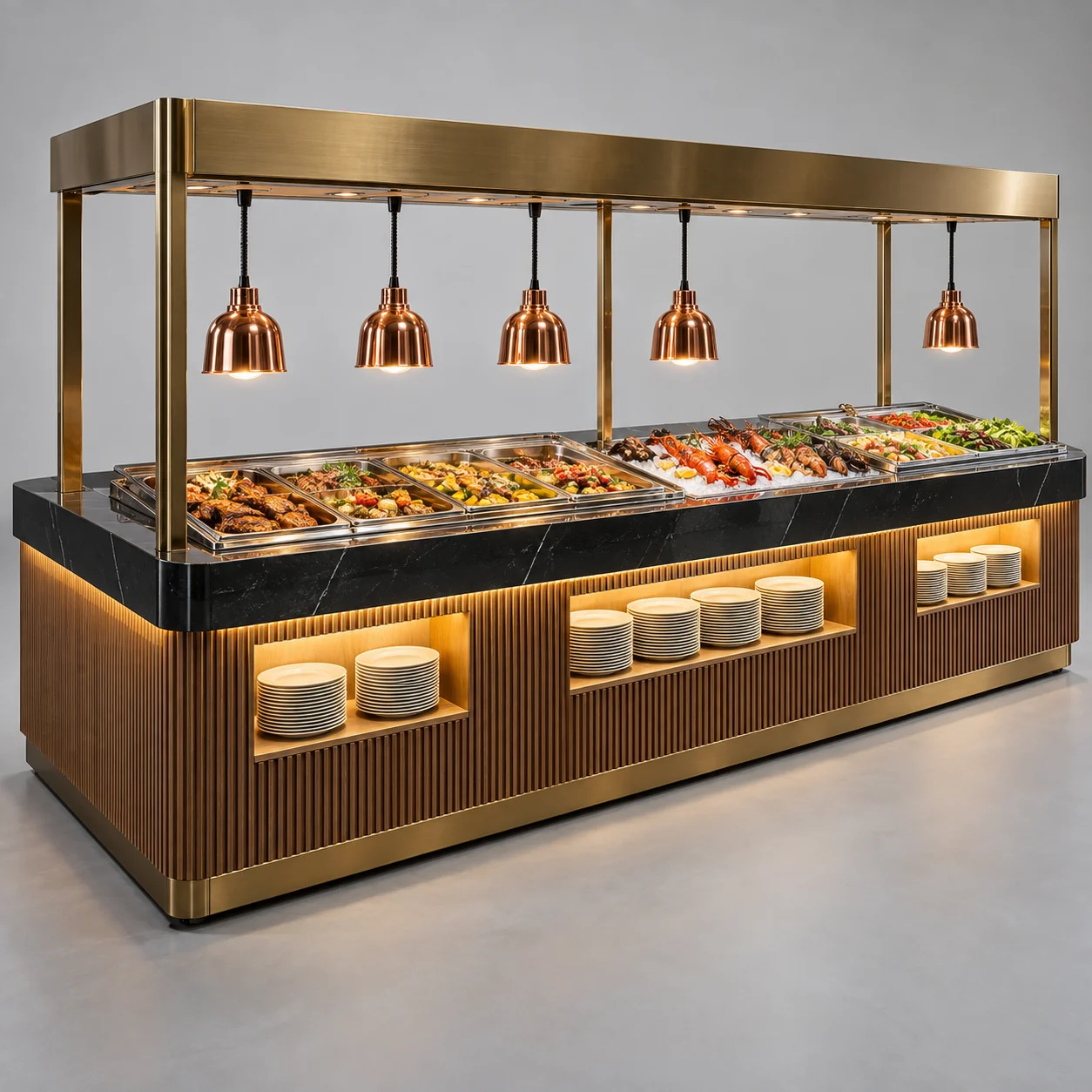
A commercial buffet counter combines plate storage, serving surfaces and an overhead lamp framework.
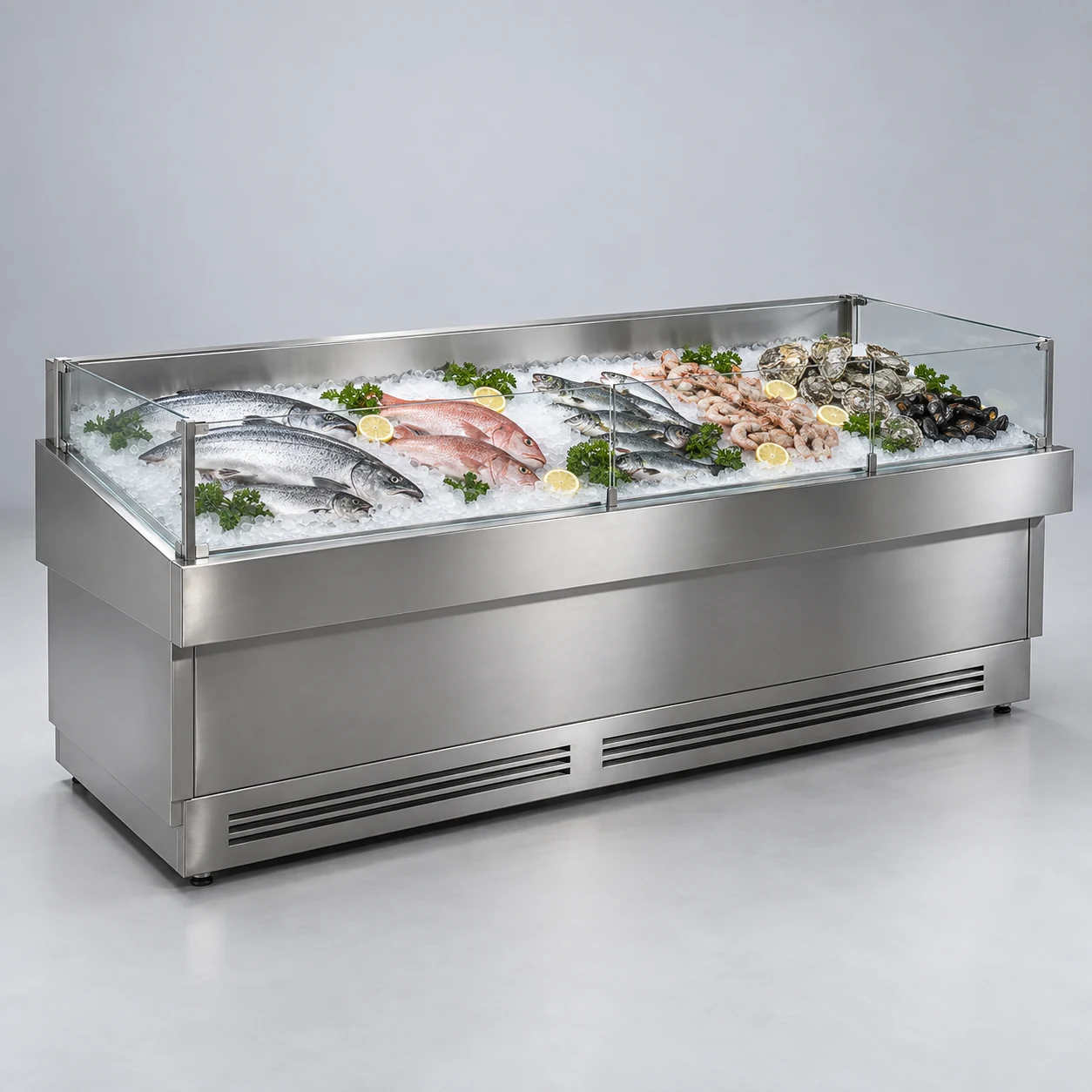
An open ice bed highlights the colour and texture of fresh seafood.
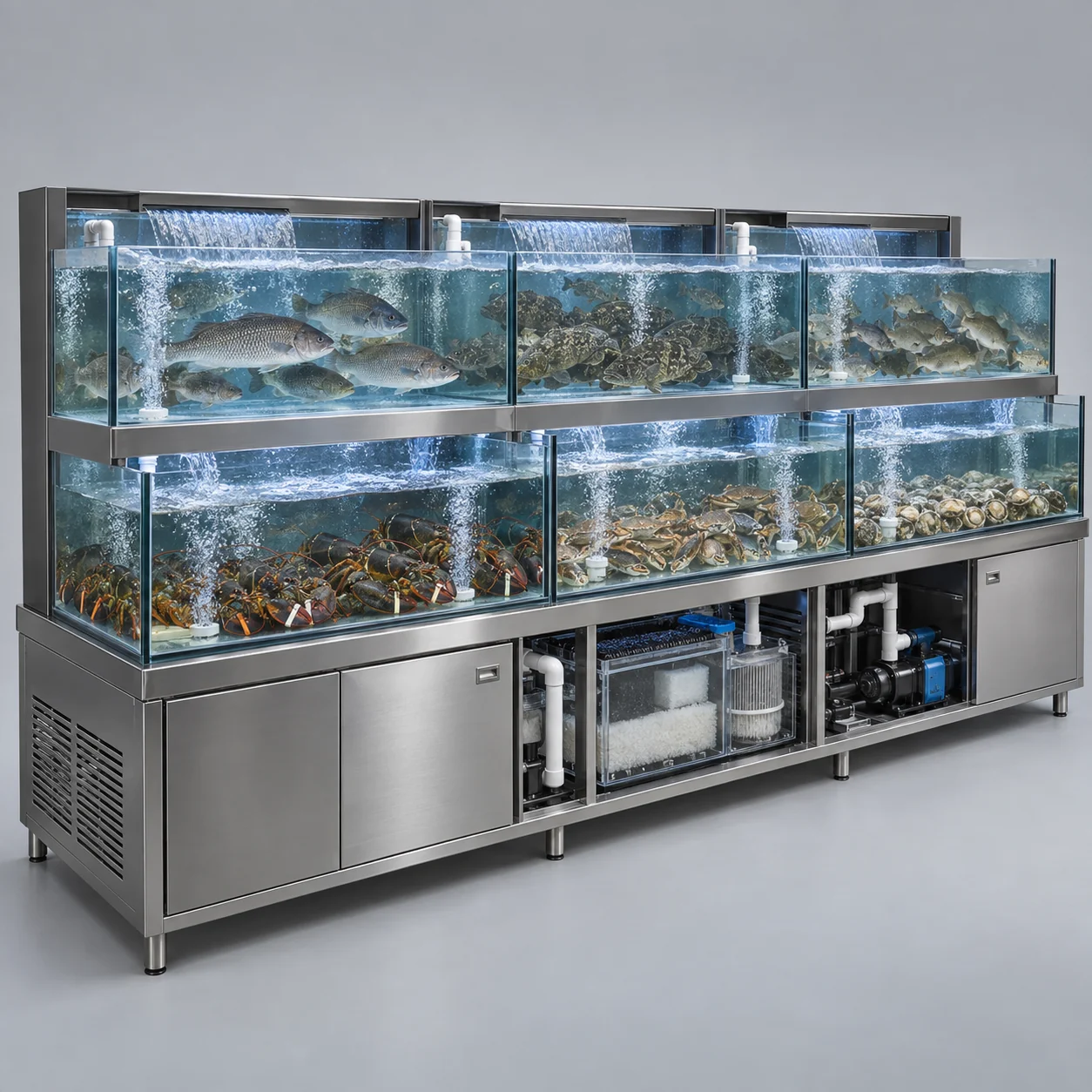
Commercial live seafood tanks for restaurants and supermarkets, with separate compartments for edible fish and shellfish.
When selecting a stewing stove, first clarify the business objectives, then compare the equipment’s appearance and configuration. For example, when a restaurant prepares an independent soup service station, the first thing to organize is not how many units to purchase, but how the soup bowls, pots, ingredients containers, and service items should be stored, displayed, and circulated. The form of goods, personnel actions, and equipment functions are interconnected; only by clarifying these conditions clearly can there be a basis for comparison in subsequent plans.
Read more ↗The layout of the soup cooking stove needs to consider both the customer side and the work side, not just placing the equipment in the floor plan as if it’s done. When a restaurant sets up an independent soup service station, actions such as viewing, taking, replenishing, and cleaning often occur around the equipment. The focus of the planning is to ensure these actions can be seamlessly connected in the same space, rather than simply aiming for neat equipment arrangement.
Read more ↗The daily management of the soup cooking stove should focus on equipment status, product display, and personnel handover to establish stable records. In scenarios like setting up an independent soup service station, it is often difficult to reconstruct the process when information is only found after obvious issues occur. The purpose of recording is to let the next shift and service staff know what happened, rather than adding unnecessary forms.
Read more ↗Clarify the tasks involved in soup preparation or service, and then verify the appropriate use of the equipment and containers. A large number of holes does not mean a smoother process; If the production window and container turnover are not properly arranged, waiting will still occur between the equipment and service.
Read article ↗Draw up an action sequence from ingredient preparation, container placement to service handover, and separate the positions where service staff stay from the equipment operation positions. A large number of holes does not mean a smoother process; If the production window and container turnover are not properly arranged, waiting will still occur between the equipment and service.
Read article ↗Record the use of containers, production rhythm, and cleaning handover during shifts, and stop using incompatible containers promptly and consult accordingly. A large number of holes does not mean a smoother process; If the production window and container turnover are not properly arranged, waiting will still occur between the equipment and service.
Read article ↗Check the energy form, installation compatibility, container matching, and training content to determine which accessories fall within the supply scope. A large number of holes does not mean a smoother process; If the production window and container turnover are not properly arranged, waiting will still occur between the equipment and service.
Read article ↗Leave your contact details and requirements. We will get in touch.