Dough Mixer Recipe Changeovers: A Practical Trial and Review Checklist
Plan a dough mixer recipe changeover with clear ingredient weights, comparable trial batches and a written review. This guide covers commercial mixer trials, batch loading, recipe changes and procurement checks without assuming model-specific settings.
Define the question before starting
Before adding a bread line or changing a dough recipe, separate the process question from the equipment question. Are batches too large, changeovers too slow, or downstream handling poorly coordinated? Set one clear objective. Changing ingredients, loading and operators together makes results difficult to interpret.
A useful commercial mixer trial records the recipe version, weighing basis, actual loading, approved operating procedure and the person reviewing the dough. Keep trials within the instructions and supplier-confirmed operating range; do not use repeated increases in loading to find the machine’s limit.
Separate flour weight, total dough weight and recipe version
Agree what batch loading means. Flour weight, total ingredient weight and bowl volume are different measurements. List flour, water and other ingredients separately, describe their condition, and ask the supplier to confirm suitability for the exact model. A website image cannot replace a capacity chart or written confirmation.
Give each recipe a version number and retain earlier versions. For a recordkeeping example, an original formula can be version A and its revision version B, with actual measured weights on both sheets. Vague notes such as “a little more water” make later comparisons unreliable.
Use comparable trials rather than a single demonstration
Keep a stable existing process as a baseline, then test the revised recipe. Use the same machine, approved accessories and weighing method where practical, and identify the variable being changed. Follow the exact machine manual and training for speeds, timing, loading order and work cycles rather than copying another model’s settings.
Record planned and actual start times, waiting points and handover to the next operation. This helps distinguish weighing delays from machine occupancy or transfer delays. The aim is a repeatable process, not merely a video of one successful run.
Review the downstream process as well as the mixed dough
Ask the people responsible for the next production stage to review the trial. Record the method and tool for measured checks, and identify the reviewer for visual or handling observations. A single subjective result is not an equipment guarantee across every recipe.
When batches differ, check weighing, ingredient batches, recipe versions and operating records before planning another trial. Follow the manual if there is unusual noise, vibration or a guard problem, and contact the supplier. Never remove guards, bypass interlocks or reach into a running bowl. Follow the model’s shutdown and isolation requirements before cleaning or inspection.
Turn trial results into usable procurement and handover records
For procurement, retain the confirmed model and accessories, approved recipe and batch range, reviewed trial record and outstanding supplier questions. A quote listing only one mixer leaves room for misunderstandings about site conditions, training and service. Keep loading information together with the recipe it applies to.
A second trained operator can review whether the agreed instructions and form are clear. This checks handover quality; it does not invite untrained operation. Mark superseded process versions as inactive while keeping them on file.
Common questions before confirming a change
Does a small ingredient change need a record? Retain the revision and actual batch details; ask the supplier first if the change may affect suitability or the operating procedure. Can equal bowl volume justify reusing an old loading table? No: check the exact model, recipe and capacity documentation.
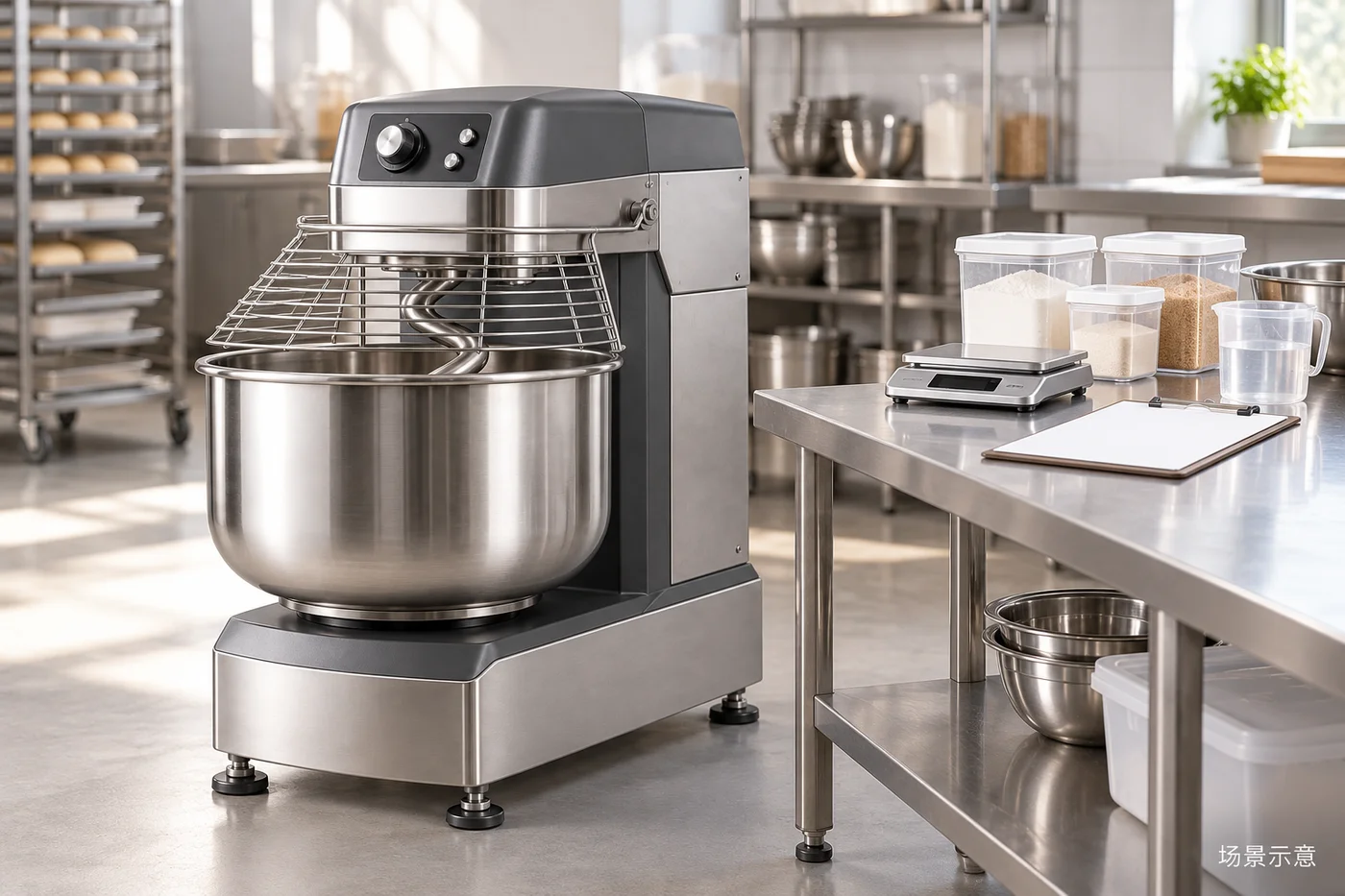
A successful trial should still be considered alongside site conditions, cleaning, accessories, training and service. When contacting BAONIER, provide the recipe type, planned batch loading, daily batches and site photographs. This guide helps organize requirements and does not replace the model’s operating instructions. The image is a conceptual illustration; the agreed specification governs the supply.
Products and requirements
Dough mixer product information · Food machinery category · Discuss equipment requirements