Recording Slicer Yield: Separate Input Material, Usable Slices and Offcuts
Record input material, usable slices and offcuts separately. Define the basis of yield and processing costs before comparing batches, rather than relying only on the final tray weight.
Define where the measurement starts
Results differ when one person weighs after unpacking and another weighs after trimming. Define whether the record covers the entire preparation process or only slicing. Record packaging removal, trimming and slicing separately so differences can be traced to the relevant stage instead of being assigned entirely to the machine.
Record the material, batch identifier, weighing time, unit and intended use. Deduct container weight consistently; different bowls should not be assumed to weigh the same. Arrange measurement around the actual workflow and equipment instructions, without interrupting an operation merely to collect another number.
Define usable slices and offcuts
Usable yield must relate to a defined purpose. Intact presentation slices and fragments intended for another dish can be recorded separately rather than mixed to improve the reported percentage. Define the shape, completeness and intended use first; when the menu purpose changes, explain how the acceptance basis changed.
Offcuts are not automatically waste. Separate material intended for another planned use, material awaiting assessment and material actually discarded. A weight record does not authorize further food use; responsible shop personnel must assess the actual conditions. Keep recording materials clear of feeding, collection and working areas.
Use a mass balance to find missing entries
Compare input weight with usable slices, classified offcuts and other recorded destinations within the same stage. If the difference is substantial, check for an omitted tray, a duplicated tare deduction or mixed batches. A single unexplained difference does not establish a machine fault or an operator error.
Calculate slicing yield as usable slice weight divided by the input weight for the same stage, expressed as a percentage. If total batch utilization is also tracked, give it a separate name and define its numerator and denominator. Inconsistent calculations cannot support comparisons or claims of guaranteed savings.
Keep the destination of offcuts visible in costs
Start processing-cost records with actual purchasing and material-issue information, connecting the cost entering the stage with usable output. If offcuts move to another use, retain the transferred quantity and the internal valuation method. Avoid charging the same material twice or treating transferred material as cost-free.
Show labour, consumables and equipment-related costs separately where appropriate, using an explainable allocation method. For shared equipment, discuss allocation against existing work-time or task records instead of inventing long-term costs from one observation. Reliable direct records are more useful than a complex but unsustainable spreadsheet.
Investigate batch differences one at a time
Before comparing results, check material specifications, preparation state, slice requirements and measurement scope. Presentation orders and preparation tasks that accept fragments should not share a simplistic ranking. Keep those conditions beside the cost data and explain exceptions rather than retaining only a potentially misleading average.
For supplier enquiries, provide the model, task and specific observed differences so the supplier can determine the assessment scope. Do not dismantle equipment, bypass protection or change unconfirmed settings to test a guess. This guide concerns records and costing, not repair procedures, material suitability or guaranteed yield.
Common recording questions
Preparation and use questions
Must every task be recorded on the first day? Start with one clearly bounded task and verify containers, units and destinations before expanding. Should an unexplained difference automatically be called loss? Keep it pending until the recording gap is investigated, rather than presenting an estimate as a confirmed fact.
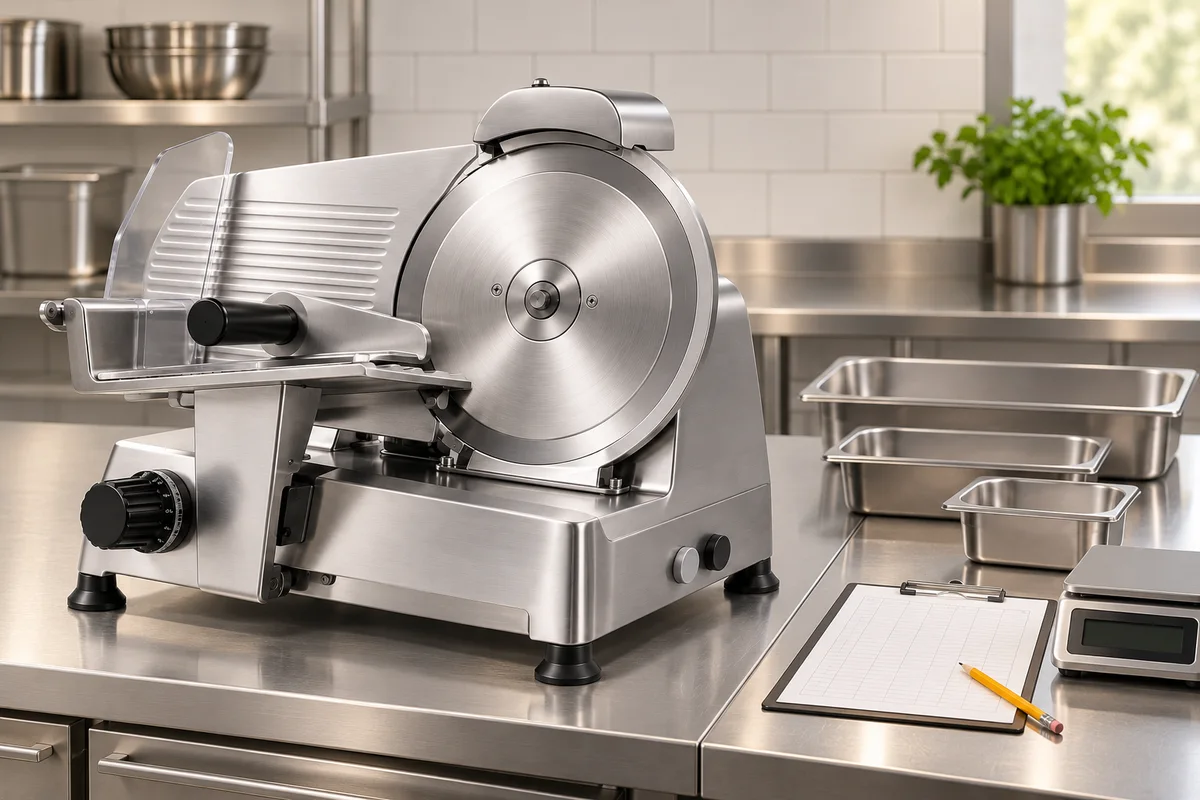
Is a yield percentage enough for an enquiry? Include the measurement scope, material background, slice requirements and classification method. Use the public BAONIER slicer and food-machinery pages to frame product questions. The generated cover illustrates record planning; it does not show a real processing trial or establish performance.
Related products and enquiries
Slicer product information · Food machinery category · Discuss slicing requirements