Estimating Dough Mixer Scheduling Time: Record Weighing, Processing and Transfer Separately
Separate preparation, waiting, machine occupancy and transfer when recording mixer batches. Use comparable observations to plan production rather than treating one processing interval as total shift capacity.
Define the interval before measuring
Multiplying one processing interval by the number of batches overlooks preparation, waiting, transfer and checks. Define consistent start and end points before comparing timing records; waiting is not necessarily machine operation.
Possible milestones include preparation start, ingredients ready, machine occupancy start, processing finish and transfer completion. Adapt names to the actual process. Follow applicable instructions and trained personnel for recipes, operation and cleaning; this guide supplies no processing settings or shortcuts.
Separate machine occupancy from staff time
Preparation for one batch may overlap processing of another, while container work may continue after dough leaves the machine. Record staff involvement and machine occupancy separately; neither add them automatically nor assume overlap is always possible.
Use batch rows with observed waiting reasons, such as ingredients not ready or the receiving position unavailable. Record task handoffs when several people participate, without double-counting one interval as available labor.
Check batch context before comparing
Recipe version, planned quantity, ingredient readiness and receiving arrangements may differ even when both entries say one batch. Keep context beside timings, including the machine and operating conditions; another shop’s schedule is not directly transferable.
Flag inserted orders, rework and changes separately. With few observations, retain uncertainty rather than promising the shortest observed completion time. One smooth batch does not establish sustained or rated capacity.
Identify where a handoff causes waiting
Examine preparation before mixing and receiving after it. Ingredient waiting and downstream waiting are different coordination issues. Machine idleness and busy staff can coexist, so machine motion alone does not explain the workflow.
Change one clear coordination point and compare observations using the same definitions. Do not compress required operational, hygiene or quality checks, or infer permissible continuous running time from the scheduling sheet.
Turn observations into a reviewable plan
Distinguish confirmed batches, missing inputs and unresolved intervals. Preserve the earlier plan and reasons for changes so another shift can follow them. An internal schedule is not automatically a customer delivery commitment.
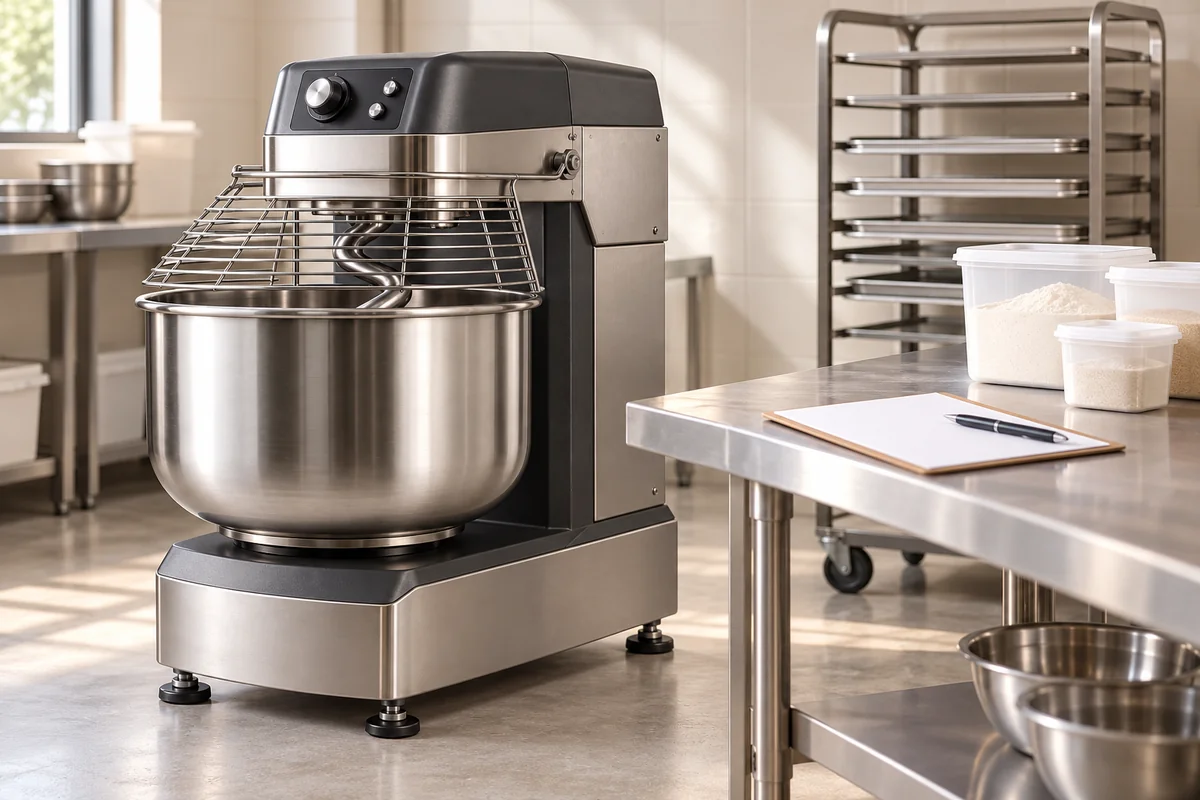
For equipment discussions, prepare product types, batch ranges, observed timings and handoff issues. Unrelated recipes and customer orders need not be shared. The cover illustrates an idle machine and planning materials, not a measured trial or a model’s processing speed.
Common scheduling questions
Practical questions
Can one observation determine a full day’s schedule? First gather context across normal batches instead of filling the day using the shortest interval. Is all staff waiting an equipment problem? Check ingredients, staffing, machine status and receiving conditions before assigning a cause.
Where should handoff records begin? Identify where waiting occurs, what the preceding task has completed and what the next task still needs. Use BAONIER product pages to discuss actual production requirements; suitability and supporting requirements remain subject to confirmed information.
Related products and enquiries
Dough mixer information · Dough mixer category · Discuss batches and site arrangements