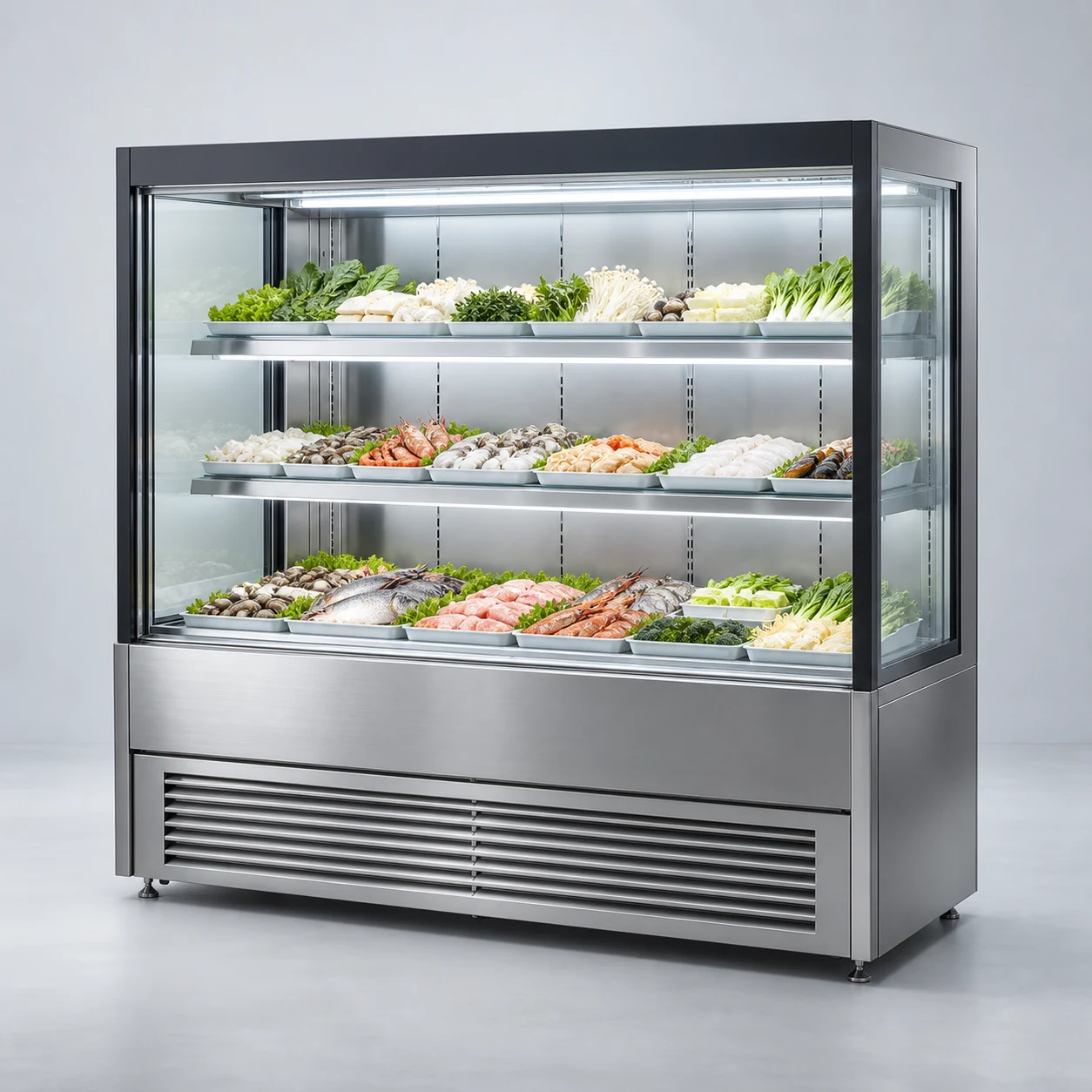
Catering equipment
Menu display cabinets
Display ingredients clearly to support menu selection and restaurant service.
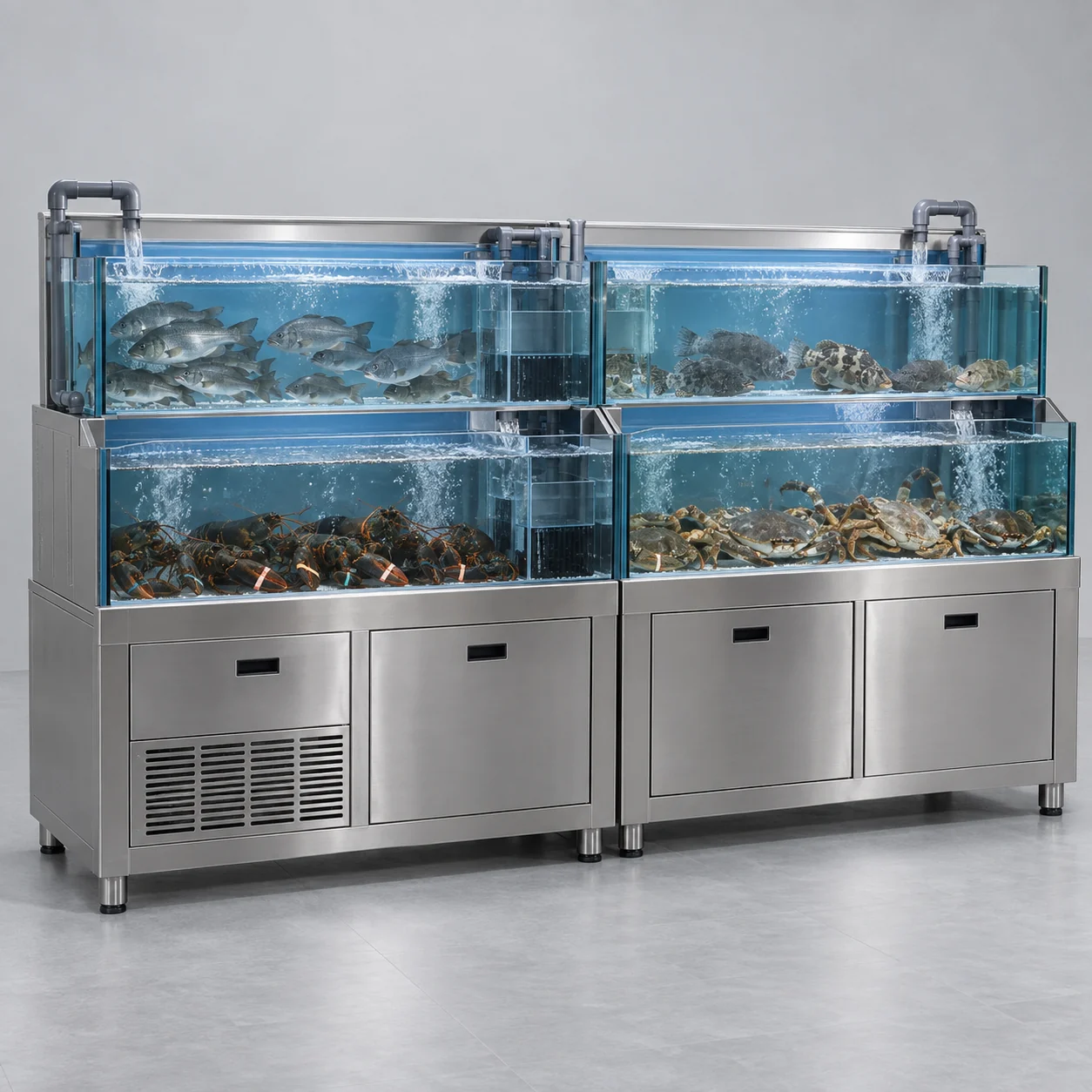
Modular combination for seafood aquariums, arranged around access and everyday work.
Choose equipment around the goods you store, the way you display them and the space available.
Modular combination for seafood aquariums, arranged around access and everyday work.
Compare the working arrangement with real packages, containers and staff movements. Keep display, access and preparation positions clear.
The modular combination arrangement should be considered together with the shop floor plan and adjacent equipment.
Record entrances, fixed structures and service access before confirming the arrangement. Check the complete loading and retrieval movement with representative containers.
Arrange stock, containers and tools by the intended task. Restore clear working positions after replenishment and record changes when the assortment or process is updated.
Follow the selected equipment instructions for operation and cleaning. Review access and accessories whenever the working arrangement changes.
| Item | Description |
|---|---|
| Product | Seafood aquariums — Modular combination |
| Layout | Modular combination |
| Application | Commercial catering equipment settings |
| Configuration | Confirm against selected model documentation |
Display ingredients clearly to support menu selection and restaurant service.
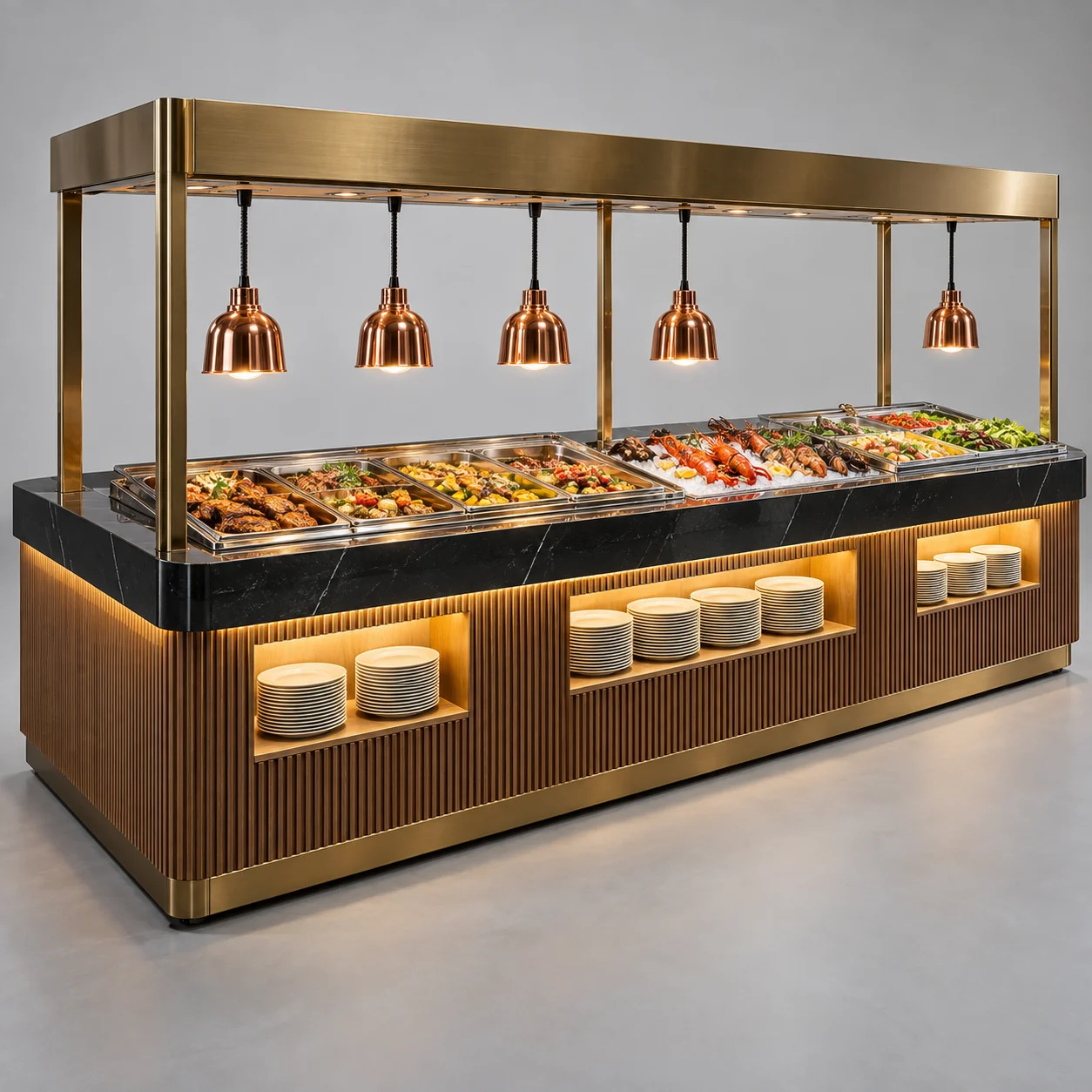
A commercial buffet counter combines plate storage, serving surfaces and an overhead lamp framework.
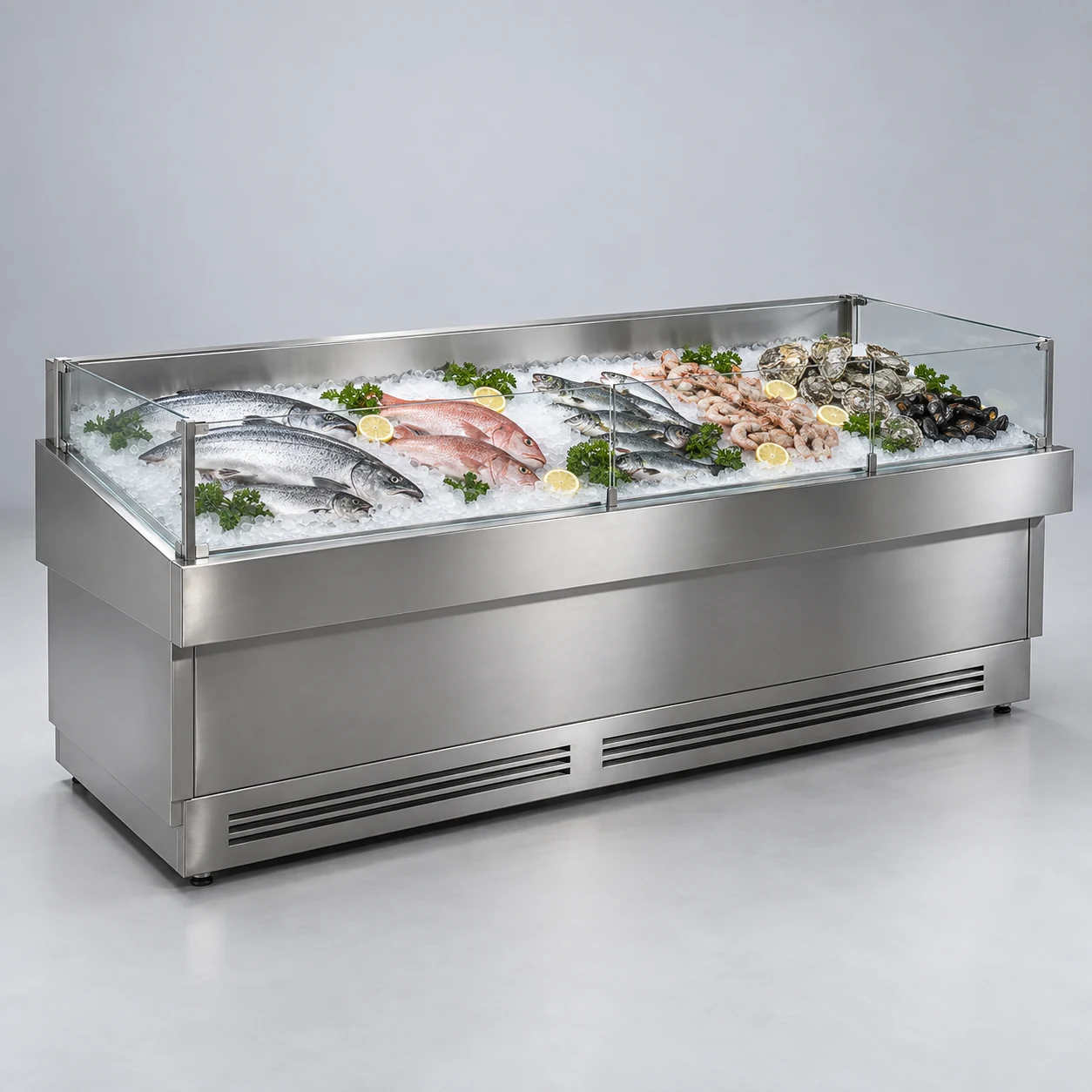
An open ice bed highlights the colour and texture of fresh seafood.
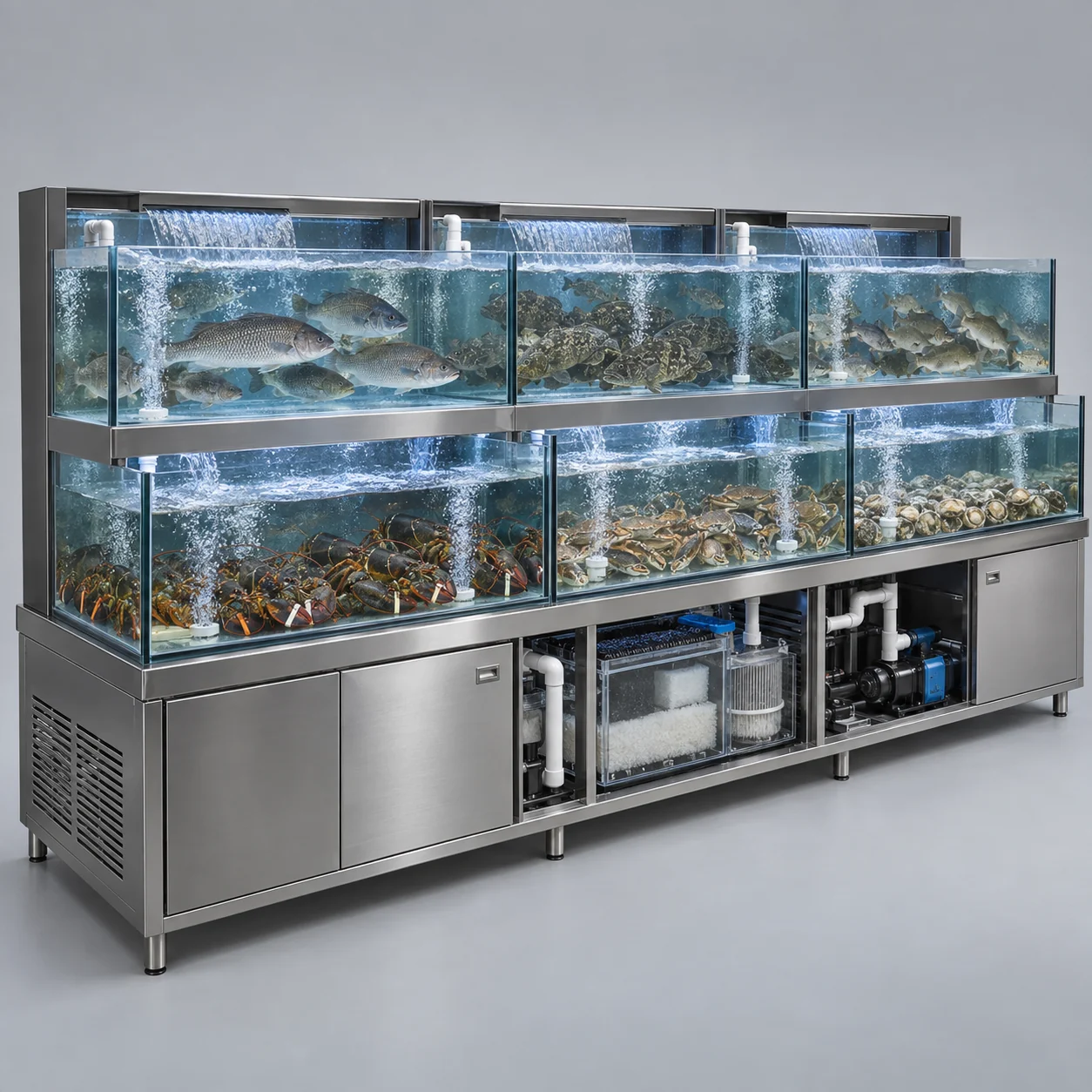
Commercial live seafood tanks for restaurants and supermarkets, with separate compartments for edible fish and shellfish.
When choosing a dining fish tank, it is necessary to first clarify the business objectives, and then compare the appearance and specifications of the equipment. Taking the scenario of a restaurant wanting to reserve an independent area for aquatic product display as an example, what needs to be organized first is not how many units to purchase, but how the areas for aquatic product display, container accessories, labels, and maintenance tools should be stored, displayed, and used during turnover. The form of goods, personnel actions, and equipment functions are interconnected; only by clarifying these conditions clearly can there be a basis for comparison in subsequent plans.
Read more ↗The layout of the dining fish tank should consider both the customer side and the staff side, rather than simply placing the equipment in the floor plan as sufficient. When a restaurant wants to reserve an independent area for aquatic product display, actions such as viewing, picking up, replenishing, and cleaning often occur around the equipment. The focus of the planning is to ensure these actions can be seamlessly connected in the same space, rather than simply aiming for neat equipment arrangement.
Read more ↗The daily management of the dining fish tank should focus on maintaining stable records regarding the equipment's condition, product display, and staff handover. For restaurant outlets that wish to reserve an independent area for aquatic product displays, they usually only search for information when the equipment encounters obvious problems, making it difficult to reconstruct the process of changes. The purpose of recording is to let the next shift and service staff know what happened, rather than adding unnecessary forms.
Read more ↗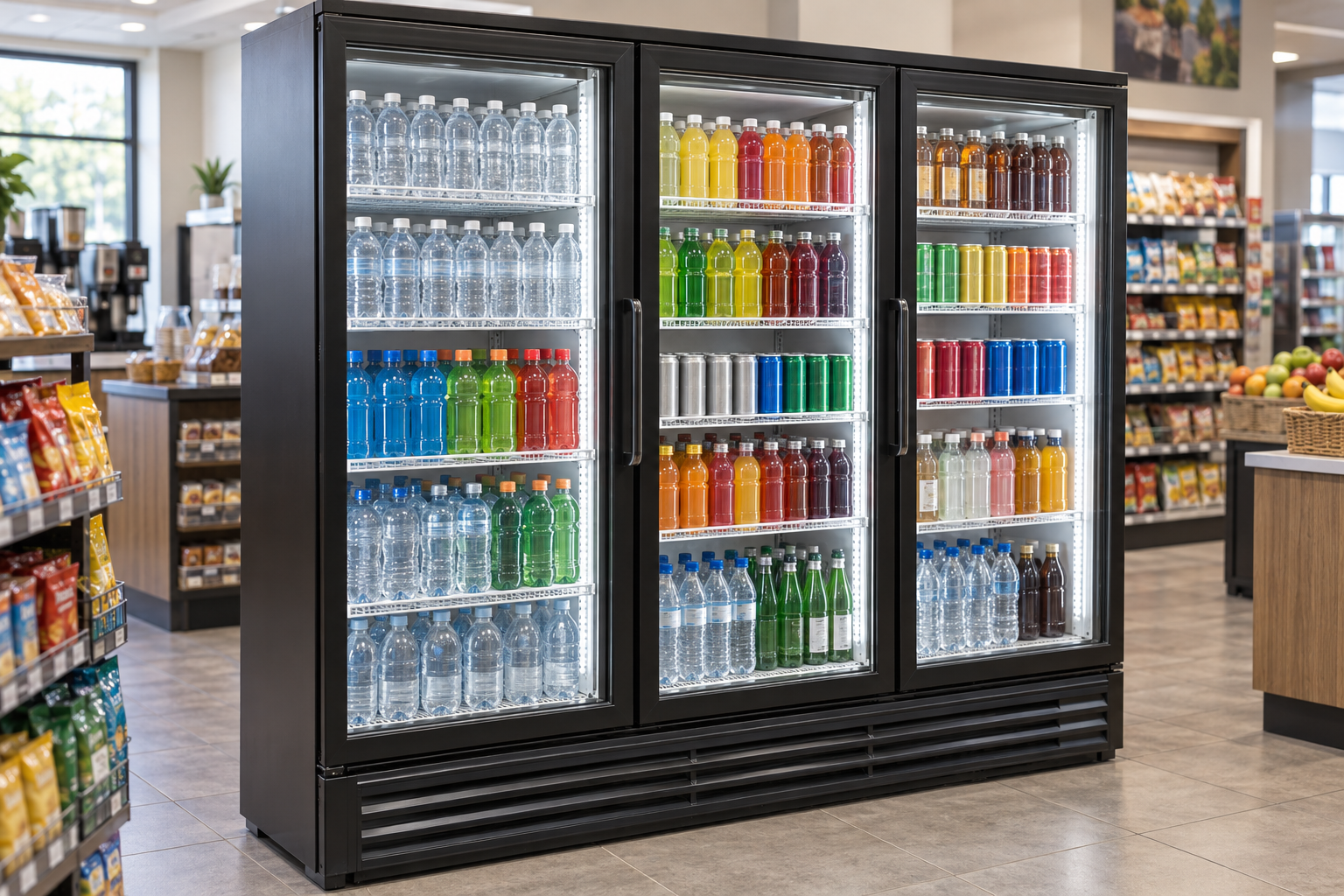
Plan seasonal beverage promotions with packaging checks, trial shelf layouts, aligned labels and a clear return to everyday displays.
Read article ↗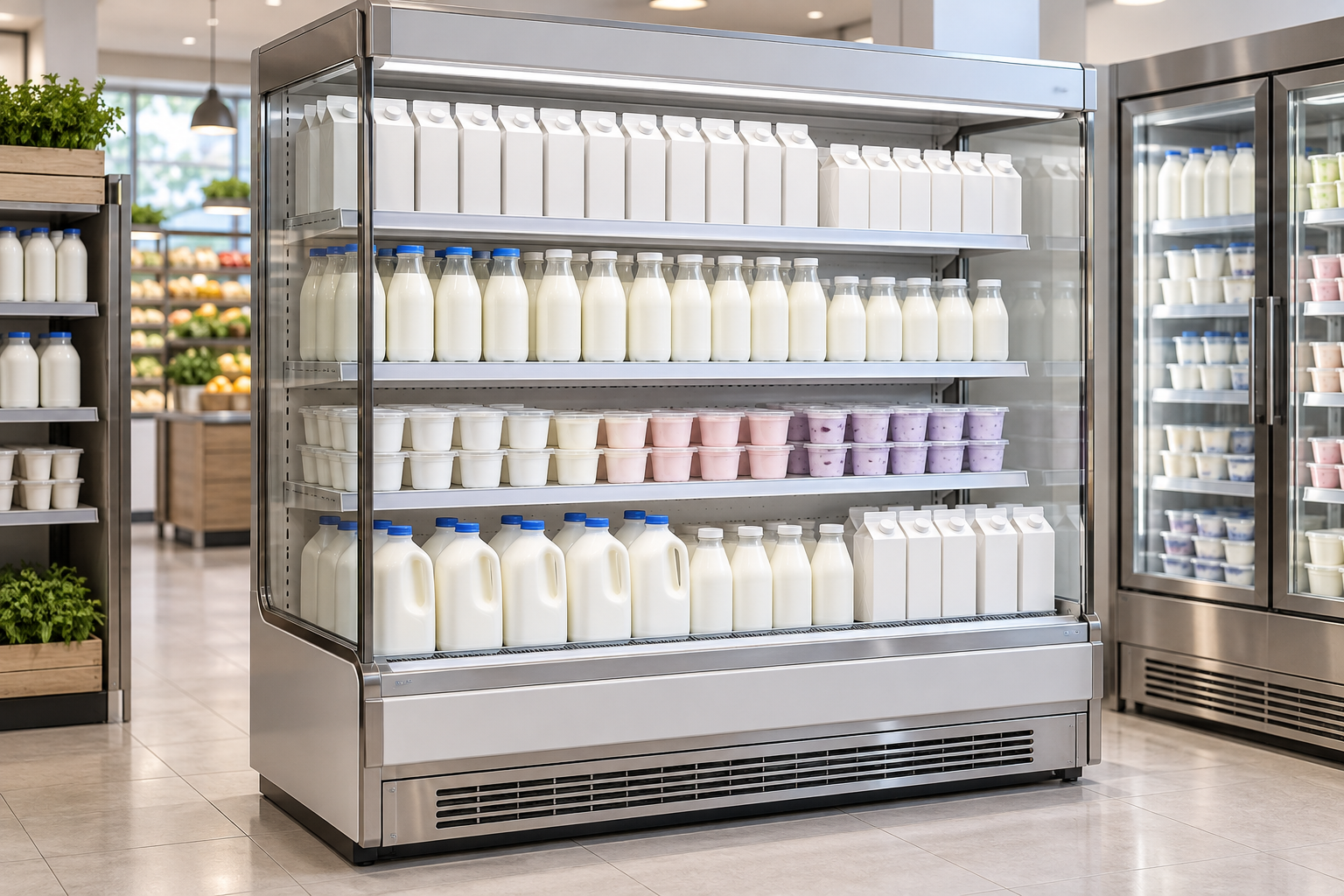
Organize dairy date checks, exception handling and shift handovers with clear product records and model-specific cabinet operating requirements.
Read article ↗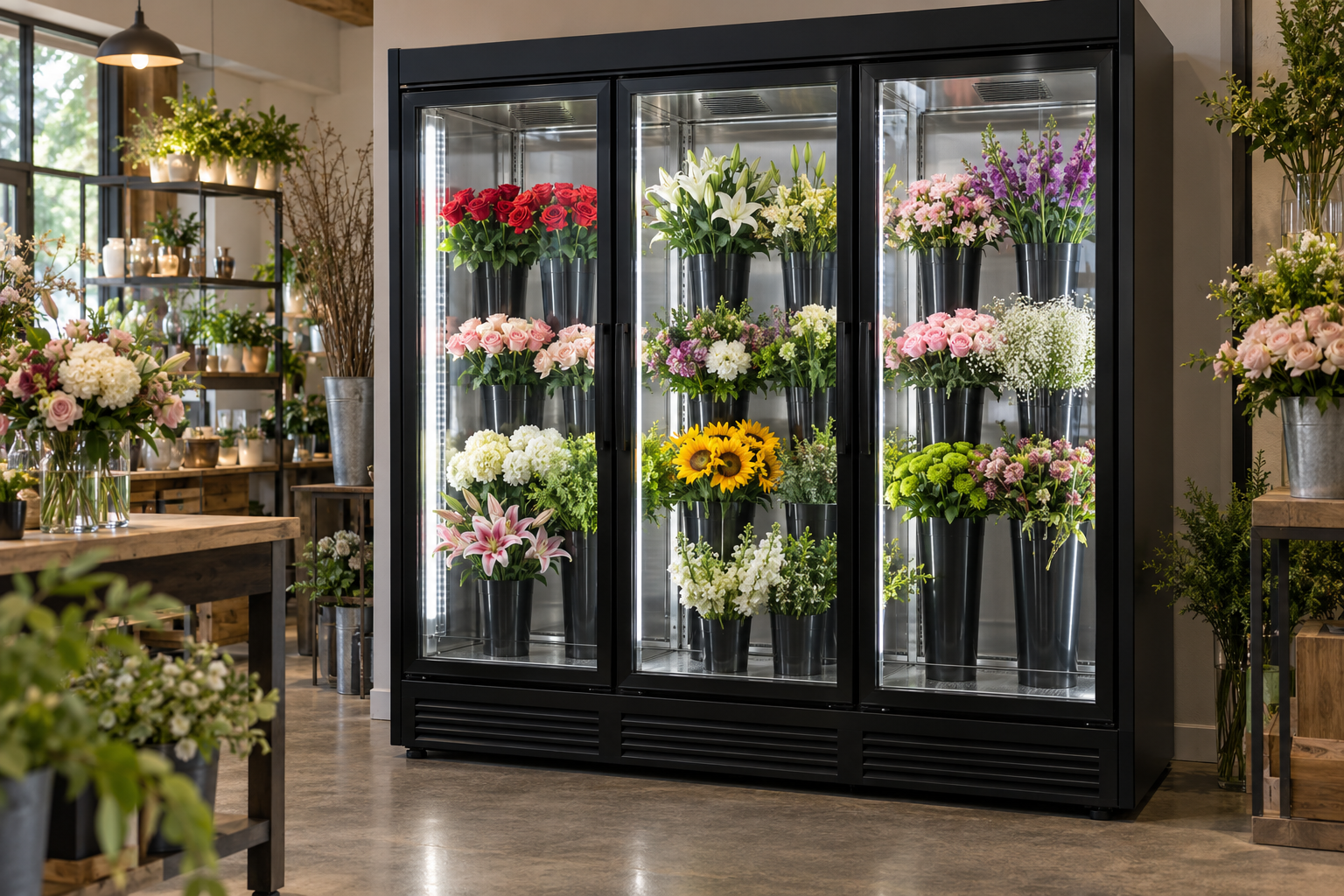
Plan bouquet space, pickup orders, replenishment and handovers around a flower display refrigerator with practical checks for florist workflows.
Read article ↗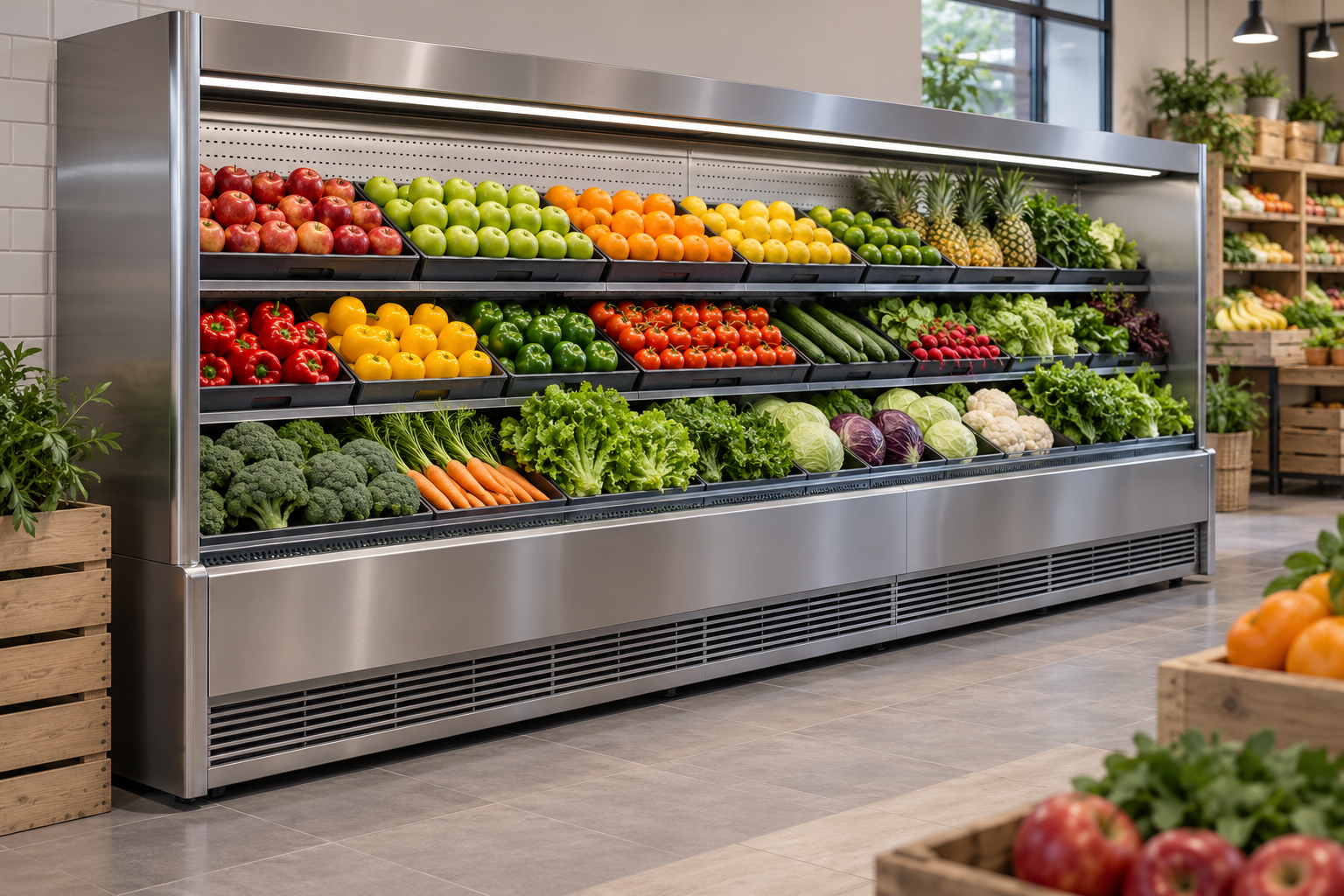
Organize stepped produce displays with practical guidance on containers, replenishment, shelf labels and daily checks for an open refrigerated cabinet.
Read article ↗Leave your contact details and requirements. We will get in touch.