Catering equipment
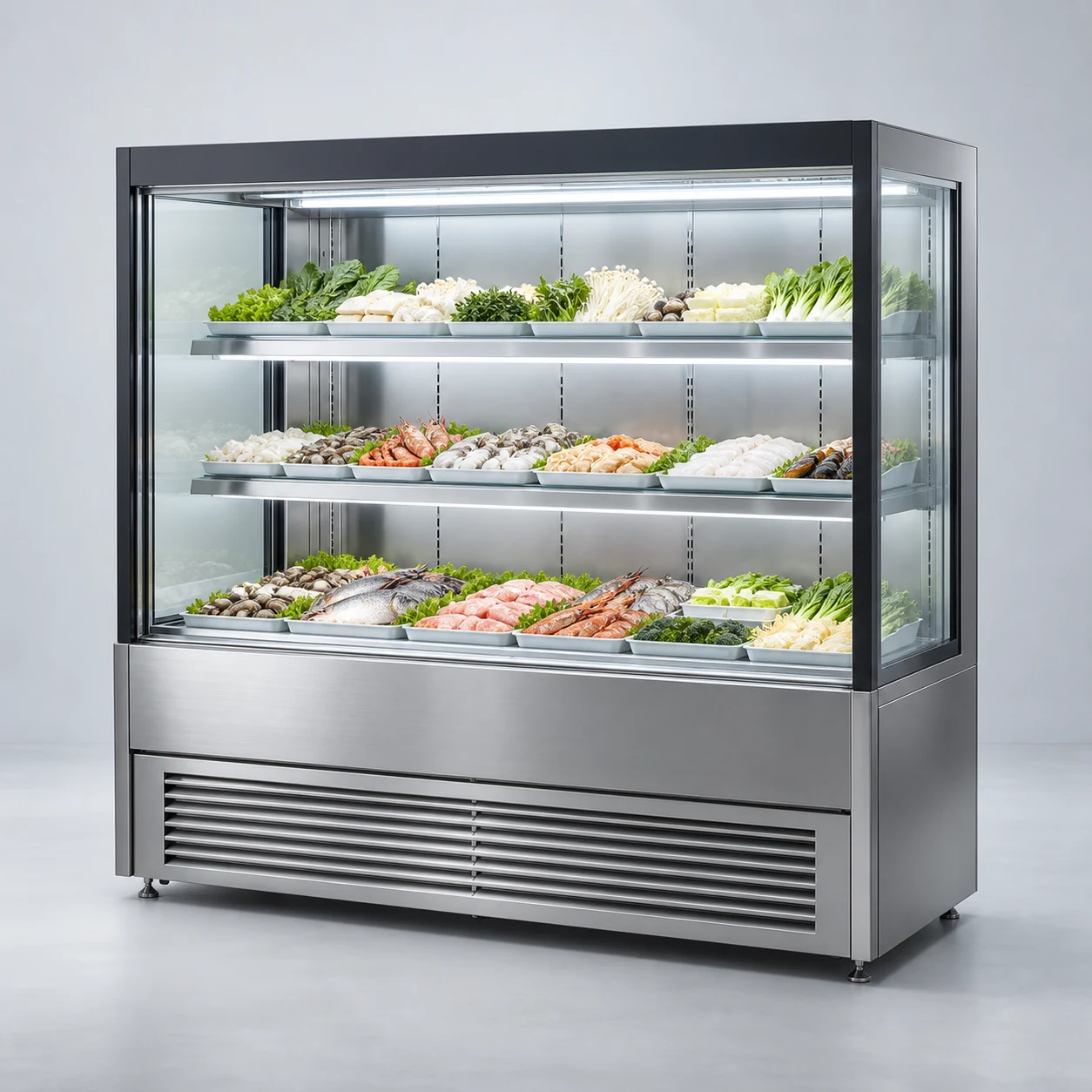
Menu display cabinets
Display ingredients clearly to support menu selection and restaurant service.
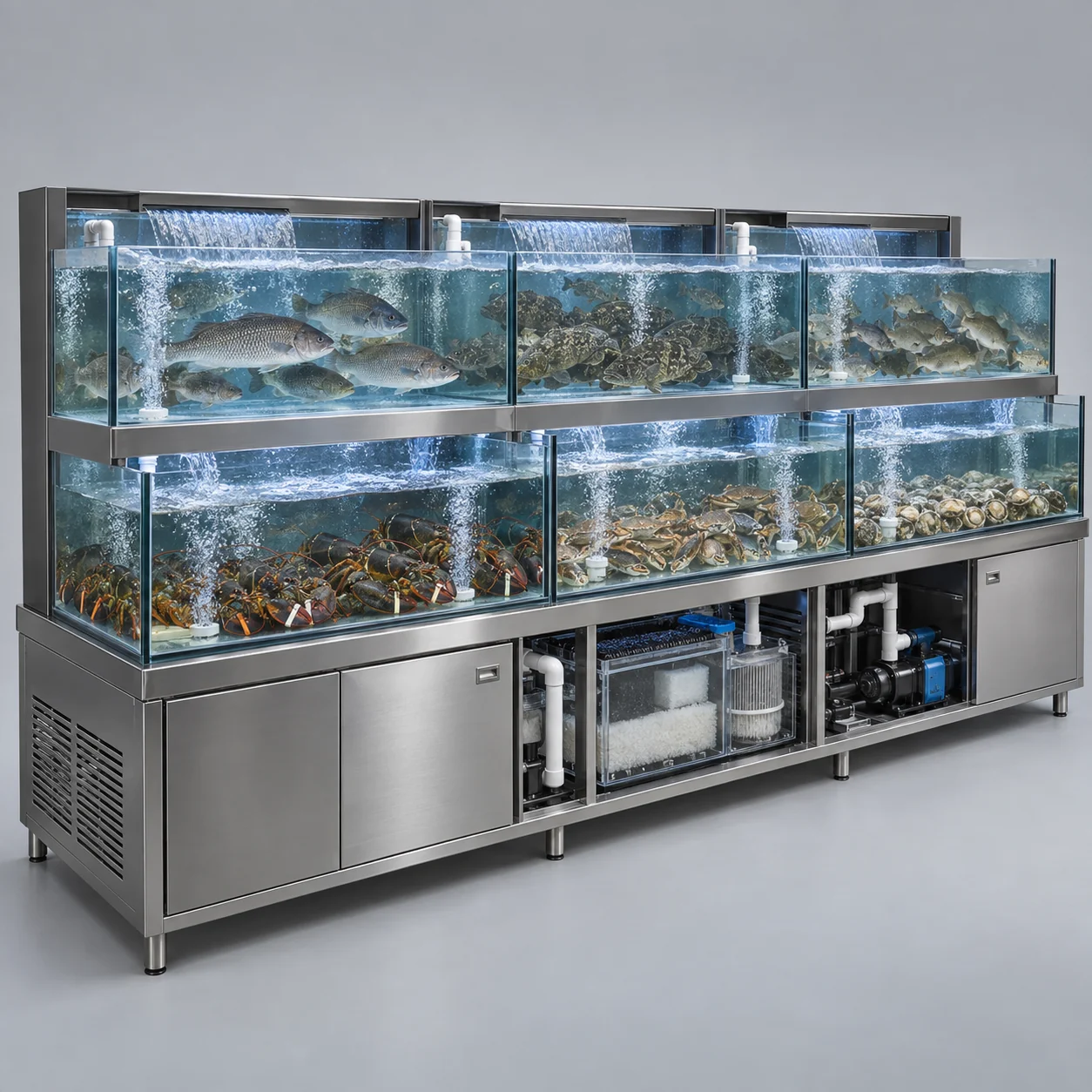
Commercial live seafood tanks for restaurants and supermarkets, with separate compartments for edible fish and shellfish.
Choose equipment around the goods you store, the way you display them and the space available.
Commercial live seafood tanks for restaurants and supermarkets, with separate compartments for edible fish and shellfish.
Restaurant seafood areas, supermarket seafood departments and live seafood shops
Plan around the goods, floor dimensions and daily workflow. Confirm display, replenishment and cleaning access together with the selected configuration.
Display ingredients clearly to support menu selection and restaurant service.
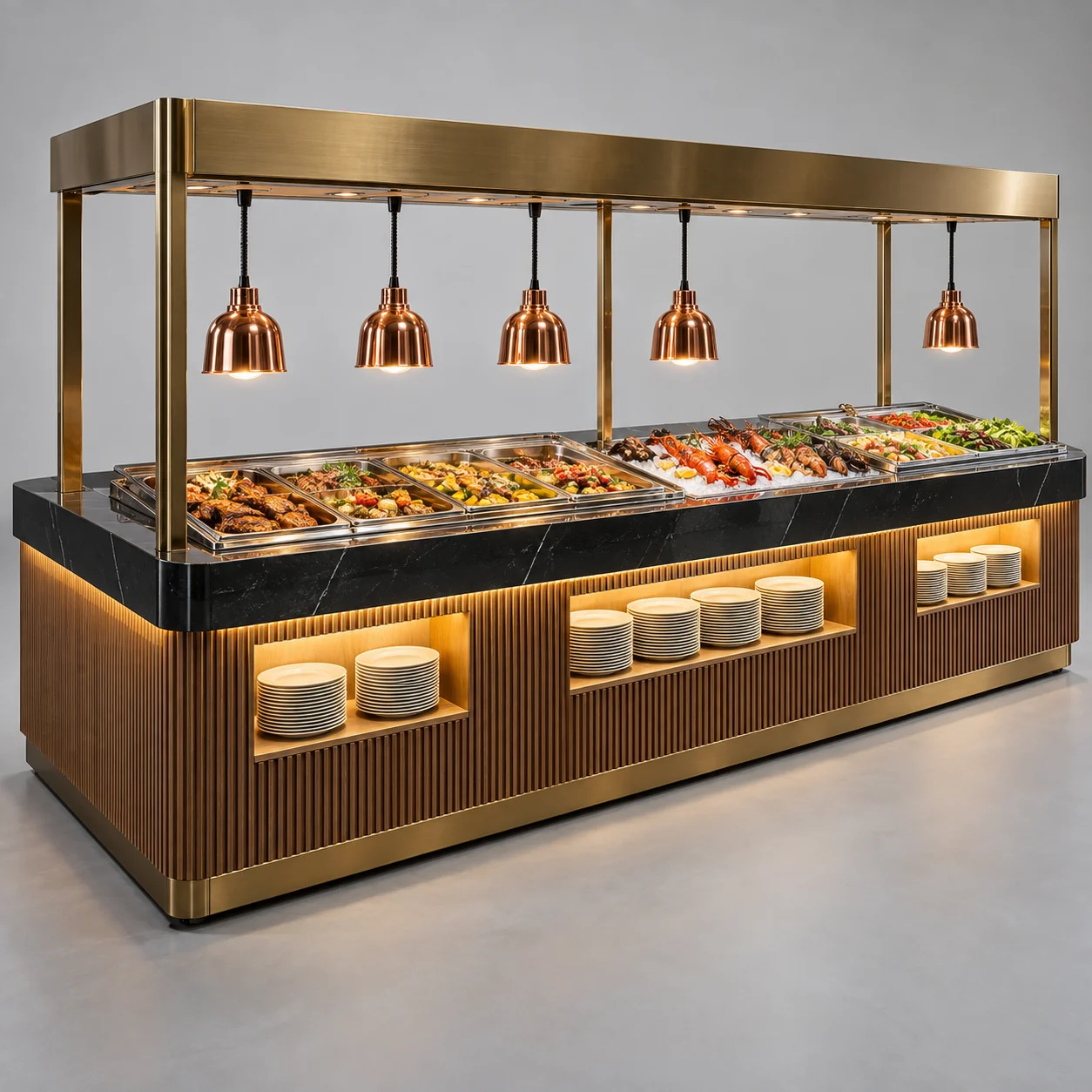
A commercial buffet counter combines plate storage, serving surfaces and an overhead lamp framework.
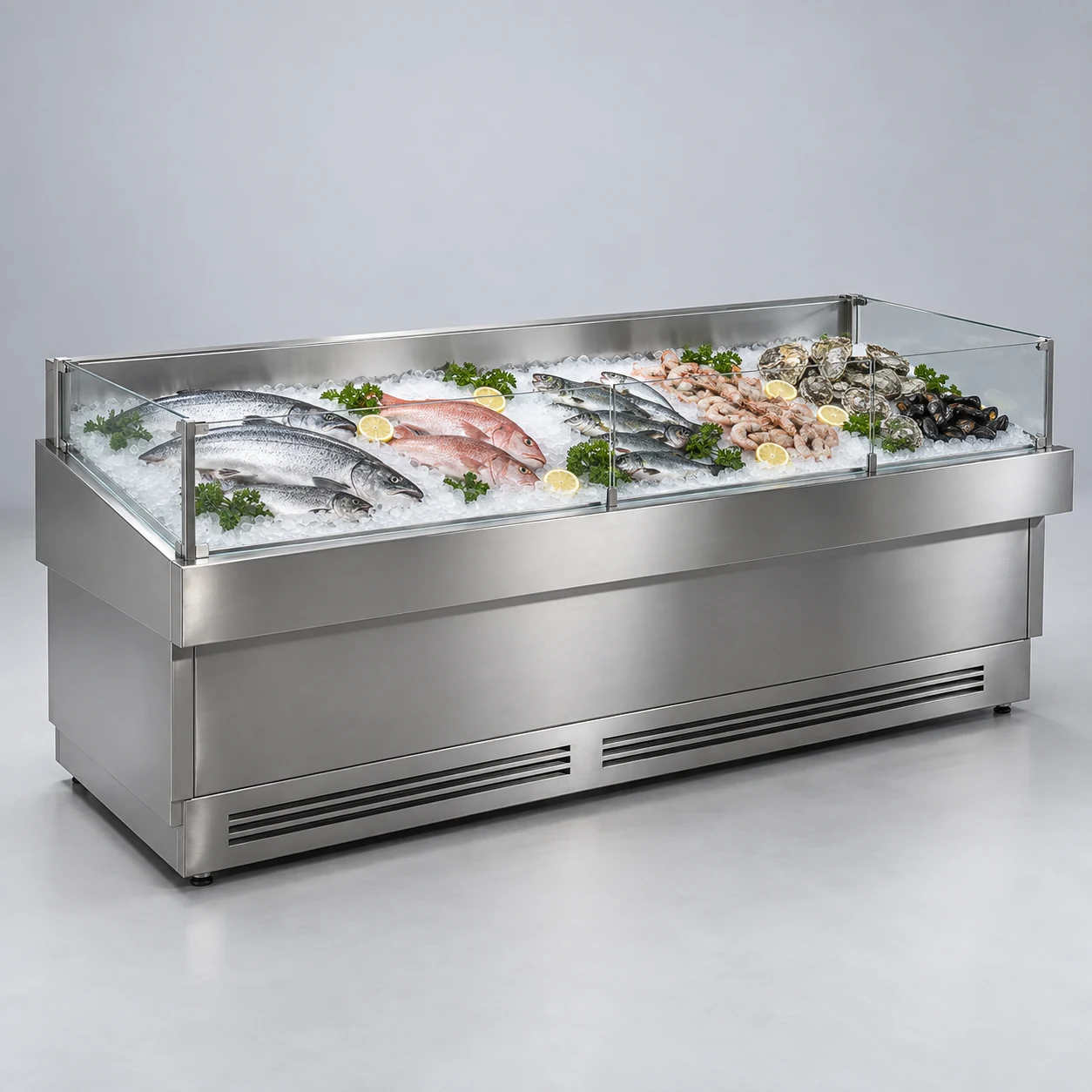
An open ice bed highlights the colour and texture of fresh seafood.
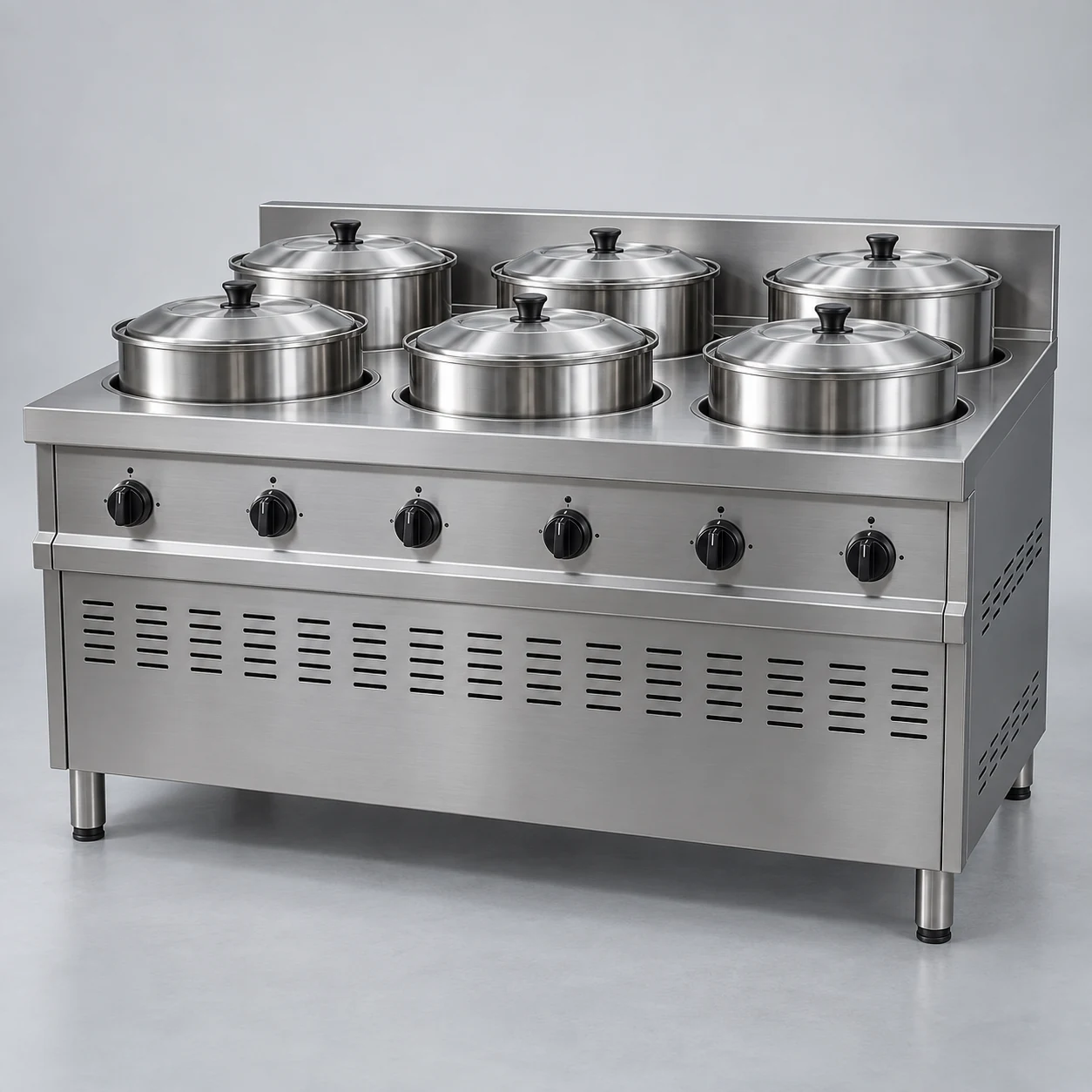
A soup preparation concept with heat source and stations configured to requirements.
When choosing a dining fish tank, it is necessary to first clarify the business objectives, and then compare the appearance and specifications of the equipment. Taking the scenario of a restaurant wanting to reserve an independent area for aquatic product display as an example, what needs to be organized first is not how many units to purchase, but how the areas for aquatic product display, container accessories, labels, and maintenance tools should be stored, displayed, and used during turnover. The form of goods, personnel actions, and equipment functions are interconnected; only by clarifying these conditions clearly can there be a basis for comparison in subsequent plans.
Read more ↗The layout of the dining fish tank should consider both the customer side and the staff side, rather than simply placing the equipment in the floor plan as sufficient. When a restaurant wants to reserve an independent area for aquatic product display, actions such as viewing, picking up, replenishing, and cleaning often occur around the equipment. The focus of the planning is to ensure these actions can be seamlessly connected in the same space, rather than simply aiming for neat equipment arrangement.
Read more ↗The daily management of the dining fish tank should focus on maintaining stable records regarding the equipment's condition, product display, and staff handover. For restaurant outlets that wish to reserve an independent area for aquatic product displays, they usually only search for information when the equipment encounters obvious problems, making it difficult to reconstruct the process of changes. The purpose of recording is to let the next shift and service staff know what happened, rather than adding unnecessary forms.
Read more ↗Professional personnel with relevant experience should first clarify the target and environmental requirements, then discuss the equipment structure and zoning. The display area aims for overall aesthetics, but maintenance space cannot be reduced at the cost of hiding all structures. For long-term use, accessibility should be included in the design considerations.
Read article ↗Mark the viewing surface for customers, the operation surface for staff, and the maintenance location separately, to avoid fixed decorations covering parts that need inspection. The display area aims for overall aesthetics, but maintenance space cannot be reduced at the cost of hiding all structures. For long-term use, accessibility should be included in the design considerations.
Read article ↗Establish zone identification and professional maintenance records, and explain the observed changes and services contacted during shift handover. The display area aims for overall aesthetics, but maintenance space cannot be reduced at the cost of hiding all structures. For long-term use, accessibility should be included in the design considerations.
Read article ↗Determine who is responsible for the tank body, supports, supporting systems, on-site construction, and subsequent maintenance. The display area aims for overall aesthetics, but maintenance space cannot be reduced at the cost of hiding all structures. For long-term use, accessibility should be included in the design considerations.
Read article ↗Leave your contact details and requirements. We will get in touch.