How to choose a slicer to match the actual store operating requirements?
When selecting a slicer, first clarify the business tasks, then compare the equipment appearance and configuration. For example, when a food store wants to organize the slicing processing tasks for different raw materials, the first thing to address is not how many units are needed, but how different raw materials, receiving containers, packaging materials, and processing batches should be stored, displayed, and circulated. The form of goods, personnel actions, and equipment functions are interconnected; only by clarifying these conditions clearly can there be a basis for comparison in subsequent plans.
Prepare a representative product list, and list the most common items, the largest sizes, and those with the most inconvenient handling. First, clearly identify the types and conditions of raw materials, then have the equipment provider confirm if they are suitable for use. Do not treat all ingredients as the same processing object. Thickness requirements, batch scale, and subsequent packaging methods should be included in the consultation documents together. If only giving the supplier a general product name, it is easy to overlook the details that truly affect usage; Bring packaging photos, container dimensions, and the quantity to be displayed, which is more helpful than simply asking ‘which one is the best’.
The types and conditions of raw materials processed by the fake design plan have changed, requiring a recheck of the applicable range of the slicing machine. Requirements for thickness and output performance should be explained in relation to specific raw materials, and cannot be just an abstract goal. Such inspections can be completed before confirming the plan, or can be included in the communication with the prototype. When comparing, use the same items and the same operating sequence, and record the differences between each plan. Do not judge suitability for long-term operation based on a single display or a design drawing.
Before pursuing thin slices or high speed, confirm the condition of the raw materials and the range of the equipment; Defining clear task boundaries is more beneficial for selection than general requests for ‘one machine for all’. You can separate the conditions that must be met, the conditions desired, and the issues still to be confirmed. For example, what must be met are the purpose and on-site installation conditions, what is desired may be a more convenient display method, and the parameters that have not been confirmed should be provided by the supplier with technical details for the corresponding model.
Finally, convert the selection conclusions into a verifiable list: equipment purpose, physical dimensions, main configurations, applicable products, on-site conditions, and subsequent communication matters. Check the applicable objects, accessories, protective components, and usage training of the equipment, and confirm that the manual corresponds to the actual model. The raw materials shown in the sample diagram cannot replace the confirmation of suitability for specific ingredients. Price and appearance can only be part of the comparison. Warranty boundaries, maintenance arrangements, and accessory availability should also be discussed before order confirmation. When specific temperature, load, and energy conditions are involved, refer to official model specifications and professional confirmation results.
Related products
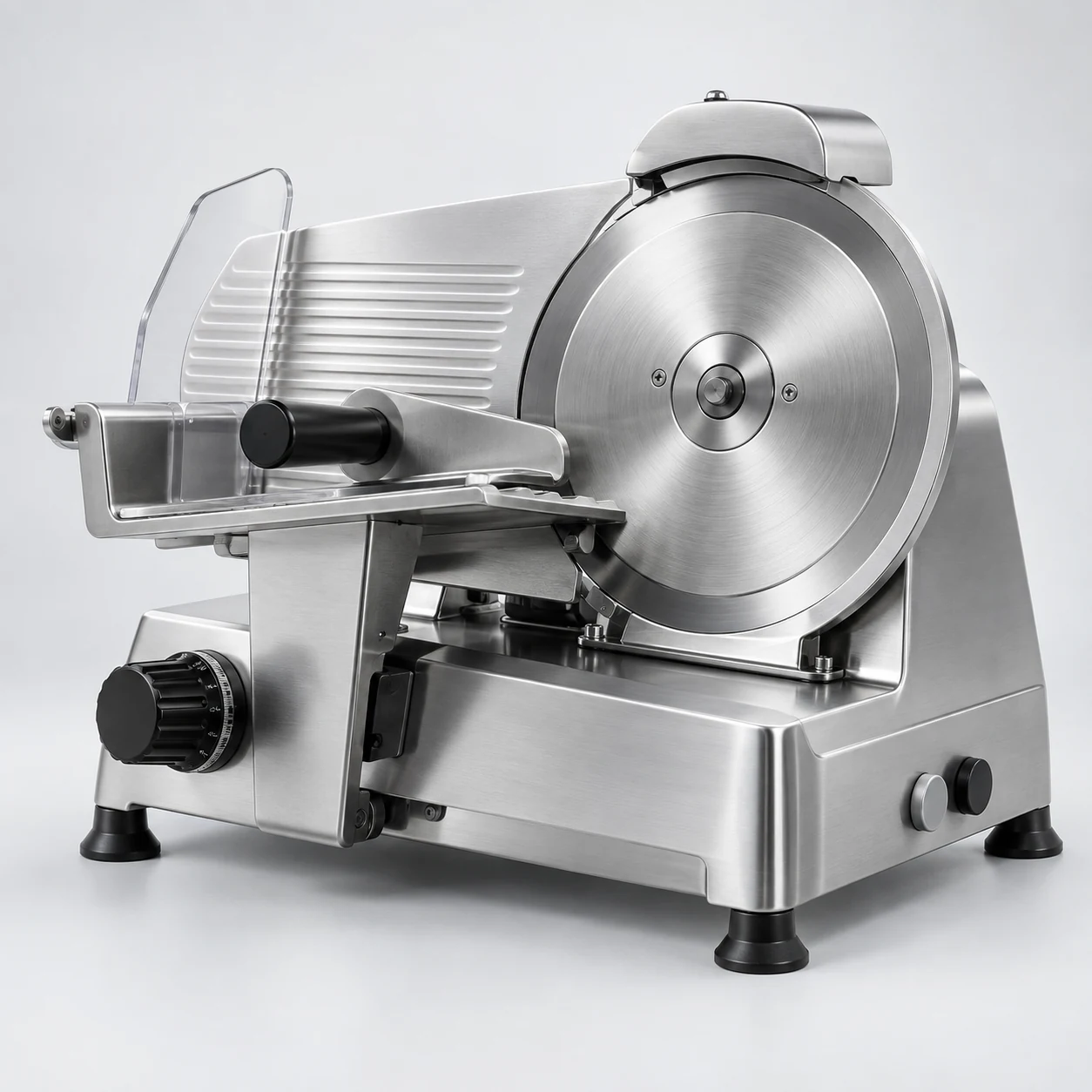 Food machinery
Slicers
Support food slicing workflows; select configurations for the intended ingredients.