How should we choose a menu cabinet to match the actual business needs of the store?
When selecting a menu cabinet, first define the business objectives, then compare the appearance and specifications of the equipment. For example, when a restaurant adjusts the connection between customers viewing dishes and kitchen preparation, the first thing that needs to be organized is not how many cabinets to purchase, but how the dish display trays, price labels, ingredients, and transfer containers are stored, displayed, and circulated. The form of goods, personnel actions, and equipment functions are interconnected; only by clarifying these conditions clearly can there be a basis for comparison in subsequent plans.
Prepare a representative product list, and list the most common items, the largest sizes, and those with the most inconvenient handling. Determine whether the display shows actual dishes, packaged ingredients, or visual representations of dishes, then choose the appropriate display structure accordingly. Test the display area and viewing angle using common containers; comparing the cabinet height alone is less accurate. If only giving the supplier a general product name, it is easy to overlook the details that truly affect usage; Bring packaging photos, container dimensions, and the quantity to be displayed, which is more helpful than simply asking ‘which one is the best’.
If a restaurant uses display plates of the same size to hold different dishes, customers cannot easily identify them based solely on appearance. Labels should remain consistently aligned with the display positions. The names and viewing distances must be tested together, and additional display trays cannot replace meaningful information. Such inspections can be completed before confirming the plan, or can be included in the communication with the prototype. When comparing, use the same items and the same operating sequence, and record the differences between each plan. Do not judge suitability for long-term operation based on a single display or a design drawing.
The more categories that can be displayed, the less likely customers will make decisions easily; The key is to clearly identify items, ensure smooth retrieval, and maintain consistent order even after replenishing the display. You can separate the conditions that must be met, the conditions desired, and the issues still to be confirmed. For example, what must be met are the purpose and on-site installation conditions, what is desired may be a more convenient display method, and the parameters that have not been confirmed should be provided by the supplier with technical details for the corresponding model.
Finally, convert the selection conclusions into a verifiable list: equipment purpose, physical dimensions, main configurations, applicable products, on-site conditions, and subsequent communication matters. Include the number of display levels, door movement, compartment alignment, and installation locations in the confirmation diagram. The conditions for food storage should be confirmed according to the model specifications and store management requirements, and suitability cannot be judged solely by display photos. Price and appearance can only be part of the comparison. Warranty boundaries, maintenance arrangements, and accessory availability should also be discussed before order confirmation. When specific temperature, load, and energy conditions are involved, refer to official model specifications and professional confirmation results.
Related products
 Catering equipment
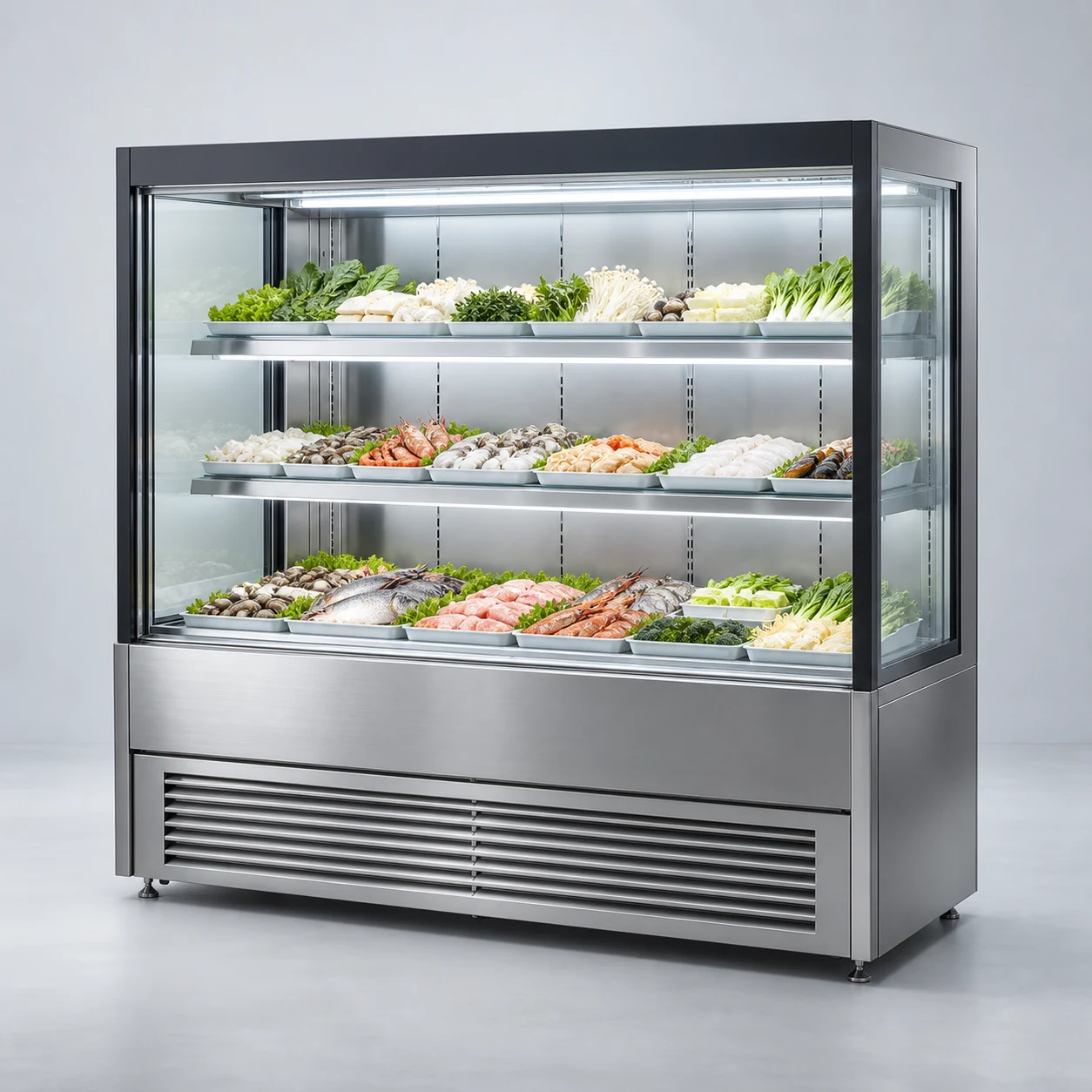
Menu display cabinets
Display ingredients clearly to support menu selection and restaurant service.