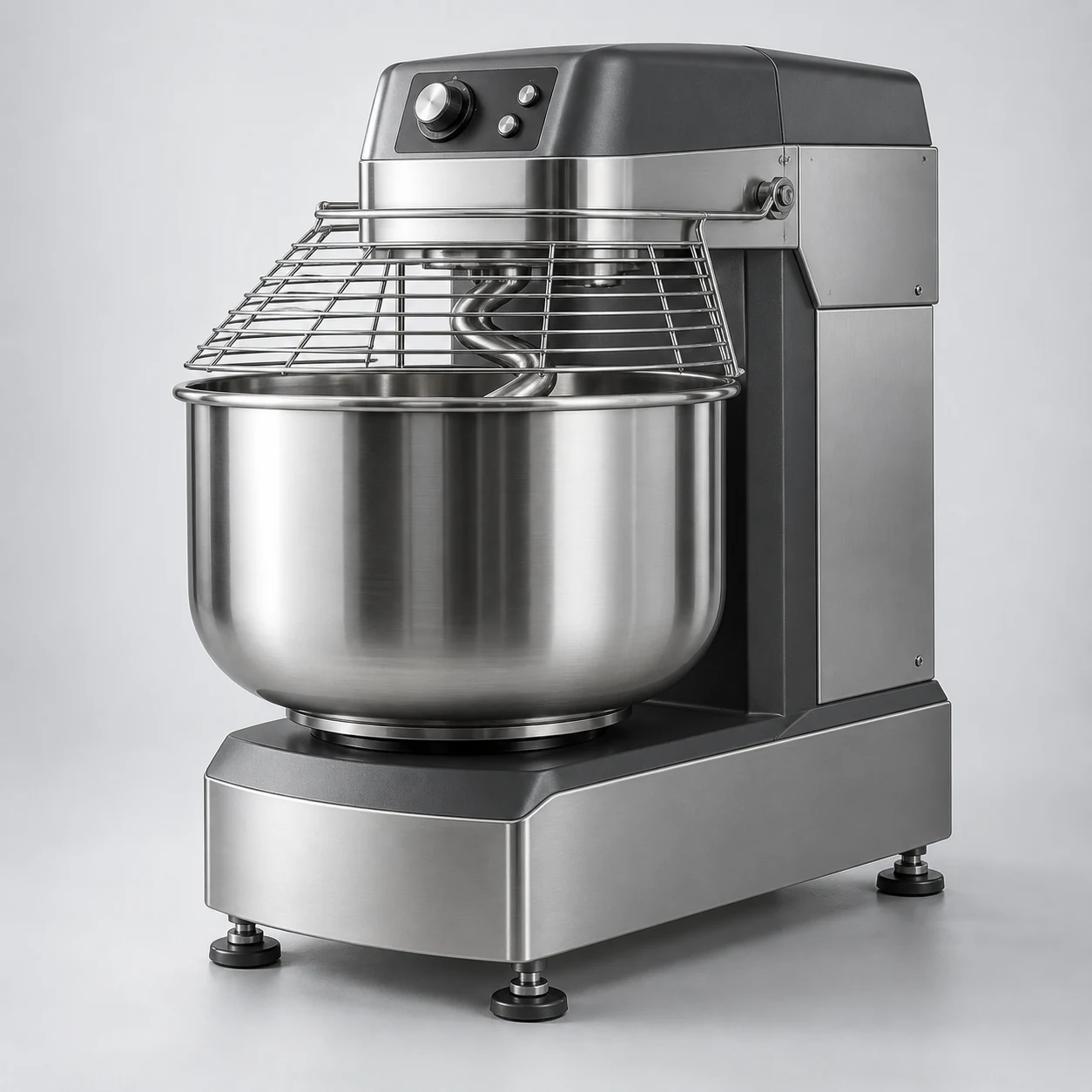
How to choose a flour mill that meets the actual business needs of the store?
When selecting a mixing machine, it is necessary to first clarify the business objectives, and then compare the appearance and configuration of the equipment. For example, when reorganizing the dough processing process in a bakery or pastry shop, the first thing to organize is not how many machines to purchase, but how doughs with different recipes, batches of raw materials, mixing accessories, and containers should be stored, displayed, and circulated. The form of goods, personnel actions, and equipment functions are interconnected; only by clarifying these conditions clearly can there be a basis for comparison in subsequent plans.
Prepare a representative product list, and list the most common items, the largest sizes, and those with the most inconvenient handling. Explain the raw materials, recipe characteristics, processing capacity per batch, and usage frequency to the equipment provider, and request confirmation of the applicable range based on the specific model. Container volume is not the processing weight that all recipes can use, and different process loads cannot be directly equated. If only giving the supplier a general product name, it is easy to overlook the details that truly affect usage; Bring packaging photos, container dimensions, and the quantity to be displayed, which is more helpful than simply asking ‘which one is the best’.
If two dough preparation recipes are planned to use the same processing weight per batch, it is still necessary for the equipment provider to confirm whether it is applicable based on the specific model. Container volume, recipe characteristics, and operating frequency should be described separately and cannot be directly converted between each other. Such inspections can be completed before confirming the plan, or can be included in the communication with the prototype. When comparing, use the same items and the same operating sequence, and record the differences between each plan. Do not judge suitability for long-term operation based on a single display or a design drawing.
A larger capacity may not be more suitable for stores with frequent small-batch changes; The procurement comparison should consider task combinations and personnel arrangements, not just the largest number. You can separate the conditions that must be met, the conditions desired, and the issues still to be confirmed. For example, what must be met are the purpose and on-site installation conditions, what is desired may be a more convenient display method, and the parameters that have not been confirmed should be provided by the supplier with technical details for the corresponding model.
Finally, convert the selection conclusions into a verifiable list: equipment purpose, physical dimensions, main configurations, applicable products, on-site conditions, and subsequent communication matters. Verify the model, applicable processing instructions, accessories, on-site power conditions, and training handover. Compare the planned processing tasks with the equipment data item by item, and do not require the equipment to demonstrate beyond the specified scope. Price and appearance can only be part of the comparison. Warranty boundaries, maintenance arrangements, and accessory availability should also be discussed before order confirmation. When specific temperature, load, and energy conditions are involved, refer to official model specifications and professional confirmation results.