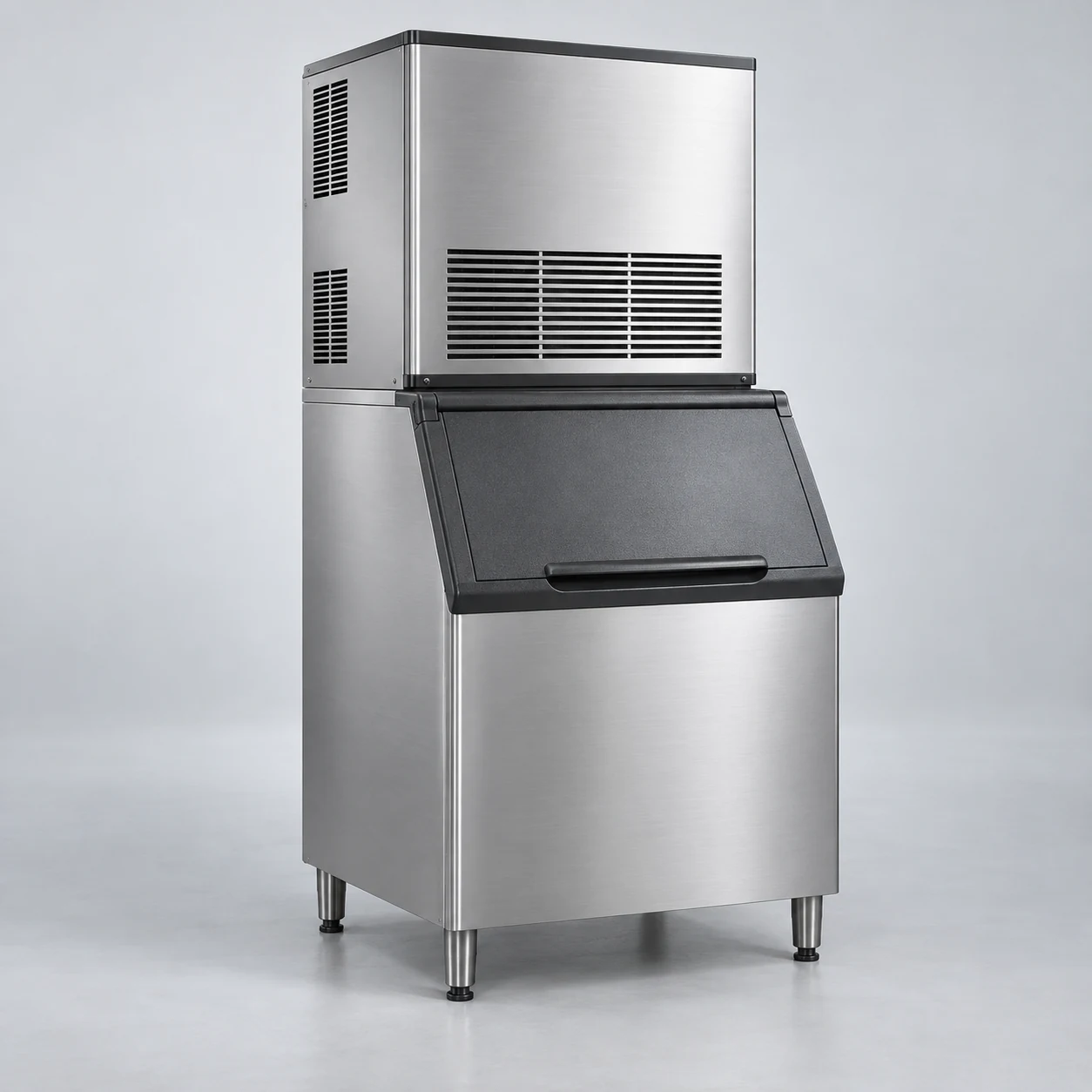
How to Choose an Ice Maker That Matches Actual Store Operations?
When selecting an ice maker, it is necessary to first clarify the operational requirements, and then compare the appearance and configuration of the equipment. Taking the ice demand during peak business hours in a restaurant or beverage store as an example, what needs to be organized first is not how many units to purchase, but how ice materials, ice removal containers, and storage and turnover tools for different purposes should be stored, displayed, and circulated. The form of goods, personnel actions, and equipment functions are interconnected; only by clarifying these conditions clearly can there be a basis for comparison in subsequent plans.
Prepare a representative product list, and list the most common items, the largest sizes, and those with the most inconvenient handling. List the specific uses for beverage production, display, or other purposes, and verify the required ice types. Comparisons of nominal output must be based on the specified conditions of the corresponding model; numbers from different testing conditions should not be directly considered as equivalent capabilities. If only giving the supplier a general product name, it is easy to overlook the details that truly affect usage; Bring packaging photos, container dimensions, and the quantity to be displayed, which is more helpful than simply asking ‘which one is the best’.
If the ice demand at the store is concentrated over a period of time, another store with the same average quantity throughout the day may have dispersed access. When comparing ice-making solutions, it is necessary to specify both peak usage patterns and circulation methods, and compare them with the applicable and testing conditions indicated by the manufacturer. Such inspections can be completed before confirming the plan, or can be included in the communication with the prototype. When comparing, use the same items and the same operating sequence, and record the differences between each plan. Do not judge suitability for long-term operation based on a single display or a design drawing.
The daily average demand does not necessarily represent peak demand; In procurement communication, it is necessary to specify the time periods and turnover methods for centralized use, rather than merely reporting the approximate quantity for a day. You can separate the conditions that must be met, the conditions desired, and the issues still to be confirmed. For example, what must be met are the purpose and on-site installation conditions, what is desired may be a more convenient display method, and the parameters that have not been confirmed should be provided by the supplier with technical details for the corresponding model.
Finally, convert the selection conclusions into a verifiable list: equipment purpose, physical dimensions, main configurations, applicable products, on-site conditions, and subsequent communication matters. Separate the main unit, ice storage section, on-site water and electricity infrastructure, and related accessories individually. Check the model, operating conditions, and cleaning handover documents during delivery, so sales staff know how to obtain corresponding instructions. Price and appearance can only be part of the comparison. Warranty boundaries, maintenance arrangements, and accessory availability should also be discussed before order confirmation. When specific temperature, load, and energy conditions are involved, refer to official model specifications and professional confirmation results.