When purchasing full-store refrigerators, how should the configuration and delivery boundaries be clearly defined
Mark the numbers of each cabinet group on the floor plan, and verify the shape, opening direction, installation conditions, and service scope one by one. A longer continuous display cabinet helps maintain a uniform appearance, while dividing it into multiple groups may make it easier to organize by product category; It is necessary to compare the existing aisles with future operational changes, rather than making judgments based solely on the number of cabinets;
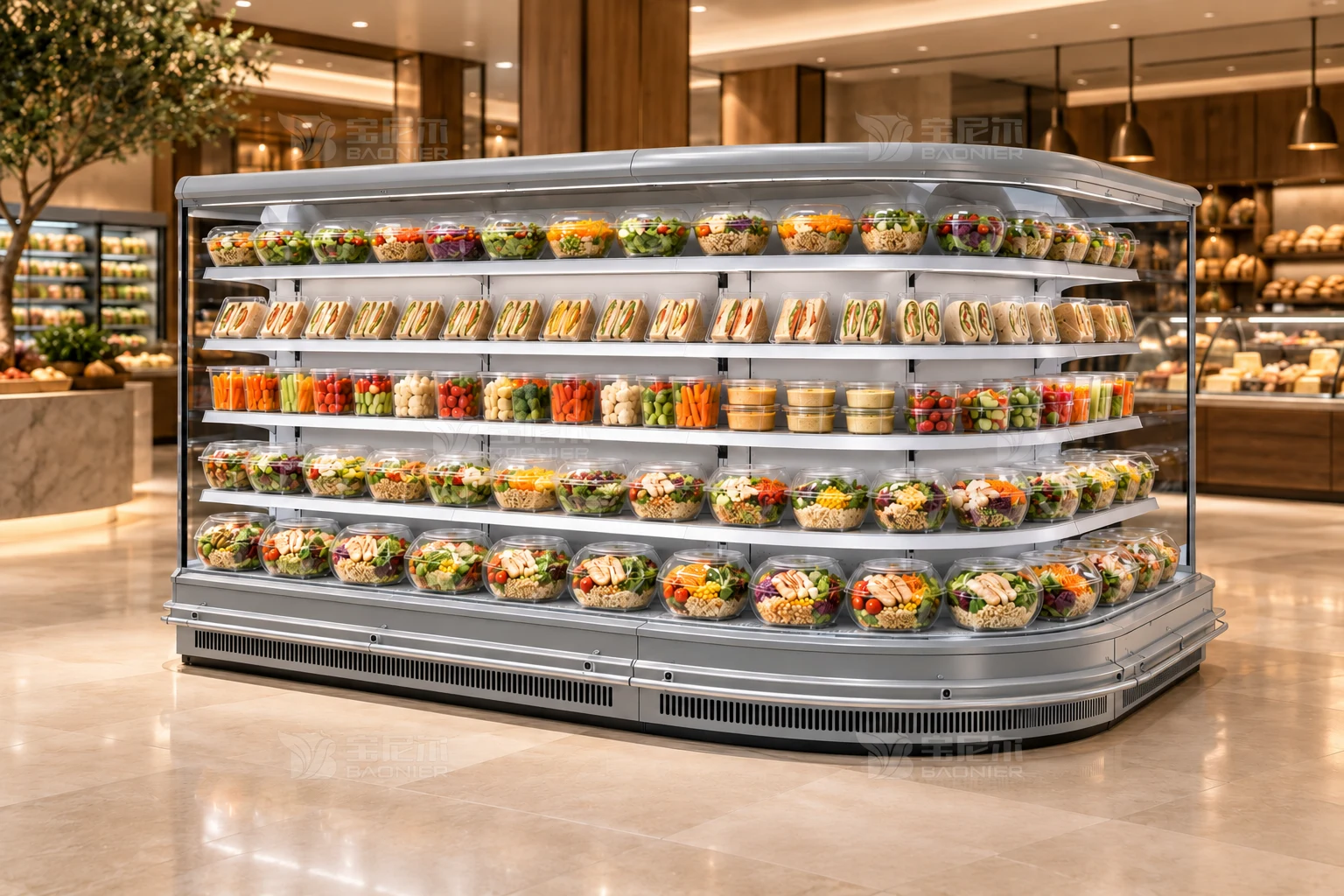
From procurement intent to a deliverable that can be verified
After deciding to purchase supermarket refrigerators, community supermarkets planning to replan their refrigerated goods areas shift their focus from comparing options to confirming boundaries. Mark the numbers of each cabinet group on the floor plan, and verify the shape, opening direction, installation conditions, and service scope one by one. Use the same numbering sheet during delivery to check the site, avoiding acceptance based solely on verbal descriptions like ‘a few supermarket cabinets’. A clear delivery arrangement should ensure that receiving staff, even without prior communication, know what to receive on-site and what additional support is needed.
The name and quantity of equipment are just the starting point of the list. It is recommended to list the model, physical dimensions, key configurations, attached components, on-site services, and documentation separately, indicating who provides each item. For items like boxed dairy products, bottled beverages, bagged vegetables, and ready-to-eat packages, if supporting containers or additional accessories are required, it must be specified whether they are included in the current quote, avoiding using display images to replace a clear supply scope.
Keep the selection criteria until the order confirmation stage
Describe your needs using the packaging dimensions, single-row display quantity, and restocking intervals, then compare the display methods of open cabinets and door cabinets. The external size of the cabinet cannot directly represent the usable shelf area; the same length may correspond to different shelf arrangements. These requirements cannot disappear from the document after the total price is determined. Before placing the order, the final selection should be matched item by item with the original requirements list to ensure there are no new discrepancies due to size, configuration, or on-site conditions. Changes that need to be accepted should be justified, and unresolved issues should be followed up on.
The inspection upon delivery must correspond to actual tasks, not just a count of equipment names. Taking supermarket refrigerated cabinets as an example, if the same supermarket sells tall bottle beverages and flat boxed ready-to-eat foods, a uniform layer spacing may leave large gaps in some areas, while making it difficult to access items in other areas. Restocking actions should be clearly marked with visible surfaces, access angles, and specific actions, followed by decision-making on which shelves require zoning. This item should be referenced in confirmation documents or delivery records, detailing the actual inspection results and pending matters. Use the same number when different personnel are involved, and do not substitute parts that appear similar in images with model and configuration confirmation. Matters requiring professional judgment should continue to be handled by the responsible personnel. Records that can be accessed by both parties are more helpful for smooth handover than temporary verbal explanations.
Prepare the on-site conditions before delivery.
Draw the routes between the entrance, checkout, refrigerated area, and back warehouse, considering customer dwell time and staff restocking points separately. Especially, check whether carts at corners block the second set of cabinet doors, and whether promotional displays cover the products. The ability of the equipment to enter the store does not mean that the final installation location meets all requirements. It is necessary to verify the unloading, handling, turning, and temporary placement arrangements after delivery, and have relevant professionals confirm that the installation setup matches the equipment documentation.
On-site preparation should be evaluated based on actual actions taken, not just signing on the drawings. Take supermarket freezers as an example: if a promotional counter is added next to the entrance, the smooth path in the refrigerated area begins to stop. It is necessary to distinguish between customer stops, restocking carts, and door movements, and record the locations separately, rather than generally attributing the problem to too many freezers. This item should be referenced in confirmation documents or delivery records, detailing the actual inspection results and pending matters. Use the same number when different personnel are involved, and do not substitute parts that appear similar in images with model and configuration confirmation. Matters requiring professional judgment should continue to be handled by the responsible personnel. Records that can be accessed by both parties are more helpful for smooth handover than temporary verbal explanations.
Inspection involves checking both the equipment and its intended use.
A longer continuous display cabinet helps maintain a uniform appearance, while dividing it into multiple groups may make it easier to organize by product category; It is necessary to compare the existing aisles with future operational changes, rather than making judgments based solely on the number of cabinets; Inspection should not be limited to observing the appearance from a distance or simply asking if it can be started. The model, quantity, components, and appearance status should be checked according to confirmed information, and normal operation should be verified under permissible conditions to ensure the actual container and operating position work together.
These records are still needed after delivery, so the documentation should be easily understood by store staff. Taking supermarket refrigerators as an example, if the product locations change frequently after late-night restocking, staff need to search for items again the next day. Each group of equipment can be matched with its main storage locations, and areas where temporary adjustments are allowed should be marked, maintaining clear boundaries between promotional changes and regular displays. This item should be referenced in confirmation documents or delivery records, detailing the actual inspection results and pending matters. Use the same number when different personnel are involved, and do not substitute parts that appear similar in images with model and configuration confirmation. Matters requiring professional judgment should continue to be handled by the responsible personnel. Records that can be accessed by both parties are more helpful for smooth handover than temporary verbal explanations.
The documentation and personnel handover should be completed before delivery ends.
Document changes in products during three times: opening hours display, midday restocking, and evening inventory check. Don’t just check if the display is full on opening day, also examine whether the shelves that are empty after sales are easy to organize, and whether old items are easily obstructed by new ones. This kind of daily work requires finding the responsible person at the time of delivery, rather than arranging additional arrangements after the equipment has been used for a period of time. Instructions, names of commonly used components, service contact methods, and pending matters should be handed over to those who actually use the equipment daily.
It is recommended to establish a concise equipment file that includes confirmation images, configuration lists, receipt records, operation documents, and follow-up communication results. For training-related content, record the participants and unclear issues, so that the knowledge can be passed on when shifts are changed. When communicating with BAONIER about supermarket refrigerators, the materials can be organized in the order of ‘requirement confirmation—on-site preparation—delivery verification—handover during use’; Each step should have accessible results, so that procurement truly becomes sustainable equipment.