What should be recorded during daily inspections and shift handovers after the supermarket freezer is put into use?
Daily management of supermarket freezers should focus on equipment status, product display, and personnel handover to maintain consistent records. For scenarios like replanning the refrigeration area in community supermarkets, information is sought only after obvious equipment issues, making it difficult to reconstruct the changes. The purpose of recording is to let the next shift and service staff know what happened, rather than adding unnecessary forms.
Document changes in products during three times: opening hours display, midday restocking, and evening inventory check. Don’t just check if the display is full on opening day, also examine whether the shelves that are empty after sales are easy to organize, and whether old items are easily obstructed by new ones. The checklist should be divided into three stages: before start-up, during operation, and after completion, but specific items must align with the equipment manual and store procedures. Inspectors should identify the corresponding equipment number and location, describe observable phenomena, rather than simply stating 'normal' or 'abnormal'.
If the inventory location often changes after late-night restocking, staff need to search for items again the next day. Each group of equipment can be matched with its main storage locations, and areas where temporary adjustments are allowed should be marked, maintaining clear boundaries between promotional changes and regular displays. To distinguish between one-time changes and recurring issues, use the same number and description for the same problem consistently. Photos can help illustrate the situation, but the time period, relevant actions, and background should also be recorded to avoid making conclusions based solely on a partial image.
Cleaning arrangements must also consider the turnover of boxed dairy products, bottled beverages, bagged vegetables, and ready-to-eat packaging items. First, handle the items and containers according to store regulations, then clean the equipment as specified in the equipment documents; Do not treat unknown detergents, disassembly methods, or temporary modifications as standard practices. Matters involving energy, electrical, or mechanical components should be handled by qualified personnel, and staff should not bypass equipment requirements to resume operations on their own.
A longer continuous display cabinet helps maintain a uniform appearance, while dividing it into multiple groups may make it easier to organize by product category; It is necessary to compare the existing aisles with future operational changes, rather than making judgments based solely on the number of cabinets; During shift changes, emphasize the adjusted locations, unfinished tasks, and issues that need follow-up for that day. When there is an abnormal status, record the model, symptom, time, and measures taken, and contact the supplier or professional service personnel; The handling of specific products shall follow the store management requirements. Regularly review records and prioritize resolving recurring operation and handover issues. Do not replace cause investigation with frequent changes to device settings.
Related products
 Supermarket refrigeration
Air-curtain cabinets
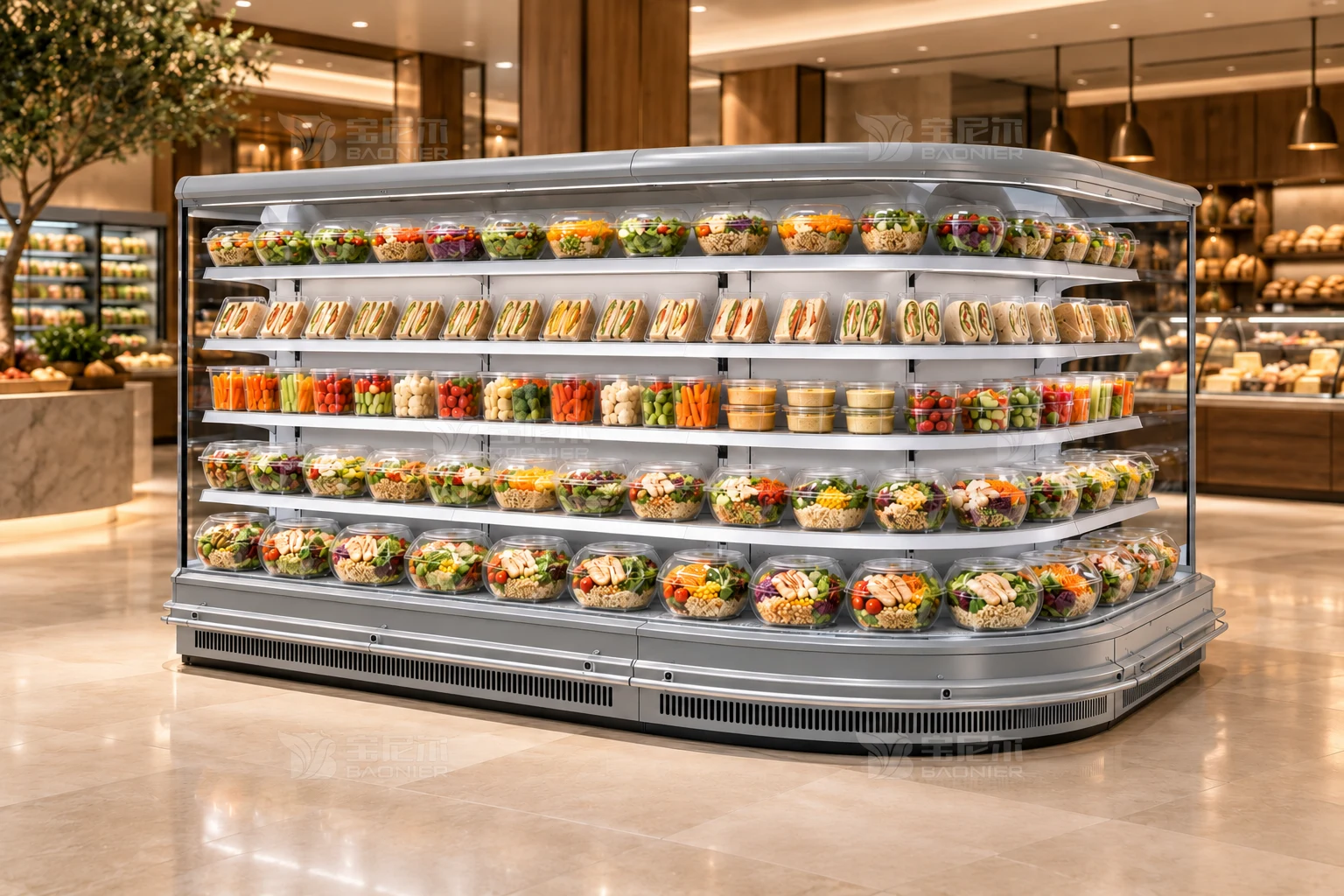
A rounded end continues the open shelving, with clear-packed salads, sandwiches and vegetable cups arranged in separate sections.