Selecting a Bufi table: First, distinguish the functional modules, then discuss the overall design.
First, list the requirements separately for cold food, hot food, or other practical uses, then confirm the functional boundaries of the Bufi equipment. The long countertop appears uniform, but the usage logic for surrounding and one-way serving differs; We should first determine how customers will move, and then decide on the combination form.
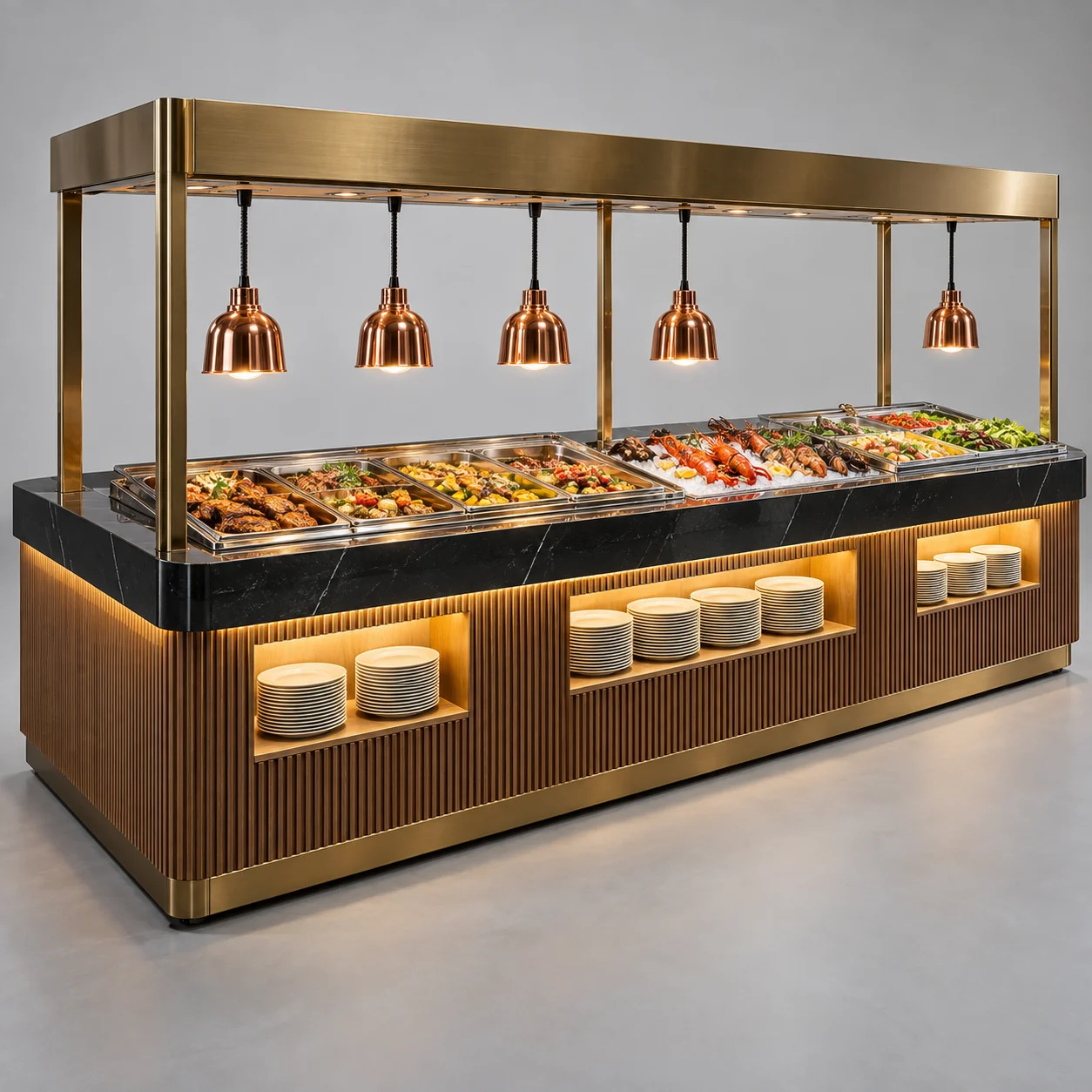
Define the issues to be solved during this purchase
When preparing a comprehensive self-service dining area for hotels or restaurants, the first issues often involve determining the size, choosing the right shape, and setting the budget. However, the answers to these questions depend on a common premise: what task the store wants the equipment to perform. The long countertop appears uniform, but the usage logic for surrounding and one-way serving differs; We should first determine how customers will move, and then decide on the combination form. If this trade-off is not clearly stated, it is easy for discussions to focus on photos and total price, seemingly comparing multiple options, but no judgment criteria are actually established.
It is recommended to first write down the requirements in a complete description, including who uses, what is processed or displayed, where the task is completed, and the most inconvenient aspect currently. What needs attention here are dishes, food containers, serving utensils, and labels of different specifications. Each item should correspond to an actual packaging or container to avoid different participants having different understandings of the ‘standard specifications’. The requirements table need not be complex, but it should be understood by procurement, store managers, and actual operators.
Actual compatibility conditions that need to be verified for Bufi tables
First, list the requirements separately for cold food, hot food, or other practical uses, then confirm the functional boundaries of the Bufi equipment. The seamless integration of components does not mean identical uses at every position; clear written instructions should be provided for each functional area. When preparing materials, representative items used daily can be photographed and numbered, with their external dimensions, usage location, and required operating space recorded separately. For special packaging, containers with handles, or temporary combinations, separate explanations are needed; only an average size cannot be provided.
Implementing size specifications for representative items makes it easier to determine compatibility differences. Take the Buffy table as an example. Suppose a Buffy table is composed of modules with different functions. While the appearance is continuous, the operational requirements are not the same. Each module should have a corresponding use and container instructions. When purchasing and on-site personnel check, they should do so based on individual modules rather than just considering the overall length of the unit. In the comparison table, a separate row should be provided for this difference, listing the current plan, adjustable sections, and information yet to be confirmed separately. If the two candidate configurations provide different responses for this item, retain each of their applicable conditions, allowing the selection to be based on consistent requirements. Continue to inquire about unclear items; no conclusions should be added independently to complete the quotation comparison.
Verify configuration using a complete workflow process
Simulate the process of customers picking plates, selecting dishes, using dining utensils, and leaving. Reserve reasonable space for repeat visitors. The paths for supplying food and recycling containers should be observed separately to avoid interference during peak times. During the product selection phase, these steps should not be discussed until the renovation is completed. Use ground markers or cardboard to simulate the equipment boundaries, allowing actual users to demonstrate in their usual order, which helps identify subtle disturbances not visible on the drawings in advance.
The comparison of solutions should also include disturbances encountered during real use, not just the equipment itself. Take the Buffy table as an example. If customers taking meals at a buffet need to find tableware in reverse order after picking food, it may disrupt the queue behind them. For layout adjustments, the positions of tableware and labels can be modified first to see if the backtracking actions decrease, then decide whether to change the equipment configuration. In the comparison table, a separate row should be provided for this difference, listing the current plan, adjustable sections, and information yet to be confirmed separately. If the two candidate configurations provide different responses for this item, retain each of their applicable conditions, allowing the selection to be based on consistent requirements. Continue to inquire about unclear items; no conclusions should be added independently to complete the quotation comparison.
Include daily management costs in the comparison table.
Use zone numbers to record replenishment times, container replacements, and counter tidying tasks, enabling different shifts to find their assigned areas. Management focus should be on clear processes and responsibilities, while equipment operation should still follow the corresponding instructions. These daily tasks are not only encountered after procurement is completed; they affect the amount of effort required by the store for organization, training, and communication. When comparing solutions, you can ask how common components are identified, where the usage instructions can be found, which tasks should be handled by the store, and which require professional assistance.
Understanding the management approach before procurement can reduce omissions during configuration confirmation. Take the Buffy table as an example. If the paths for supplying food and recycling empty containers share the same route, waiting for each other during peak times is likely to occur. The time and location of both actions should be recorded to clarify the responsible personnel for recycling and replenishment, avoiding solving workflow issues by merely increasing the counter area. In the comparison table, a separate row should be provided for this difference, listing the current plan, adjustable sections, and information yet to be confirmed separately. If the two candidate configurations provide different responses for this item, retain each of their applicable conditions, allowing the selection to be based on consistent requirements. Continue to inquire about unclear items; no conclusions should be added independently to complete the quotation comparison.
How is the quotation confirmation and selection conclusion implemented?
Verify module dimensions, assembly positions, required on-site setup, container specifications, and decorative finish details. The delivery scope for customized appearance and standard equipment should be specified separately to facilitate coordination between decoration and equipment teams. If two solutions meet basic requirements, they can be mapped to the store’s workflow respectively, indicating which benefits are retained and any adjustments required. The reasons for selection should be specific to the usage process, so that when making subsequent adjustments to decoration or product structure, it is possible to determine whether the original decisions remain applicable.
When forming the final record, it is recommended to retain the product model, confirmation images, attachment list, and results of unresolved issues. Oral commitments should be translated into accessible confirmation details. For inquiries about BAONIER products, start with this requirement document: first describe the actual scenario, then verify the equipment configuration. For Buffy counters, suitable solutions arise from the alignment between tasks, space, and management methods. The appearance and budget are further coordinated after these conditions are defined.