How the dish display trays are handed over should be synchronized with the changes on the labels and actual items
Record the name and panel replacement status of the display panel during handover, and promptly address any discrepancies between the markings and actual content. The more categories that can be displayed, the less likely customers will make decisions easily; The key is to clearly identify items, ensure smooth retrieval, and maintain consistent order even after replenishing the display.
For daily management, first identify changes worth recording
The restaurant is preparing to adjust the connection between customer viewing dishes and kitchen preparation. After implementation, the management of the ordering cabinet should not be limited to simply determining whether it is functioning properly today. The rationale for normal operations needs to be understood by different shifts, and abnormal conditions should also be documented. Record the name and panel replacement status of the display panel during handover, and promptly address any discrepancies between the markings and actual content. If customers frequently ask about a specific position, it may indicate that the labels or display method need adjustment. The purpose of recording is to enable the next person to continue working, not to fill out forms.
The store can identify key points in the actual usage process of ordering display trays, price tags, packaged ingredients, and turnover containers: when items enter the working area, who organizes them, when they are removed, and which information needs updating after completion. Record items should be arranged around these handover points. For information that does not assist subsequent decision-making, there is no need to copy it mechanically every day; For situations that repeatedly cause inquiries, clear labels or location indicators should be added.
Establish consistent numbering and location descriptions consistent with the actual site.
The area where customers stand should not block the service staff’s path; Staff also should not pass through the waiting crowd during replenishment. Include menu descriptions, lighting reflections, and readability of labels in on-site testing, making the selection process more intuitive. Based on such a site, assigning numbers and locations to equipment and common areas can transform handover references from ‘that machine over there’ into specific, identifiable objects. When a same product or container has multiple specifications, the name should also be differentiated to avoid records appearing consistent while referring to different items.
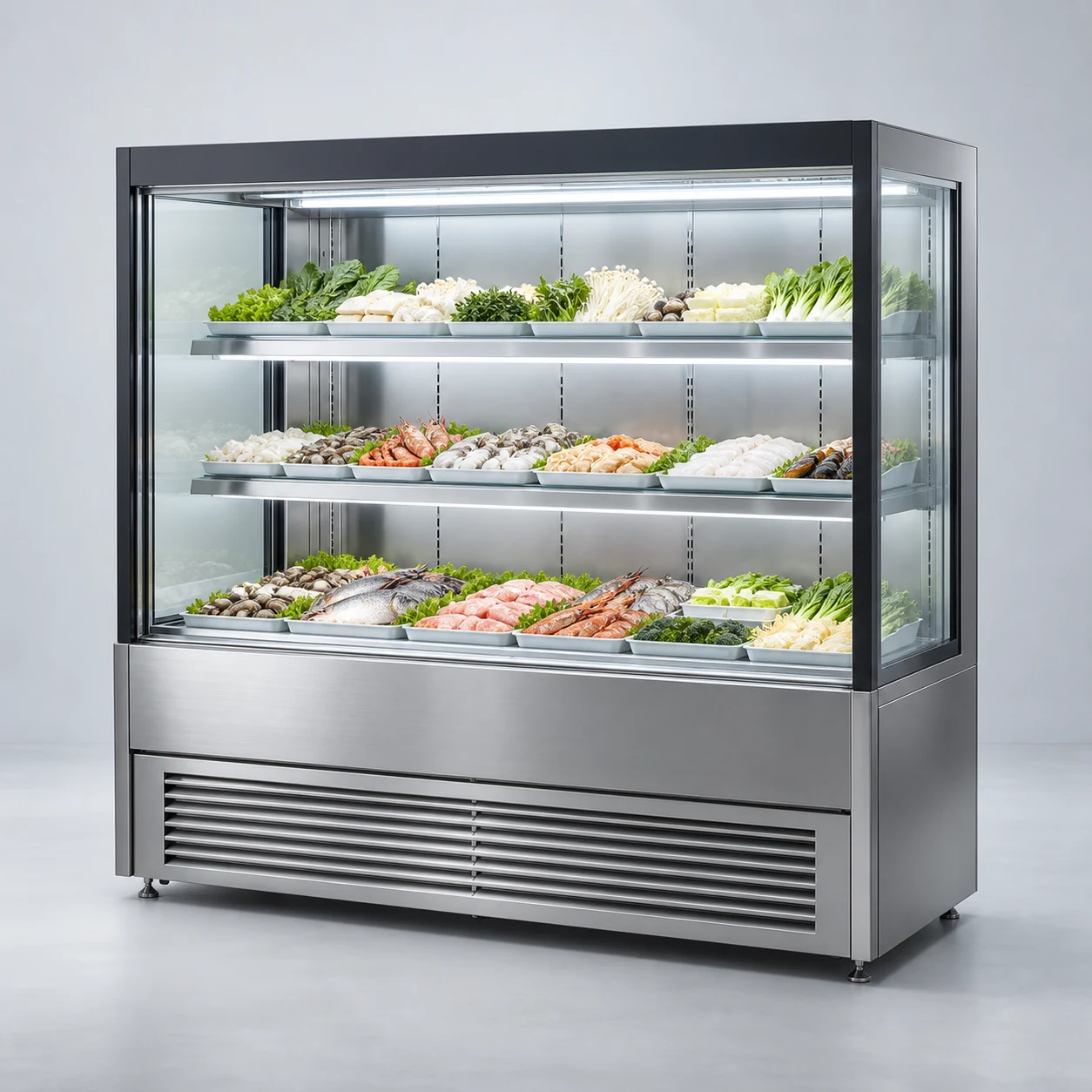
When establishing record items, you can start by focusing on situations where the item or configuration has changed. Taking the menu display cabinet as an example, assume a restaurant uses display trays of the same size to hold different dishes; customers may not be able to identify them easily based solely on appearance. Labels should remain consistently aligned with the display positions. The names and viewing distances must be tested together, and additional display trays cannot replace meaningful information. Such information is suitable for recording separately based on the location of the issue, the nature of the change, the responsible person, and the next steps. After identifying a problem, do not immediately assume a guess as the cause, and do not leave the record at ‘notified’. During the handover, it is necessary to confirm that tasks have been completed, are still being followed up, or require new information, so that the next person knows where to continue from.
Separate the phenomenon, cause judgment, and handling results
When describing equipment issues, first write down the observed or heard phenomena, the time period, the corresponding number, and the usage task at that time. Do not assume ‘a certain component is broken’ as a definite conclusion from the beginning, especially avoid using self-adjustment of key components to prove a guess. Determine whether the display shows actual dishes, packaged ingredients, or visual representations of dishes, then choose the appropriate display structure accordingly. Test the display area and viewing angle using common containers; comparing the cabinet height alone is less accurate. Understanding the applicable scope of the equipment helps distinguish the usage context and issues that require professional judgment.
Clearly documenting repetitive actions in the same location makes it easier to discuss improvements. Take the ordering cabinet as an example: assume it is located inside the entrance, where customers and staff gather while waiting for additional dishes to be placed. Mark the waiting area and replenishment area on the diagram to identify whether there is enough space to move around, rather than relying solely on the distance from the entrance in meters as a layout criterion. Such information is suitable for recording separately based on the location of the issue, the nature of the change, the responsible person, and the next steps. After identifying a problem, do not immediately assume a guess as the cause, and do not leave the record at ‘notified’. During the handover, it is necessary to confirm that tasks have been completed, are still being followed up, or require new information, so that the next person knows where to continue from.
Organizing tasks also requires clear responsibilities and boundaries.
The more categories that can be displayed, the less likely customers will make decisions easily; The key is to clearly identify items, ensure smooth retrieval, and maintain consistent order even after replenishing the display. Daily organization should serve practical use, not just focus on neatness during photography. You can observe whether employees repeatedly move items to complete the same task, or if they need to look for supporting tools in other areas. If these actions are repeated over time, examine storage locations, containers, or processes, rather than simply asking employees to speed up.
Handover isn’t just reporting a result, but delivering information needed for the next step of judgment. Take the ordering cabinet as an example: if a dish is temporarily sold out, the label remains in place after the display tray is removed. The handover must indicate changes in the display positions, dish names, and labels, so the next team knows whether the empty space indicates a pending replenishment, has stopped serving, or requires rearrangement. Such information is suitable for recording separately based on the location of the issue, the nature of the change, the responsible person, and the next steps. After identifying a problem, do not immediately assume a guess as the cause, and do not leave the record at ‘notified’. During the handover, it is necessary to confirm that tasks have been completed, are still being followed up, or require new information, so that the next person knows where to continue from.
Let records over time become actionable improvements.
Include the number of display levels, door movement, compartment alignment, and installation locations in the confirmation diagram. The conditions for food storage should be confirmed according to the model specifications and store management requirements, and suitability cannot be judged solely by display photos. Documents left during procurement and delivery remain valuable during daily management stages. When searching for models, accessories, and service ranges, they should be accessible from the same equipment file, avoiding the need to ask the original purchaser repeatedly when issues arise.
When reviewing records regularly, focus first on issues that occur repeatedly at the same location, during the same action, or at the same time period, then determine whether the issue lies with labeling, item arrangement, personnel handover, or equipment service. Each improvement should specify what is expected to be resolved, and verify whether changes have occurred in subsequent records. Consultations about BAONIER products can also be based on these real-world details. For the refrigerators, management is clearly organized, first of all reflected in the fact that on-site staff knows what to look for, to whom to report, and which tasks remain unfinished.