Supermarket refrigeration
Air-curtain cabinets
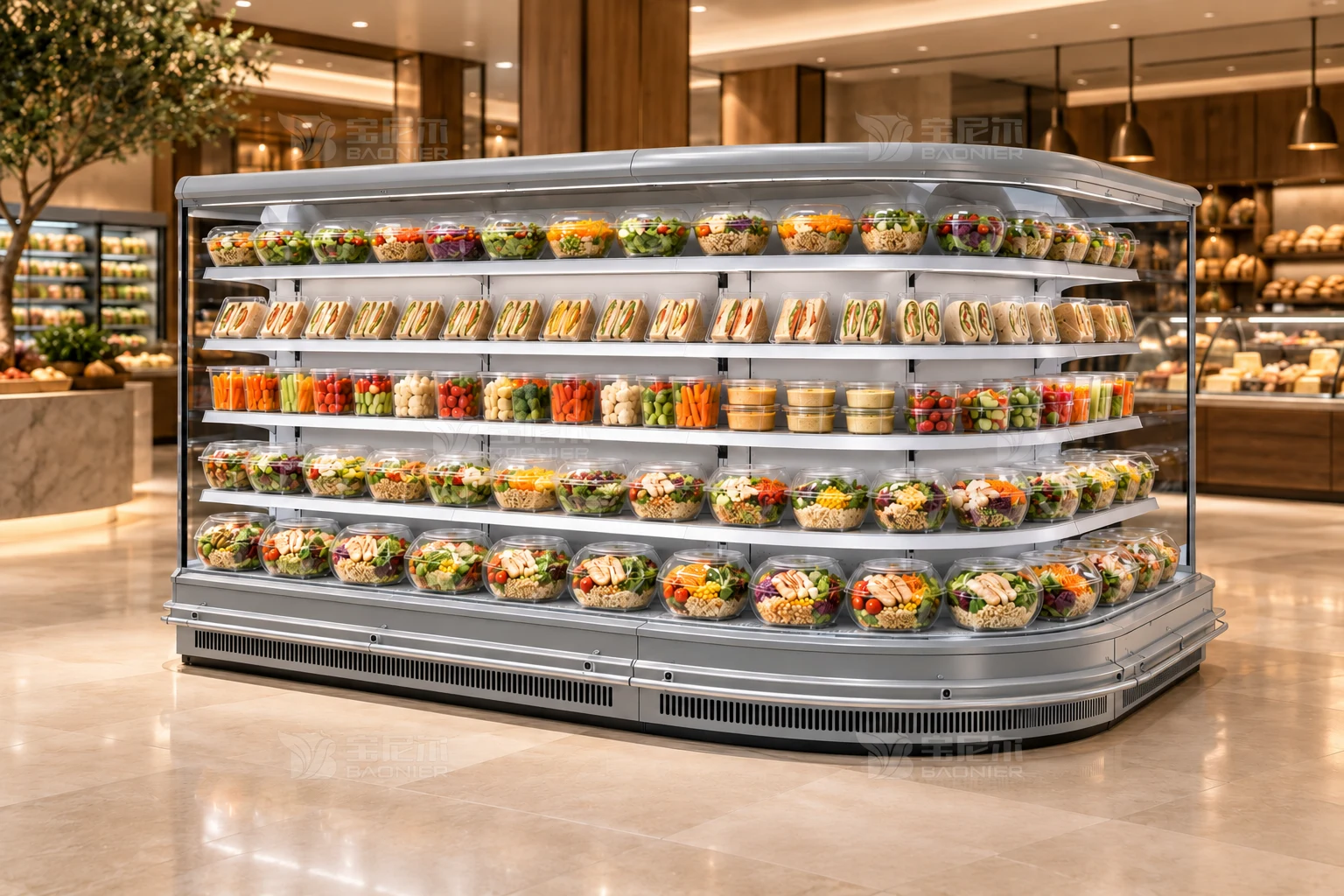
A rounded end continues the open shelving, with clear-packed salads, sandwiches and vegetable cups arranged in separate sections.
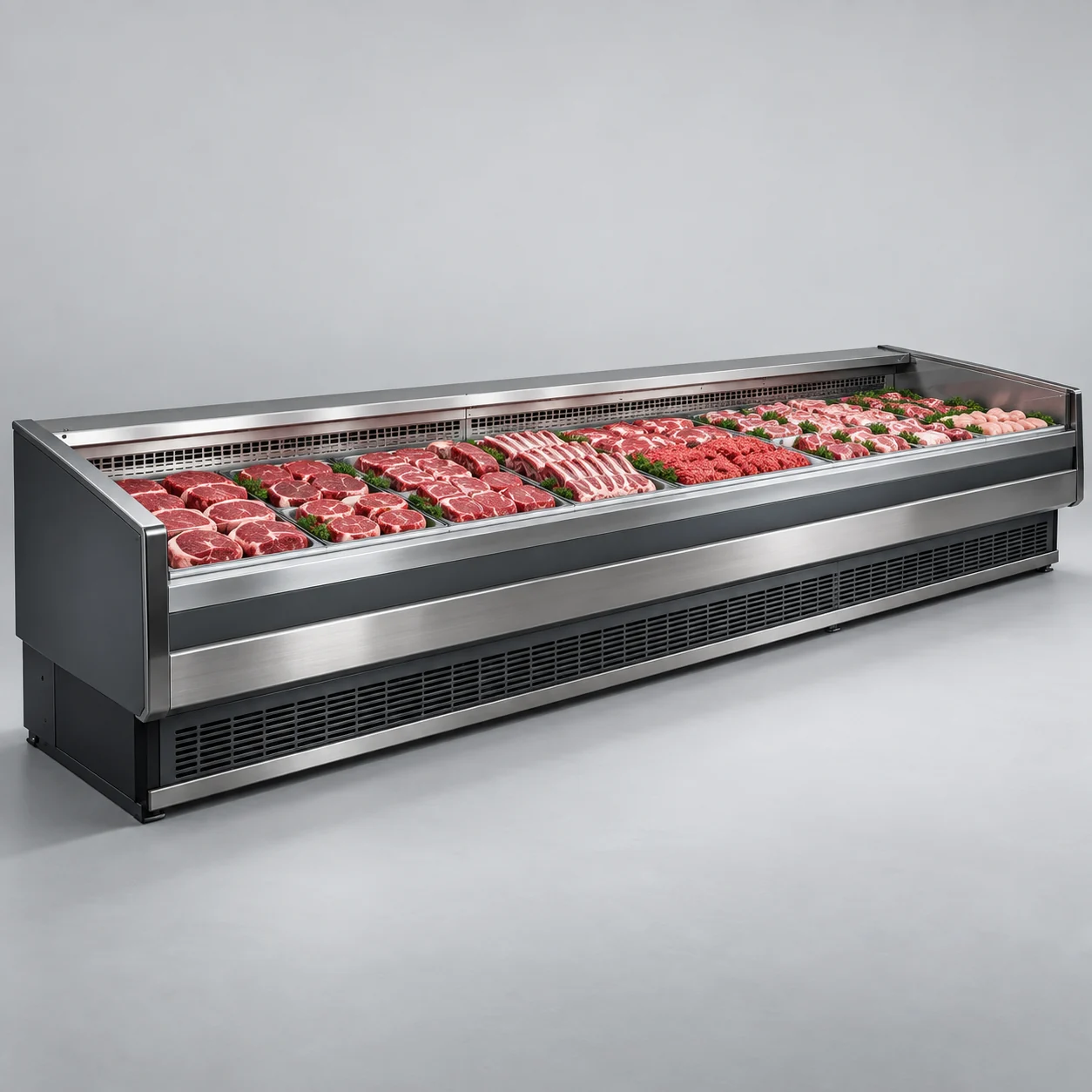
An open-top fresh meat display without a curved glass canopy supports clear merchandising and counter access.
Choose equipment around the goods you store, the way you display them and the space available.
An open-top fresh meat display without a curved glass canopy supports clear merchandising and counter access.
Supermarket meat departments and fresh meat shops
Plan around the goods, floor dimensions and daily workflow. Confirm display, replenishment and cleaning access together with the selected configuration.
A rounded end continues the open shelving, with clear-packed salads, sandwiches and vegetable cups arranged in separate sections.
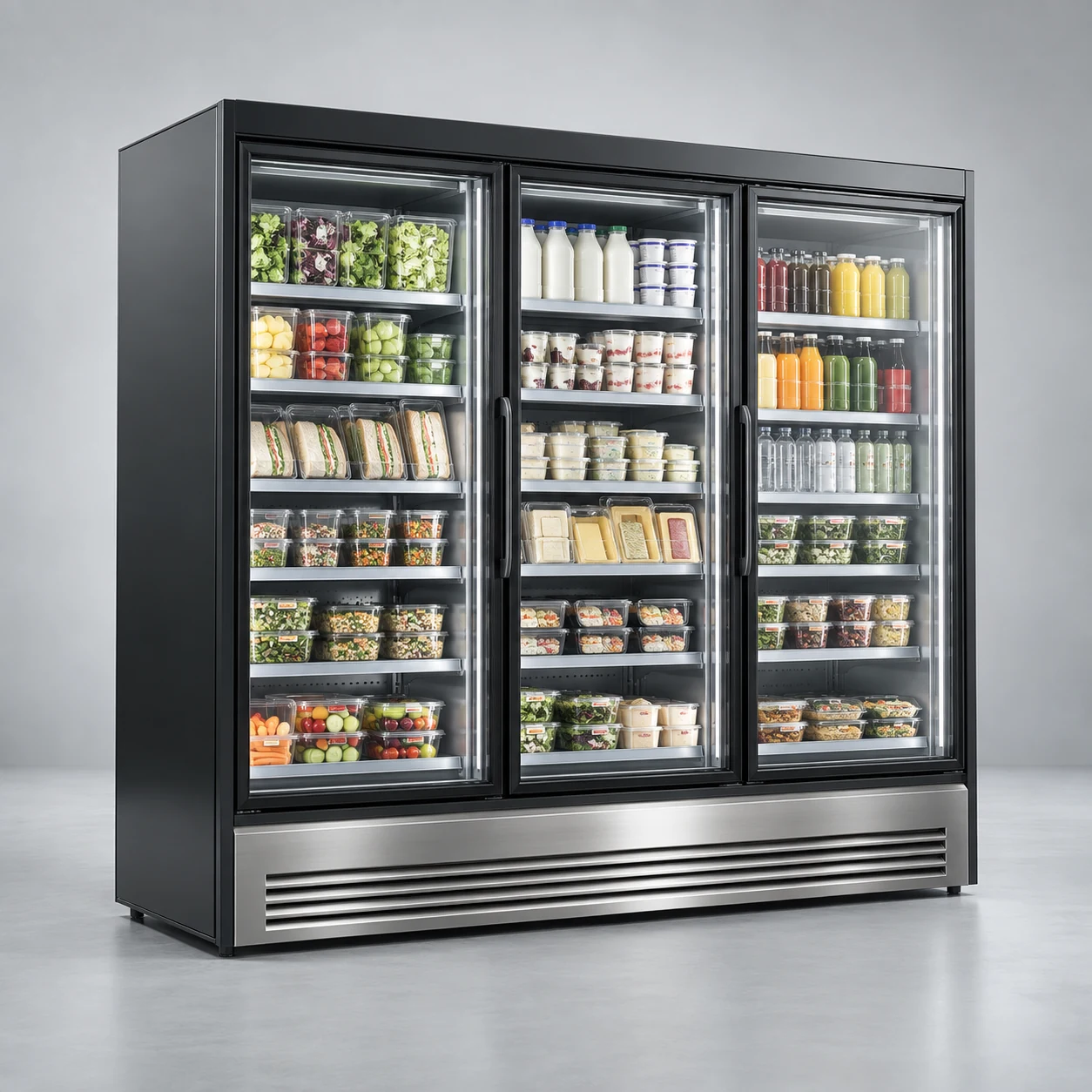
Clear glass doors and organized shelving support attractive, accessible merchandising.
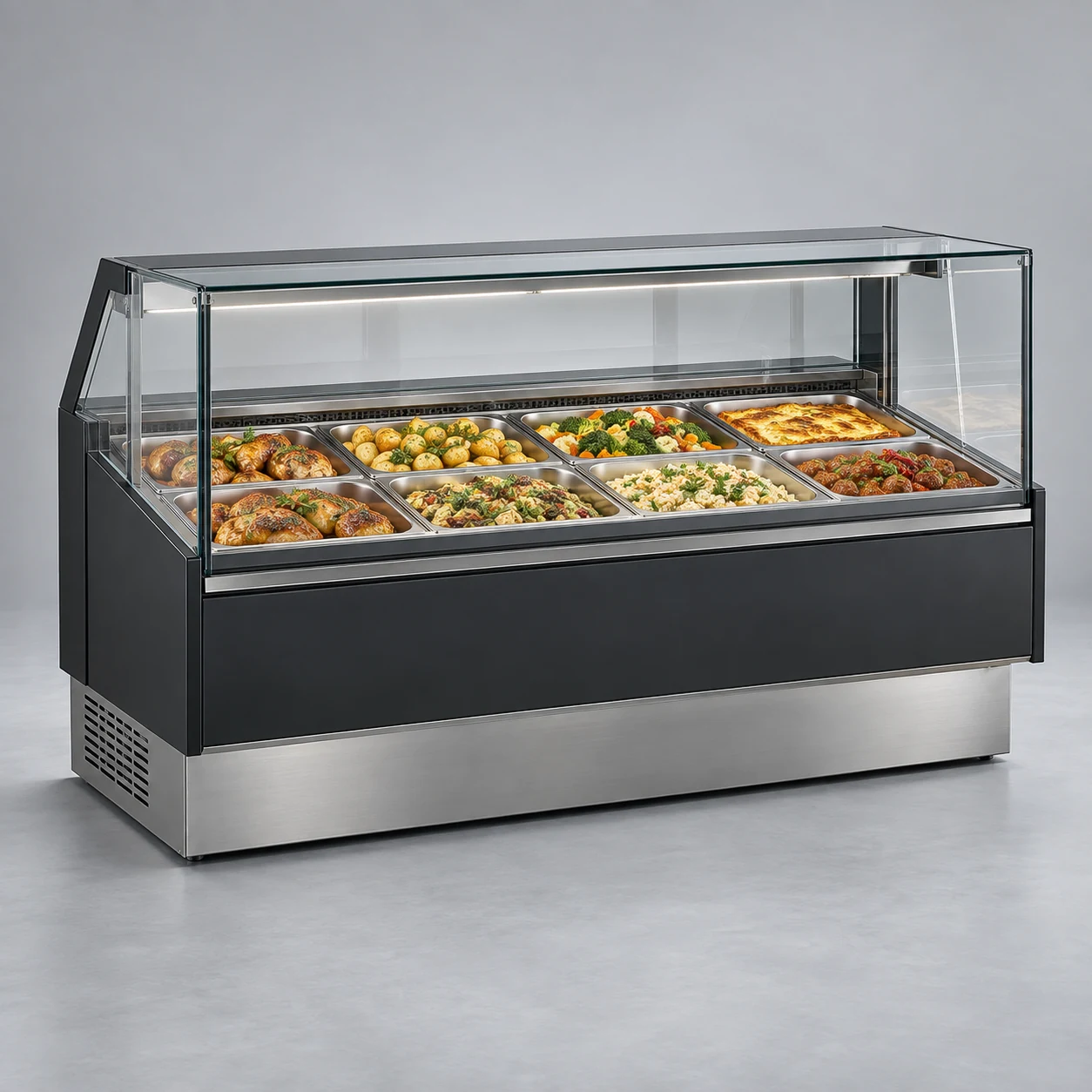
Present prepared foods in a tidy, clearly organized service counter.
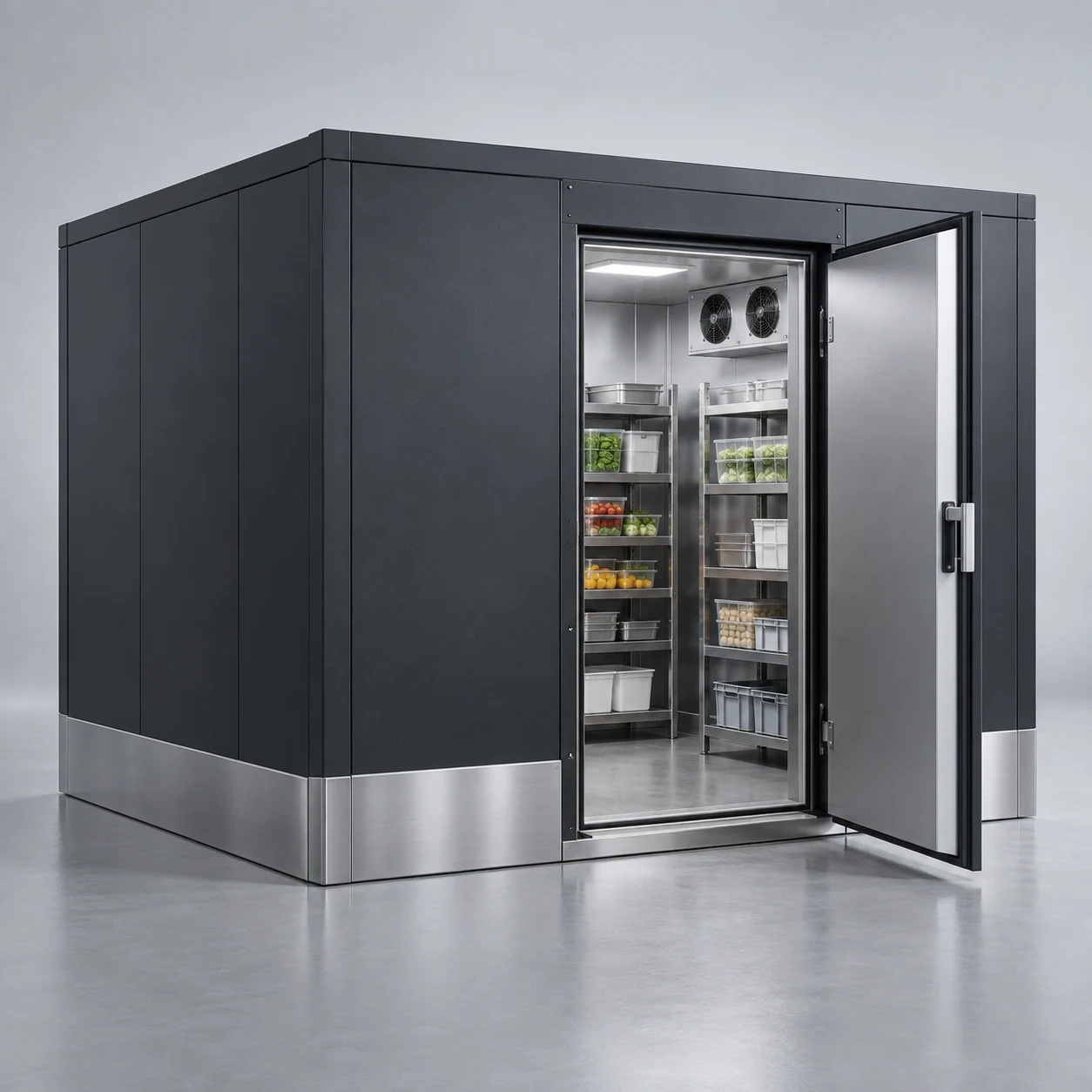
A modular storage concept planned around goods, movement and site conditions.
When selecting a fresh meat display cabinet, it is necessary to clearly define business requirements first, and then compare the appearance and features of the equipment. Taking the reorganization of customers' purchasing and staff weighing processes in fresh meat stalls as an example, the first thing that needs to be organized is not how many units to purchase, but how the fresh meat, turnover pallets, and signage are stored, displayed, and circulated in different zones. The form of goods, personnel actions, and equipment functions are interconnected; only by clarifying these conditions clearly can there be a basis for comparison in subsequent plans.
Read more ↗The layout of the fresh meat cabinets needs to consider both the customer side and the staff side, not just placing the equipment in a floor plan as if it’s done. When fresh meat stalls reorganize the customers' purchasing and staff weighing processes, actions such as viewing, picking up, replenishing, and cleaning often occur around the equipment. The focus of the planning is to ensure these actions can be seamlessly connected in the same space, rather than simply aiming for neat equipment arrangement.
Read more ↗The daily management of fresh meat cabinets should focus on equipment status, product display, and staff handover to establish stable records. For usage scenarios like fresh meat stalls reorganizing customers' purchasing and staff weighing processes, it is often difficult to reconstruct the change process only after obvious issues occur with the equipment. The purpose of recording is to let the next shift and service staff know what happened, rather than adding unnecessary forms.
Read more ↗Differentiate between service-based picking and customer self-picking based on the sales method, then confirm pallet dimensions and required display area. Customers want to see more parts, while employees want to pick trays more efficiently; A suitable arrangement between display levels and rear operation depth is needed for the store.
Read article ↗Connect the locations for weighing, packaging, transfer, and display to avoid overlap between the customer waiting area and the staff serving dishes. Customers want to see more parts, while employees want to pick trays more efficiently; A suitable arrangement between display levels and rear operation depth is needed for the store.
Read article ↗Record actions such as shelving, replenishment, and removal using pallet numbers and display locations, so staff know which area to check. Customers want to see more parts, while employees want to pick trays more efficiently; A suitable arrangement between display levels and rear operation depth is needed for the store.
Read article ↗Confirm detachable components inside the cabinet, pallet support methods, service side access space, and cleaning accessibility. Customers want to see more parts, while employees want to pick trays more efficiently; A suitable arrangement between display levels and rear operation depth is needed for the store.
Read article ↗Leave your contact details and requirements. We will get in touch.