Shift management of the soup boiling stove: From container verification to operation handover
Record the use of containers, production rhythm, and cleaning handover during shifts, and stop using incompatible containers promptly and consult accordingly. A large number of holes does not mean a smoother process; If the production window and container turnover are not properly arranged, waiting will still occur between the equipment and service.
For daily management, first identify changes worth recording
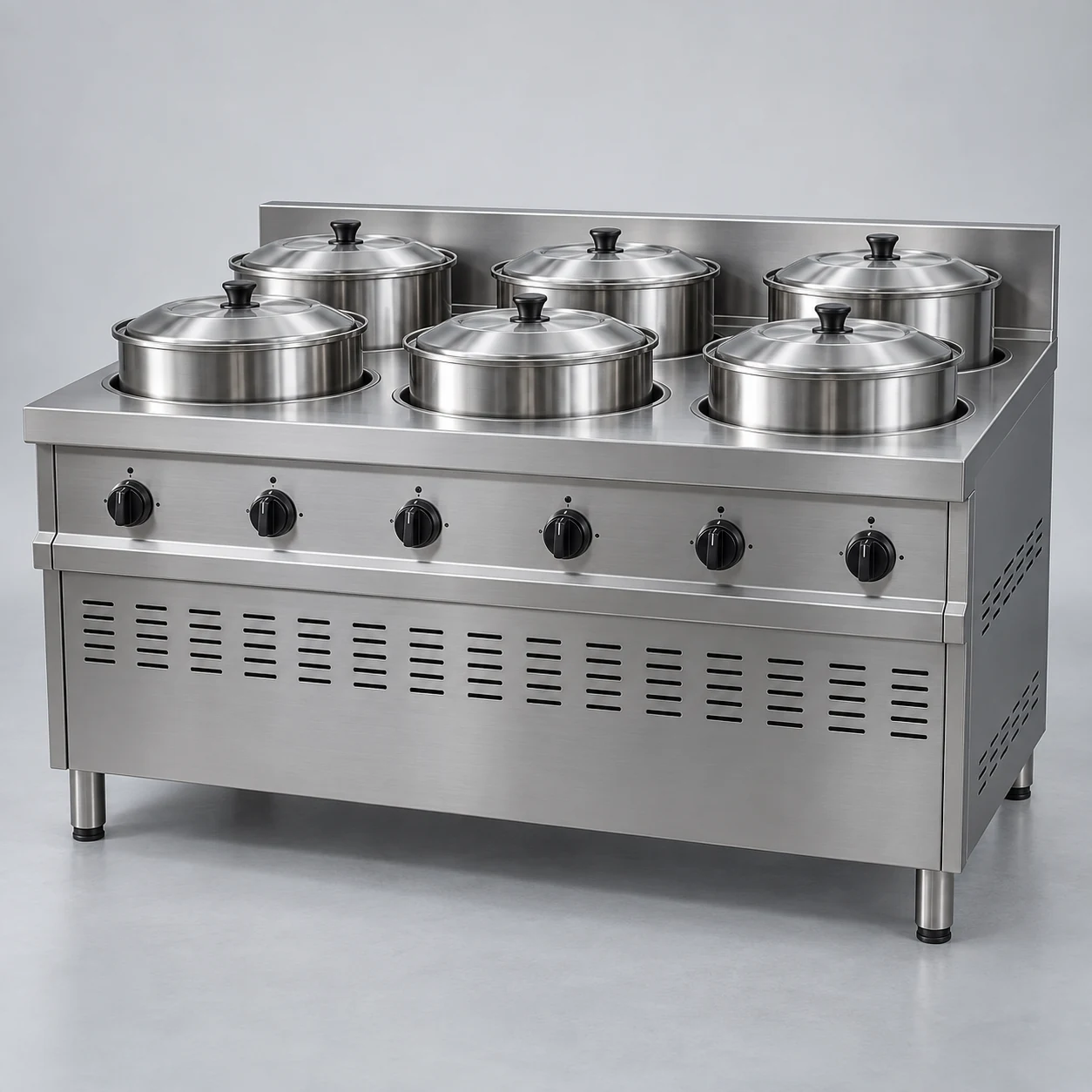
For restaurant preparation, an independent serving station for soups should be established. After implementation, the management of the mug cooking oven should not be limited to the conclusion of 'was it functioning properly today?' The rationale for normal operations needs to be understood by different shifts, and abnormal conditions should also be documented. Record the use of containers, production rhythm, and cleaning handover during shifts, and stop using incompatible containers promptly and consult accordingly. Operations on the equipment’s energy and control sections must follow instructions and should not be modified by employees themselves. The purpose of recording is to enable the next person to continue working, not to fill out forms.
Stores can identify handover points from the actual usage process of soup bowls, cooking utensils, ingredients, and service items: when items enter the work area, who organizes them, when they are removed, and which information needs updating after completion. Record items should be arranged around these handover points. For information that does not assist subsequent decision-making, there is no need to copy it mechanically every day; For situations that repeatedly cause inquiries, clear labels or location indicators should be added.
Establish consistent numbering and location descriptions consistent with the actual site.
Draw up an action sequence from ingredient preparation, container placement to service handover, and separate the positions where service staff stay from the equipment operation positions. The surrounding environment and safety distances are determined by professionals based on equipment documentation. Based on such a site, assigning numbers and locations to equipment and common areas can transform handover references from ‘that machine over there’ into specific, identifiable objects. When a same product or container has multiple specifications, the name should also be differentiated to avoid records appearing consistent while referring to different items.
When establishing record items, you can start by focusing on situations where the item or configuration has changed. Taking stewing stoves as an example, assume the store uses two different-shaped pots for dishes; the same quantity does not mean the same equipment usage pattern. The actual containers should be checked during placement, removal, and delivery processes to ensure the suitability of the equipment for the containers is clearly stated. Such information is suitable for recording separately based on the location of the issue, the nature of the change, the responsible person, and the next steps. After identifying a problem, do not immediately assume a guess as the cause, and do not leave the record at ‘notified’. During the handover, it is necessary to confirm that tasks have been completed, are still being followed up, or require new information, so that the next person knows where to continue from.
Separate the phenomenon, cause judgment, and handling results
When describing equipment issues, first write down the observed or heard phenomena, the time period, the corresponding number, and the usage task at that time. Do not assume ‘a certain component is broken’ as a definite conclusion from the beginning, especially avoid using self-adjustment of key components to prove a guess. Clarify the tasks involved in soup preparation or service, and then verify the appropriate use of the equipment and containers. Do not judge production capacity based solely on the number of holes; clarify usage rhythm, container size, and specific operation requirements first. Understanding the applicable scope of the equipment helps distinguish the usage context and issues that require professional judgment.
Clearly documenting repetitive actions in the same location makes it easier to discuss improvements. Taking the stewing stove as an example, if a temporary material is placed between the soup outlet and the equipment, employees need to adjust their positions each time they serve. Layout evaluation should focus on the complete service sequence and retain necessary operating space according to specific equipment requirements. Such information is suitable for recording separately based on the location of the issue, the nature of the change, the responsible person, and the next steps. After identifying a problem, do not immediately assume a guess as the cause, and do not leave the record at ‘notified’. During the handover, it is necessary to confirm that tasks have been completed, are still being followed up, or require new information, so that the next person knows where to continue from.
Organizing tasks also requires clear responsibilities and boundaries.
A large number of holes does not mean a smoother process; If the production window and container turnover are not properly arranged, waiting will still occur between the equipment and service. Daily organization should serve practical use, not just focus on neatness during photography. You can observe whether employees repeatedly move items to complete the same task, or if they need to look for supporting tools in other areas. If these actions are repeated over time, examine storage locations, containers, or processes, rather than simply asking employees to speed up.
Handover isn’t just reporting a result, but delivering information needed for the next step of judgment. In the case of the stewing stove, if only the number of soups is mentioned during shift handover, without information about container positions or existing issues, the next shift may still ask similar questions. Item information, equipment status, and pending matters should be listed separately to avoid confusion. Such information is suitable for recording separately based on the location of the issue, the nature of the change, the responsible person, and the next steps. After identifying a problem, do not immediately assume a guess as the cause, and do not leave the record at ‘notified’. During the handover, it is necessary to confirm that tasks have been completed, are still being followed up, or require new information, so that the next person knows where to continue from.
Let records over time become actionable improvements.
Check the energy form, installation compatibility, container matching, and training content to determine which accessories fall within the supply scope. The delivery demonstration should cover both normal operations and scenarios requiring contact with service personnel. Documents left during procurement and delivery remain valuable during daily management stages. When searching for models, accessories, and service ranges, they should be accessible from the same equipment file, avoiding the need to ask the original purchaser repeatedly when issues arise.
When reviewing records regularly, focus first on issues that occur repeatedly at the same location, during the same action, or at the same time period, then determine whether the issue lies with labeling, item arrangement, personnel handover, or equipment service. Each improvement should specify what is expected to be resolved, and verify whether changes have occurred in subsequent records. Consultations about BAONIER products can also be based on these real-world details. For the mug cooking oven, clear management is evident, first by having on-site personnel know what to look for, to whom to report, and what tasks remain unfinished.