What should be recorded during daily inspections and shift handovers after the milk cooler is put into use?
Daily management of the milk cooler should focus on equipment status, product display, and personnel handover to maintain stable records. For the convenience store scenario where the dairy area is designed as a easily identifiable frequently purchased zone, seeking information only when obvious equipment issues occur often makes it difficult to reconstruct the changes. The purpose of recording is to let the next shift and service staff know what happened, rather than adding unnecessary forms.
Use the location map to verify product names, packaging changes, and restocking sequences, paying attention to whether the back row is constantly obscured by the front row. Batch and date management are carried out according to store rules, and equipment inspections and product verification are recorded separately. The checklist should be divided into three stages: before start-up, during operation, and after completion, but specific items must align with the equipment manual and store procedures. Inspectors should identify the corresponding equipment number and location, describe observable phenomena, rather than simply stating 'normal' or 'abnormal'.
Assuming during late shifts, different batches of products are added into temporary empty spaces, making it difficult for staff to identify the original positions the next day. The location map and store product management rules should be handed over together, along with a separate explanation of the reasons for temporary adjustments. To distinguish between one-time changes and recurring issues, use the same number and description for the same problem consistently. Photos can help illustrate the situation, but the time period, relevant actions, and background should also be recorded to avoid making conclusions based solely on a partial image.
The cleaning arrangements also need to consider the turnover of dairy products in different bottle and box capacities, combined packs, and price signs. First, handle the items and containers according to store regulations, then clean the equipment as specified in the equipment documents; Do not treat unknown detergents, disassembly methods, or temporary modifications as standard practices. Matters involving energy, electrical, or mechanical components should be handled by qualified personnel, and staff should not bypass equipment requirements to resume operations on their own.
The dairy area needs to be easy for daily repeated purchases; Too many promotional signs may make it difficult for those familiar with the products to find them; the focus of display should be on stable identification and convenient replenishment. During shift changes, emphasize the adjusted locations, unfinished tasks, and issues that need follow-up for that day. When there is an abnormal status, record the model, symptom, time, and measures taken, and contact the supplier or professional service personnel; The handling of specific products shall follow the store management requirements. Regularly review records and prioritize resolving recurring operation and handover issues. Do not replace cause investigation with frequent changes to device settings.
Related products
 Convenience store refrigeration
Milk display cabinets
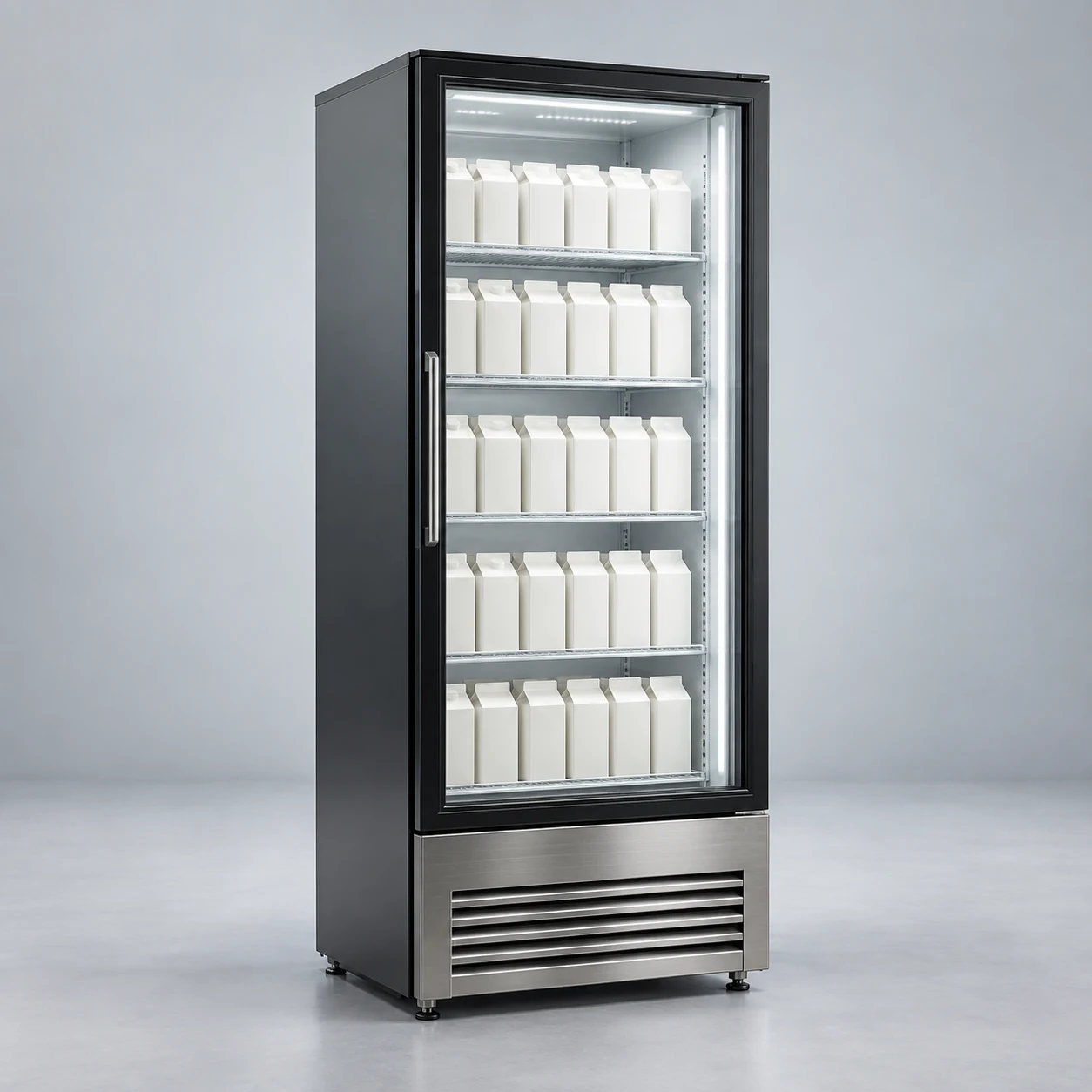
Clear shelving and soft lighting create an orderly dairy display.