What should be the placement and circulation flow around the slicers?
The layout of the slicers needs to consider both the customer side and the work side, not just placing the equipment in a floor plan as if it’s done. When a food store wants to organize the slicing processing tasks for different raw materials, actions such as viewing, picking up, replenishing, and cleaning often occur around the equipment. The focus of the planning is to ensure these actions can be seamlessly connected in the same space, rather than simply aiming for neat equipment arrangement.
Arrange the positions for unprocessed materials, completed processing, and packaging separately to reduce cross-movement of containers. The operating space and protection requirements are specified in the equipment manual; no necessary space should be reduced just to make it closer to other surfaces. During measurement, record the wall columns, door openings, fixing facilities, and channels planned to be retained. Do not directly consider the blank areas in the photos as available locations. The range after opening the cabinet doors, drawers, or other movable components also needs to be verified. The usage area of the equipment and the positions required for professional maintenance should be clearly defined separately.
Assuming the material receiving position is too close to the containers to be processed, employees need to repeatedly identify the items' identities when switching tasks. First, define area labels and container arrangements, then users should follow the standard procedures demonstrated by trained personnel. When determining layout issues, first observe which action or time period causes the conflict, then discuss whether to adjust the equipment or the operation position. If only the orientation of the cabinet is changed without organizing the surrounding materials, the original waiting or detour problems may still occur.
It is recommended to conduct a simple simulation using actual containers, trolleys, or empty packaging. Demonstrate replenishment, access, and organization for different forms of raw materials, material receiving containers, packaging materials, and processing batches. Record whether employees need to turn around repeatedly, whether labels are hard to see, and whether they intersect with the customer waiting area. Before pursuing thin slices or high speed, confirm the condition of the raw materials and the range of the equipment; Defining clear task boundaries is more beneficial for selection than general requests for ‘one machine for all’. Write down these observations next to the floor plan, which makes it easier to achieve consistent understanding than simply describing ‘a bit more spacious’.
Before the plan is finalized, have the equipment supplier review the installation conditions based on on-site photos and dimensions. The space, supporting facilities, and surrounding environment required for the equipment should be specified according to the selected model, not inferred from photos from other stores. Check the applicable objects, accessories, protective components, and usage training of the equipment, and confirm that the manual corresponds to the actual model. The raw materials shown in the sample diagram cannot replace the confirmation of suitability for specific ingredients. If renovations or changes occur to the product layout, the original drawings must be updated, and affected areas should be re-verified to ensure the actual implementation matches the original plan.
Related products
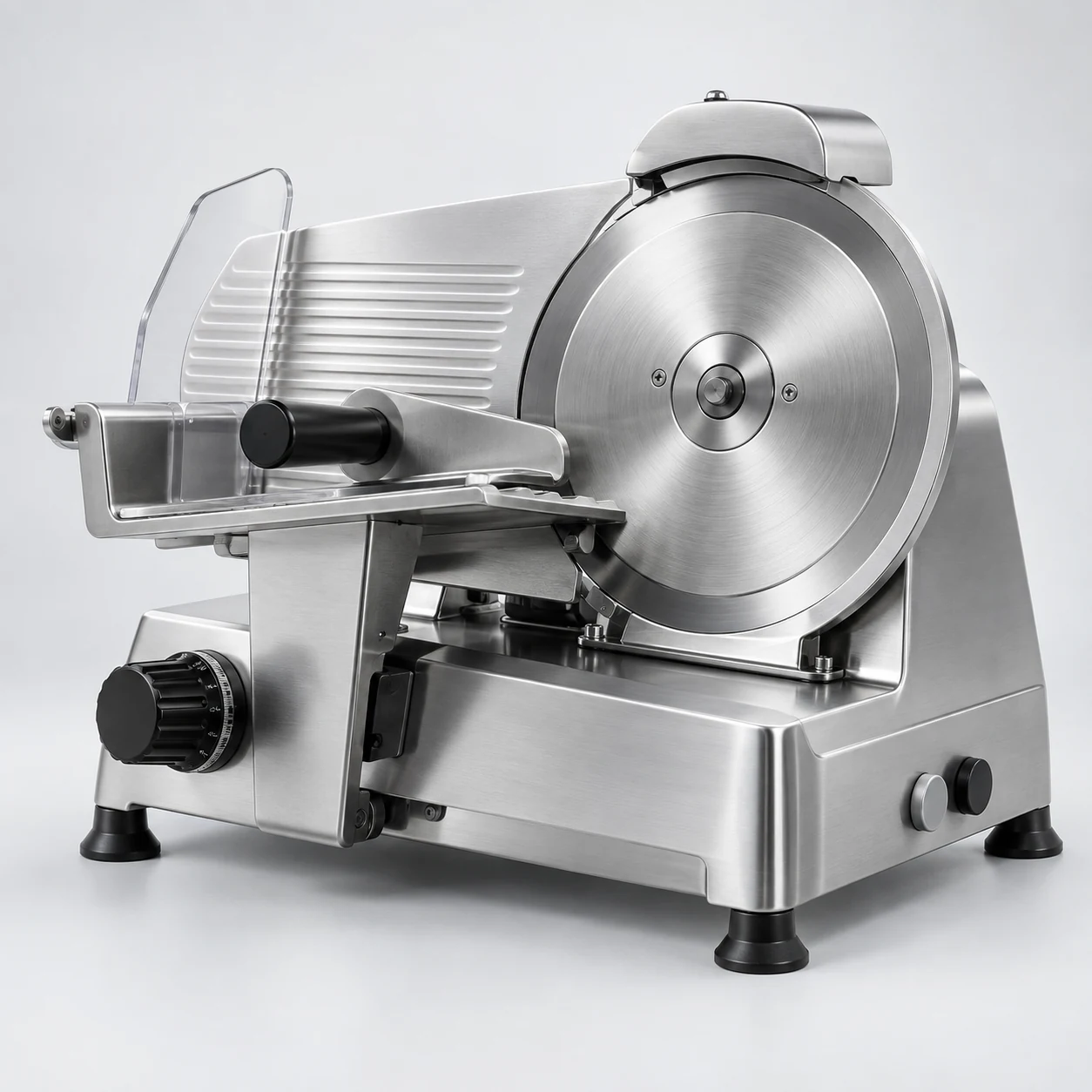 Food machinery
Slicers
Support food slicing workflows; select configurations for the intended ingredients.